

Featured Summary:
- IEA estimates place Africa’s 2024 mineral mining value at $50 billion and refining value at $16 billion, exposing the continent’s limited downstream position
- A September 2026 US-backed feasibility study advanced preparations for Buenassa’s proposed copper-cobalt refinery in the DRC
- Proposed manganese-processing capacity in Gabon and alumina refineries in Guinea show where additional African industrial investment is being pursued
- Financing, mineral supply agreements and international partnerships will influence which projects reach commercial production and where refining takes place
The U.S. Trade and Development Agency (USTDA) announced funding on September 23, 2026, for a pre-feasibility study of Buenassa Resources’ proposed copper-cobalt refinery in Lualaba Province, Democratic Republic of Congo (DRC).
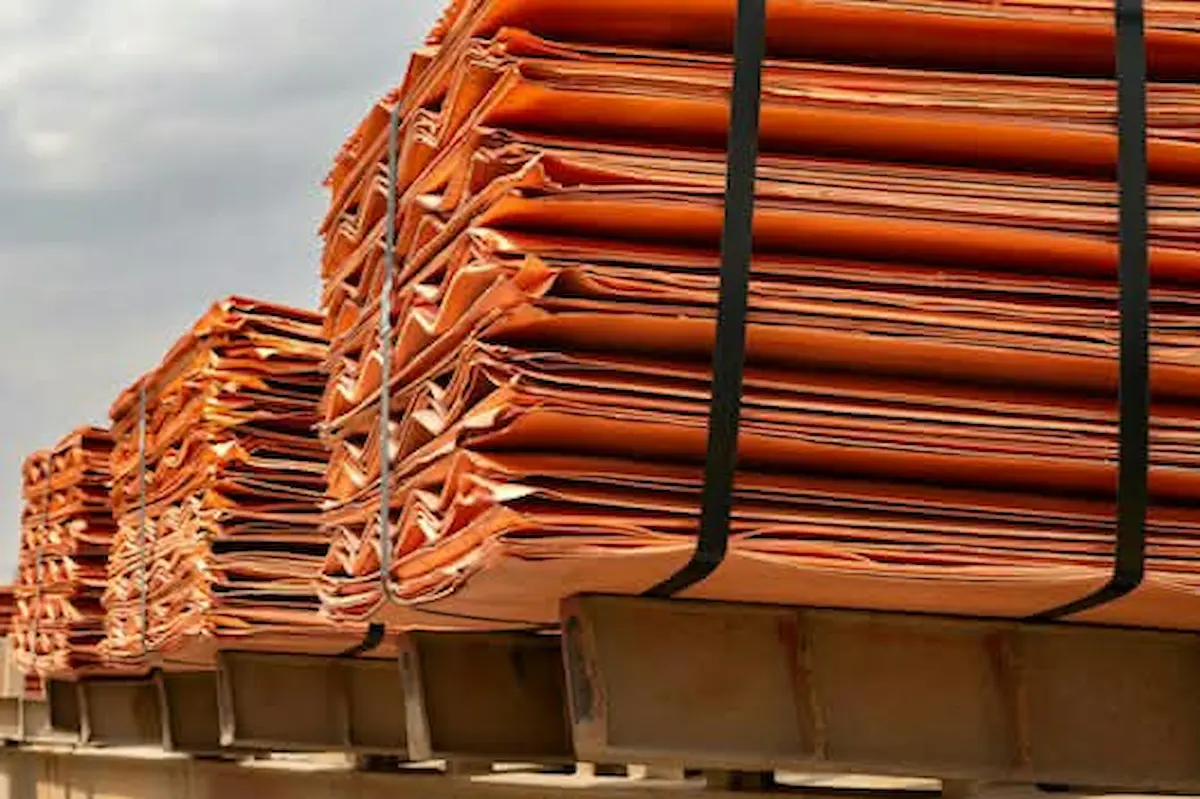
The first phase is designed to produce 30,000 tonnes of copper cathodes and 5,000 tonnes of cobalt sulphate annually. Buenassa previously received a $3.5 million grant from the Congolese government’s Industry Promotion Fund, and the government subsequently acquired an equity stake in the project.
The US-funded assessment will examine mineral supply arrangements, plant design and financial requirements. Buenassa estimated first-phase construction costs at $700 million and, in its 2025 project disclosure, targeted initial operations in 2029. Construction financing and the technical studies needed to advance the proposed facility remain outstanding.
The International Energy Agency (IEA) valued Africa’s production of key energy minerals at approximately $50 billion from mining and $16 billion from refining in 2024, representing 15% and 7% of the respective global markets.
Its Stepping Up the Value Chain in Africa report projected that the continent’s share of global refining value could decline to 5% by 2040 under the announced-project pipeline.
The projection includes additional copper-processing capacity in the DRC and nickel developments elsewhere in Africa. China holds a dominant position in several critical-mineral processing markets, including cobalt and battery-grade graphite.
The IEA’s estimates place Africa’s refining activity substantially below its mining position, even as new processing investments are being proposed across mineral-producing economies.
Buenassa intends to source concentrates from existing mining operations rather than develop an exclusively owned mine. Its proposed hydrometallurgical plant must secure sufficient feedstock and produce copper cathodes and cobalt products that meet buyers’ specifications. Gabon’s proposed manganese-processing investments and Guinea’s alumina developments have different industrial requirements.
Alumina refineries consume substantial quantities of energy and processing inputs, while manganese chemicals serve markets distinct from copper and cobalt products.
Electricity reliability, processing technology and access to industrial infrastructure influence construction costs and operating expenses. Developers also need agreements covering mineral deliveries and refined-product sales to support financing and sustain production.
The United States and the DRC signed a strategic minerals partnership on December 4, 2025, covering designated mineral assets, investment opportunities and access to critical-mineral supplies.
Under the agreement, eligible American investors receive a right of first offer for projects within the DRC’s Strategic Asset Reserve, alongside preferential commercial opportunities involving qualifying projects.
The partnership also addresses mineral offtake for the US market and identifies domestic processing among its industrial development objectives.
Chinese companies already hold substantial interests in Congolese mining and participate in international refining supply chains. The commercial arrangements established through these partnerships could influence which companies secure mineral supplies, finance processing facilities and determine where refined products are manufactured.
African Mineral Refinery Projects Are Already Taking Shape
Buenassa Resources’ copper-cobalt refinery in the Democratic Republic of Congo remains in project preparation following its September 2026 agreement with the U.S. Trade and Development Agency (USTDA).
The Congolese government previously provided a $3.5 million grant through its Industry Promotion Fund and subsequently acquired a 10% golden-share interest. Buenassa plans to purchase concentrates from existing mining operations rather than rely on a mine under its exclusive ownership.
The USTDA-backed assessment will examine potential suppliers, develop the technical configuration and evaluate the project’s economic feasibility.
Buenassa’s development roadmap identifies further feasibility work and financing preparations before construction. Its planned first phase would produce 30,000 tonnes of copper cathodes and 5,000 tonnes of cobalt sulphate annually, with an earlier company estimate placing construction costs at approximately $700 million.
The available disclosures establish government participation and funding for technical preparation, but construction financing remains to be secured.
Eramet and the Gabonese government signed an industrial agreement in July 2026 covering additional domestic manganese processing. The agreement outlined three possible industrial developments, with an ambition to process up to 700,000 tonnes of ore annually by the end of 2031.
In November, Eramet disclosed a proposed manganese-oxide plant with annual production capacity of 60,000 tonnes and estimated investment of $40 million.
The facility would expand the company’s existing processing activities at Moanda, where the Moanda Industrial Complex began operating in 2000 and the Moanda Metallurgical Complex followed in 2015.
The proposed investment targets additional manganese products for industrial customers, including markets associated with specialised steel and battery materials.
Detailed engineering, environmental assessments and economic evaluations remain necessary before Eramet takes a final investment decision. Gabon’s agreement also addresses electricity supply, an important requirement for the proposed expansion.
Guinea has launched construction of two Chinese-backed alumina refineries as the government seeks to process more of its bauxite domestically.
Work on State Power Investment Corporation’s facility in Boffa began in March 2025, with planned annual alumina production of 1.2 million tonnes.
The development includes associated electricity infrastructure and export-loading facilities, while Guinea’s 2026 national development reporting identifies June 2028 as the expected commissioning period.
Construction of Chalco’s refinery at Démougala in Boffa Prefecture was launched on June 13, 2026, following an investment agreement signed in May. Guinea’s Ministry of Mines reported planned capacity of 1.2 million tonnes annually and estimated investment of $1.68 billion.
The construction launches establish progress beyond preliminary agreements, although the available announcements do not quantify completed works or confirm that the facilities are ready for commissioning.
Guinea’s alumina developments have reached construction launches, while Buenassa’s copper-cobalt refinery and Eramet’s additional manganese-oxide facility remain subject to technical and investment decisions.
SPIC’s Boffa project incorporates power generation and export infrastructure, reflecting the substantial utility and transport requirements of alumina production.
Eramet’s proposed expansion depends partly on electricity arrangements under its agreement with Gabon, alongside the engineering and environmental work preceding investment approval.
Buenassa must establish commercially dependable concentrate supplies and complete the studies needed to support construction financing. These are different industrial requirements, with Guinea’s alumina facilities involving large-scale bauxite conversion and Buenassa’s proposed operation producing refined copper and cobalt products.
The next evidence of progress will come from completed construction works in Guinea and investment approvals for the facilities still undergoing development assessments.
Refinery Financing Faces Capital and Commercial Constraints
Buenassa Resources has estimated construction costs of approximately $700 million for the first phase of its copper-cobalt refinery in the Democratic Republic of Congo.
Eramet’s November 2026 investment roadmap places its proposed manganese-oxide facility in Gabon at $40 million, reflecting a smaller processing operation within an established mining and industrial business.
Guinea’s Ministry of Mines estimates Chalco’s planned alumina refinery at $1.68 billion, although Chalco’s May 2026 corporate disclosure gives an investment estimate of approximately $1 billion.
The published figures have not been reconciled and may reflect differences in project scope or associated infrastructure. Chalco’s refinery involves large-scale bauxite conversion, while Buenassa must establish a processing operation supplied by third-party mining companies.
The disclosed budgets cover projects with different production requirements, construction arrangements and infrastructure needs. Buenassa’s feasibility funding and Eramet’s industrial planning agreement do not constitute financing for full-scale construction.
Buenassa’s Congolese shareholders have brought the government into the company through a 10% golden-share interest, although that holding does not establish a corresponding construction-financing contribution.
In Guinea, Chalco’s May 2026 agreement grants the government a 5% free-carried interest in the refinery company, with an option to increase its ownership to a maximum of 35% at fair market value under specified conditions.
Chalco plans to establish the business through its Hong Kong subsidiary and may raise additional capital through shareholder or bank loans. The agreement provides Guinea with an ownership position and the possibility of greater participation, while the Chinese investor retains responsibility for organising the proposed development.
Eramet is assessing its additional manganese-processing capacity through existing Gabonese operations, with government participation documented in the industrial agreement and electricity arrangements.
The available ownership disclosures establish state participation in Buenassa and Chalco, but provide limited evidence of independent African institutional investors financing the proposed facilities.
The International Finance Corporation previously approved a $150 million investment in Guinea Alumina Corporation’s bauxite development, alongside proposed mobilisation of up to $350 million from other lenders.
The African Development Bank also reported $100 million in financing for the first phase of the company’s integrated mining and infrastructure programme, including railway and port facilities.
Those commitments supported mineral extraction and associated infrastructure rather than construction of the Chalco and SPIC alumina refineries announced in 2025 and 2026.
AfDB records also identify an alumina refinery operation approved in Guinea in December 2008, although that historical approval does not establish financing for the current developments.
Buenassa has secured US support for pre-feasibility work, while Eramet and Chalco have disclosed industrial investment plans and potential financing arrangements. The reviewed disclosures do not identify completed development-bank financing packages for construction of these selected facilities.
Chalco’s proposed alumina refinery is linked to its existing bauxite interests in Guinea. Its amended mining convention covers the Boffa North and South deposits and permits the project company to seek shareholder or bank financing, with provisions for lenders to take security over qualifying assets and rights.
Access to the company’s mineral resources provides a potential feedstock base for the planned operation. Buenassa intends to purchase copper and cobalt concentrates from established mining producers, making supply agreements particularly important to its operating model.
The USTDA-backed study is intended to assess potential suppliers and the project’s economic feasibility. Eramet already operates manganese mining and processing facilities in Gabon, although its proposed manganese-oxide plant remains subject to a final investment decision.
None of the cited disclosures establishes a complete set of binding feedstock, financing and refined-product sales agreements for all three developments.
Their progress towards construction will be determined by the commercial arrangements developers secure and the investment decisions that follow.
Global Mineral Competition Could Reshape Africa’s Refinery Plans
Chinese companies hold substantial interests in the mineral production and refining networks that African processing projects would seek to enter.
UNCTAD’s Trade and Development Report 2026 identified CMOC as the largest individual cobalt producer in the Democratic Republic of Congo, accounting for 39.5% of national output in 2025.
China produced 78.6% of global refined cobalt that year, compared with Finland’s 6.6% and Indonesia’s 3.2%. Chinese investment also supports processing within Africa, including Chalco’s and State Power Investment Corporation’s alumina developments in Guinea.
In the DRC, existing mining ownership and mineral sales relationships influence the availability of concentrates for independent refiners. Buenassa intends to purchase copper and cobalt feedstock from established producers rather than operate an exclusively owned mine.
Its proposed refinery must therefore compete for commercially available supplies in a market where major producers already have established customers and purchasing arrangements.
The United States secured preferential commercial opportunities under its December 2025 strategic minerals partnership with the DRC. The agreement grants eligible American investors a right of first offer for projects within the country’s Strategic Asset Reserve and establishes arrangements covering designated mineral developments and offtake opportunities.
Domestic processing is included among the partnership’s objectives, although its provisions also address mining assets, mineral marketing and transport infrastructure.
On December 5, 2025, the U.S. International Development Finance Corporation announced a letter of interest concerning a possible equity investment in a venture between Gécamines and commodity trader Mercuria to market copper, cobalt and other minerals.
Another letter concerned rehabilitation of the Dilolo–Sakania railway. The partnership also establishes five-year targets for directing specified shares of copper, zinc concentrate and cobalt exports through the Sakania–Lobito Corridor.
The disclosed American financing proposals concern mineral commercialisation and transport, rather than committed construction capital for a new refinery in the DRC.
The DRC’s cobalt export controls have changed the conditions under which mining companies sell material internationally. Authorities suspended exports in February 2025 before introducing quotas in October, with an annual ceiling of 96,600 tonnes for 2026.
The World Bank reported in October 2026 that the quota represented approximately half the country’s 2024 export volume. Exporters also face requirements to prepay a 10% royalty and obtain compliance certificates.
The government subsequently established a strategic mineral reserve covering cobalt, coltan and germanium, including arrangements to acquire part of national cobalt exports.
These restrictions introduce additional regulatory obligations for producers and traders operating in the Congolese market. The IEA’s 2026 critical-minerals outlook also identifies quota provisions affecting processors without their own mines.
For an independent operation such as Buenassa, the treatment of purchased concentrates and domestically refined products under the applicable rules is particularly relevant to securing reliable supplies and negotiating sales agreements.
Gabon plans to prohibit manganese-ore exports from 2029, requiring producers to reassess how much of their output can be processed domestically.
Eramet’s July 2026 industrial agreement with the government covers additional manganese products and electricity arrangements for future processing investments. Its proposed manganese-oxide facility remains subject to engineering assessments and a final investment decision.
Guinea has pursued a different approach through refinery development agreements with bauxite producers, including Chalco’s convention covering its mining interests, planned alumina production and government equity participation.
The DRC has combined cobalt export controls with strategic mineral agreements that provide foreign investors with access to designated projects and commercial opportunities.
Guinea’s approach has produced announced construction starts, while Gabon’s export deadline precedes the commissioning of the additional manganese capacity under consideration.
The effectiveness of these policies will depend on whether producers can establish operating facilities capable of processing the minerals that governments want to retain within their domestic industrial economies.
Africa’s Refinery Projects Face Their Next Investment Decisions
Buenassa Resources must complete its US-backed pre-feasibility assessment before advancing the technical studies and financing arrangements required for construction of its copper-cobalt refinery in the Democratic Republic of Congo.
Eramet’s proposed manganese-oxide facility in Gabon awaits further engineering assessments and a final investment decision. Guinea’s SPIC and Chalco alumina developments have reached announced construction starts, with the completion of processing plants and supporting infrastructure now central to their schedules.
Guinea’s 2026 national development reporting identifies June 2028 as the expected commissioning date for SPIC’s refinery. Verified construction progress and subsequent commissioning will establish whether these projects can deliver the additional processing capacity envisaged in their development plans.
The financing arrangements will also determine who participates in the resulting industrial businesses. Guinea holds a 5% free-carried interest in Chalco’s refinery venture, with an option to increase its stake under the investment agreement.
The Congolese government has secured a 10% golden-share interest in Buenassa, whose construction financing and concentrate supply arrangements remain unresolved.
Chalco’s development structure provides for shareholder and bank borrowing, while American-backed mineral initiatives in the DRC have concentrated on strategic asset access, mineral marketing and transport. Chinese investors are advancing alumina production in Guinea through projects linked to existing bauxite interests.
The eventual distribution of earnings will reflect the equity held by African participants, debt obligations, operating costs and the terms under which refined products reach international buyers.
The International Energy Agency projects that Africa’s share of global refining value could fall to 5% by 2040 under the announced-project pipeline.
The commissioning of new facilities would increase installed processing capacity, but their contribution to Africa’s industrial economy will be measured through sustained production, sales of refined minerals and the earnings generated from those operations.
Buyers must accept the products at competitive prices, while plants need dependable mineral supplies and sufficient operating revenue to maintain production.
The next evidence of progress will come from completed investment decisions, operational refineries and rising processed-mineral output. Africa’s position in the global refining market will ultimately be determined by the minerals its industries process and sell, rather than the value of projects announced.


Recent Comments