

Featured Summary:
- AfDB and Japanese institutions are pursuing partnerships combining industrial technology, private capital and investment guarantees
- Existing cooperation includes Nigerian fertiliser production, Kenyan geothermal power and African agricultural supply chains
- Japan and the AfDB are prioritising local mineral processing, energy infrastructure and integrated industrial production
- Operating capacity, completed financing agreements and domestic industrial output will determine whether the partnerships deliver greater economic value
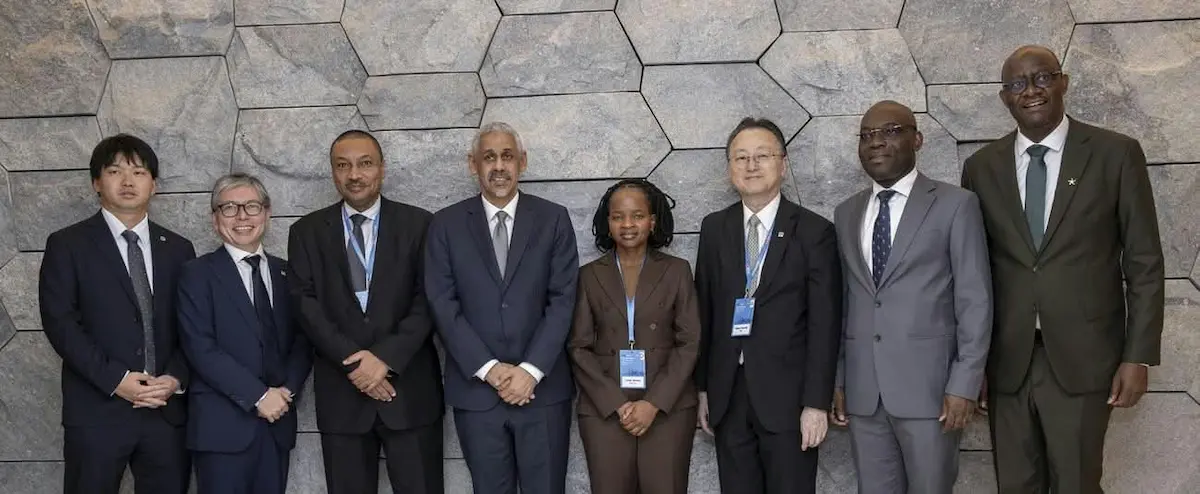
The African Development Bank (AfDB) and Japanese financial institutions met in Tokyo on November 16, 2026, to discuss financing African industrial projects through private investment, technology partnerships and risk guarantees.
The roundtable, hosted by Japan’s export credit insurer NEXI, included Afreximbank, the African Trade and Investment Development Insurance (ATIDI), the Islamic Corporation for the Insurance of Investment and Export Credit (ICIEC) and South Africa’s Export Credit Insurance Corporation (ECIC).
Existing cooperation covers fertiliser manufacturing in Nigeria, geothermal electricity in Kenya, agricultural supply chains and Mozambique’s liquefied natural gas industry.
AfDB President Sidi Ould Tah called for greater Japanese investment in local resource processing in remarks reported on November 23. Discussions with Japanese officials also identified critical minerals, energy infrastructure and agricultural production as priorities.
Africa’s copper-producing economies already supply international manufacturers, while several countries export minerals before completing more advanced processing domestically.
Japanese engineering firms and equipment manufacturers have participated in African industrial and energy projects, providing an established commercial relationship for potential investment in refining, manufacturing and supporting infrastructure.
The AfDB and Japan are targeting $5.5 billion in joint financing under the sixth phase of the Enhanced Private Sector Assistance for Africa programme between 2026 and 2028.
Japan also signed an approximately $583.4 million concessional loan agreement in November to support the African Development Fund’s seventeenth replenishment.
NEXI and African insurance institutions are pursuing arrangements to share the political and commercial risks facing investors and lenders. The next measure of cooperation will be whether individual projects secure financing and begin producing goods, electricity and export revenue within African economies.
Japanese Technology Supports African Energy and Manufacturing Projects
Toyo Engineering completed its third fertiliser production line for Indorama in Nigeria’s Rivers State in June 2026. The facilities are designed to produce 2,300 tonnes of ammonia and 4,000 tonnes of urea daily, increasing the Eleme complex’s installed annual urea capacity from 2.8 million to approximately 4.2 million tonnes.
Under a contract awarded in 2023, Toyo supplied its ACES21 urea technology and undertook engineering, procurement and commissioning work.
Dutch development bank FMO subsequently reported that all three production lines were operational. The complex uses Nigerian natural gas to manufacture fertiliser for domestic and export markets.
Toyota Tsusho and its Kenyan subsidiary CFAO Kenya secured the engineering, procurement and construction contract for the 35-megawatt Quantum Menengai geothermal power plant. Fuji Electric was selected to supply the steam turbine and generator.
Japan Bank for International Cooperation agreed to lend up to $8.64 million through a credit line with the Eastern and Southern African Trade and Development Bank. Mizuho Bank provided a further $5.76 million, insured by Japan’s export credit agency NEXI. Kenya’s Geothermal Development Company supplies steam for the project, while Kenya Power is contracted to purchase the electricity.
Kenya’s April 2026 public-private partnership report classified the Toyota Tsusho-contracted Menengai facility as under construction. A separate 35-megawatt plant developed by Sosian Menengai began commercial operations in November 2023.
Indorama’s third fertiliser line, meanwhile, had entered operation by June 2026. The projects therefore provide different evidence of Japanese industrial participation: completed engineering work at an operating Nigerian manufacturing complex and contracted equipment, construction and financing for a Kenyan power facility whose subsequent operating status requires confirmation.
Indorama is pursuing a fourth fertiliser production line that would raise the Eleme complex’s installed capacity to approximately 5.6 million tonnes annually.
AfDB documentation published in October 2026 identifies associated plans for product storage, port-handling facilities and a roughly 65-kilometre natural gas pipeline.
The infrastructure would support feedstock delivery and the movement of larger fertiliser volumes to customers. At Menengai, the remaining commercial milestone is confirmation that the Japanese-contracted generating plant has completed construction and begun supplying electricity under its power-purchase agreement.
Japanese Partnerships Target African Agriculture and Mineral Processing
Mitsui & Co. has invested in Export Trading Group (ETG) since 2018, establishing a commercial presence in African agricultural sourcing and distribution.
An International Finance Corporation disclosure published in 2026 identifies Mitsui’s African investment vehicle as holding 31.9% of ETG, alongside the group’s founding shareholders and South Africa’s Public Investment Corporation.
ETG trades maize, rice, pulses, oilseeds, cashew nuts, cocoa and coffee, while supplying fertilisers and other agricultural inputs. Mitsui’s corporate disclosures identify operations across 29 African countries, connecting producers with regional markets and international buyers.
ETG previously reported procuring and distributing more than 8.6 million tonnes of agricultural commodities, with 80% of African-origin stock purchased at farm-gate level.
Its distribution infrastructure includes more than 450 warehouses and a fleet exceeding 600 trucks across over 20 African countries. The group also operates cashew-processing activities under its Korosho brand and fertiliser-blending facilities serving agricultural markets.
An IFC disclosure in 2026 outlined a proposed trade-risk participation of up to $40 million within a financing programme valued at up to $230 million, primarily supporting transactions in eastern, southern and western Africa.
AfDB President Sidi Ould Tah identified local critical-mineral processing as an investment priority during discussions with Japanese officials on November 13, reported by the Bank on November 19.
The AfDB renewed its appeal for Japanese industrial participation on November 23, including technology and financing for African resource processing. Zambia and the Democratic Republic of Congo already operate copper smelters alongside substantial mining industries.
Additional refining and manufacturing capacity would increase the range of industrial activities undertaken domestically, with electricity supply, transport infrastructure and access to buyers affecting the commercial viability of new facilities.
Japanese financing already supports another part of ETG’s African operations. In August 2025, the Japan Bank for International Cooperation agreed to provide up to $14 million for the group’s liquefied petroleum gas business in Zambia, South Africa, Mozambique and Uganda.
The loan formed part of a $24 million financing arrangement with Sumitomo Mitsui Banking Corporation. The investment supports energy distribution through an established commercial network.
The AfDB’s proposed mineral-processing partnerships have yet to establish comparable project-level financing commitments, leaving the next investment decisions dependent on identifiable processing facilities, commercial customers and financing agreements.
AfDB–Japan Guarantees Face Africa’s Industrial Financing Test
The November 16 investment roundtable hosted by Japan’s export credit insurer NEXI brought together institutions involved in financing African industrial projects.
Afreximbank provides trade and project finance, while ATIDI, the Islamic Corporation for the Insurance of Investment and Export Credit (ICIEC) and South Africa’s Export Credit Insurance Corporation (ECIC) offer insurance against political, credit and commercial risks.
Discussions covered long-term private investment, financial guarantees and arrangements for sharing exposure among lenders and insurers. The AfDB’s November 20 disclosure identified existing cooperation in manufacturing, electricity, agriculture and energy, without reporting new financing agreements concluded at the meeting.
Japan’s cumulative contributions to the Enhanced Private Sector Assistance for Africa (EPSA) programme reached $7.4 billion by December 2025, according to the AfDB.
The initiative, launched in 2005, finances public infrastructure and private-sector development through cooperation with Japanese institutions. Its sixth phase, agreed with the Japan International Cooperation Agency in August 2025, targets up to $5.5 billion in joint financing between 2026 and 2028.
The programme provides an established financing channel for African development projects, although the reported commitments cover a wider portfolio than the industrial partnerships discussed in Tokyo.
The AfDB approved a $125 million equity investment in ATIDI on May 22, 2026, to expand its political-risk and trade-credit insurance activities. ATIDI reported supporting $93 billion in investment and cross-border trade since its establishment in 2001.
Its existing operations include guarantees supporting long-term naira financing in Nigeria, where insurance coverage helped issuers obtain regulatory approval for 15-year funding.
Japanese export-credit protection has also supported Kenya’s Menengai geothermal development, with NEXI insuring Mizuho Bank’s $5.76 million financing contribution.
The AfDB’s New African Financial Architecture for Development (NAFAD) includes a Pan-African Guarantee Platform coordinated through ATIDI.
Bank officials reported in November 2026 that the platform had begun operating, alongside plans to increase ATIDI’s capital from approximately $1 billion to $2 billion and eventually $5 billion.
The AfDB has identified an annual guarantee-capacity target of $20 billion. Further Japanese participation in African manufacturing, electricity and mineral processing will depend on financing agreements and insurance arrangements attached to identifiable projects. Signed investment commitments, construction financing and completed industrial facilities will provide the commercial evidence of progress.
Japanese Investment Faces Africa’s Industrial Delivery Test
Toyo Engineering’s completed work at Indorama’s Nigerian fertiliser complex provides evidence of Japanese technology contributing to African manufacturing capacity.
Mitsui’s investment in Export Trading Group supports agricultural procurement, processing and distribution across African markets. In Kenya, Toyota Tsusho and Fuji Electric have secured engineering and equipment contracts for the Menengai geothermal development, supported by Japanese lending and export-credit insurance.
These established commercial relationships provide a basis for the AfDB’s efforts to attract further Japanese investment into African industry.
Indorama’s planned fourth fertiliser line would increase the Eleme complex’s installed annual urea capacity to approximately 5.6 million tonnes, alongside proposed gas supply, storage and port infrastructure.
At Menengai, electricity supplied under the power-purchase agreement will be a measure of the Japanese-contracted project’s commercial progress.
The AfDB’s mineral-processing priorities will require investors to commit financing, secure equipment contracts and establish buyers for refined products before construction advances.
The value of further Japanese investment will be measured by additional manufacturing output, electricity generation and agricultural processing within African economies.
Employment, export earnings and revenue from operating facilities will establish the economic contribution of completed projects. The AfDB and Japan have established financing channels and commercial partnerships.
Their industrial ambitions will be judged by the factories, power plants and processing facilities that enter production and sustain commercially viable operations.


Recent Comments