

Featured Summary:
- Japan’s $583.4 million concessional loan supports the AfDB’s record $11 billion ADF-17 replenishment
- Energy, transport and food-security investments are among the Fund’s development priorities for 2026–2028
- Grants and concessional loans support eligible governments, while planned market borrowing could increase the Fund’s financing capacity
- Borrowing costs, disbursements and completed projects will determine the economic value of the expanded financing model
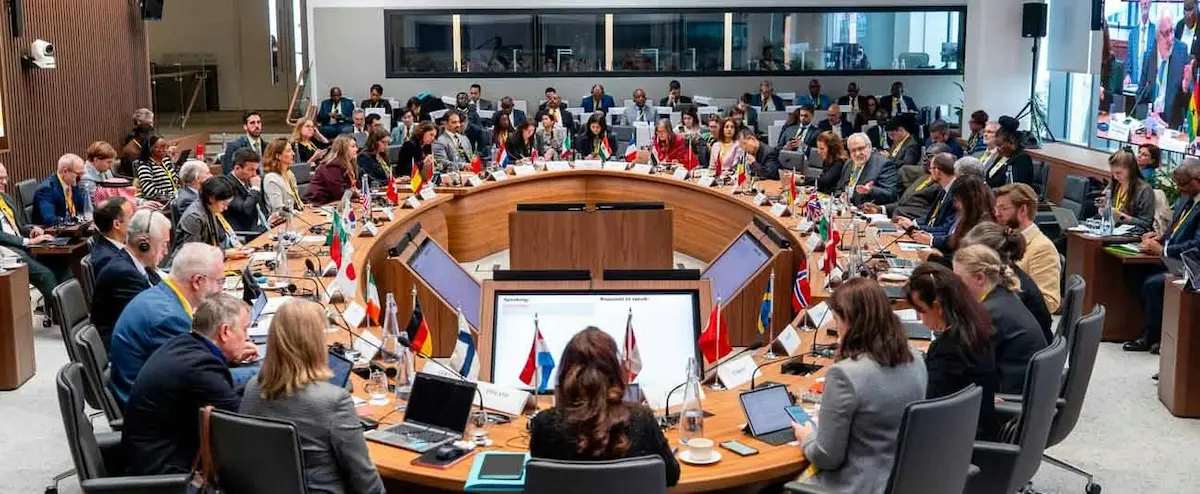
The African Development Bank (AfDB) Group and the Japan International Cooperation Agency (JICA) signed a ¥86.6 billion ($583.4 million) concessional loan agreement on November 13, 2026.
Announced the following day, the agreement supports the African Development Fund’s (ADF) record $11 billion ADF-17 replenishment, which will provide development financing to eligible African countries during 2026–2028.
The ADF is seeking to raise additional resources beyond traditional donor contributions. Concessional loans from development partners already form part of its funding arrangements, and the institution is preparing to borrow from capital markets.
Issuing debt could increase the amount available for lending to African governments, while requiring the Fund to meet repayment obligations to investors.
Electricity access, transport infrastructure, food security and regional integration are among ADF-17’s investment priorities. The replenishment is intended to support projects in these sectors across eligible countries, with individual allocations determined through the Fund’s financing arrangements. Japan’s contribution supports the replenishment as a whole rather than a separately identified project.
Debt-servicing costs have reduced the fiscal resources available to many African governments for infrastructure and other public investments.
Additional ADF financing would offer eligible countries another source of long-term capital, but the terms of that support will matter alongside the amounts approved.
The Fund must expand its financing capacity while preserving affordable lending for governments already managing substantial repayment obligations.
ADF Investments Target Electricity Supply and Cross-Border Transport
The African Development Fund (ADF) is directing its 2026–2028 financing priorities towards electricity access, transport connectivity and agricultural production.
Its previous financing cycle approved approximately $1.6 billion for regional operations, according to the African Development Bank’s 2026 Annual Development Effectiveness Review.
The new replenishment is intended to provide further resources for eligible countries, building on existing investments in infrastructure and economic development.
In October 2026, the AfDB Group approved $144.34 million for the second phase of Niger’s Programme to Support Energy Sector Governance and Competitiveness.
The package comprises a $123.72 million ADF loan and $20.62 million from the Transition Support Facility. It finances reforms under Niger’s Electricity Code, regulations for rural mini-grids and off-grid systems, and the establishment of a renewable energy promotion body.
The programme also addresses domestic payment arrears and measures intended to improve conditions for private investment in electricity.
The AfDB approved another $214.47 million in December 2025 for the second phase of the South Sudan–Ethiopia–Djibouti transport corridor.
ADF grants account for $213.17 million, with $1.30 million provided through the Transition Support Facility. Planned construction includes a 67-kilometre expressway in Ethiopia and improvements to an 18-kilometre road section in Djibouti.
Preparatory studies cover a further 280 kilometres in South Sudan. The corridor is intended to improve freight access to Djibouti’s ports, where transport connections are important for regional importers and exporters.
The corridor’s road construction and related works will require procurement and implementation before the expected transport improvements can be realised.
Niger’s programme has a different purpose, concentrating on electricity-sector regulation and financial management rather than new generating capacity.
Both approvals preceded Japan’s November 2026 contribution and belong to the Fund’s existing financing activities. ADF-17’s investment priorities will become clearer through subsequent country allocations and project approvals.
ADF Lending Terms Confront Africa’s Sovereign Debt Burden
The African Development Fund’s ADF-17 framework introduces a 20% ceiling on total grant financing, alongside a new category of very highly concessional loans for eligible countries.
Small ADF-only economies facing severe debt vulnerabilities can continue receiving grants, while other governments may qualify for loans on exceptionally long repayment terms.
The AfDB’s 2026 Transition Support Facility classifications identify the Central African Republic for grant financing, Niger for a combination of grants and very highly concessional loans, and Kenya for loans. These classifications concern the facility’s specified operations and do not determine the terms of every ADF allocation.
Very highly concessional loans under ADF-17 have maturities of 60 years, including a 20-year grace period. They carry no interest, but borrowers pay an annual service charge of 1% on disbursed amounts and a commitment fee of 0.75% on undisbursed balances.
Other ADF lending categories have different repayment arrangements, including maturities of 30 to 50 years. Japan’s reported 0.7% interest rate applies to its financing agreement with the Fund, not to loans subsequently provided to African governments.
Nearly half of the Sub-Saharan African countries examined by the World Bank spent more than 20% of government revenue servicing external debt in 2025, according to its October 2026 assessment.
Zambia’s sovereign debt restructuring demonstrates the difficulty of securing additional development financing while managing existing repayment obligations.
Its borrowing decisions remain subject to debt-sustainability considerations, making the affordability of new financing particularly important for public investment.
The 20% grant ceiling places greater importance on the repayment conditions attached to ADF-17 lending. A government receiving a 60-year loan can defer principal repayments for two decades, although service charges begin before the principal falls due.
Grant recipients face no equivalent repayment obligation. For countries financing electricity networks, transport links and other long-term investments, the distinction affects future budgets and the amount of public revenue available for additional development spending.
ADF’s Market Borrowing Plans Test Concessional Lending Capacity
The African Development Fund (ADF) plans to raise between UA 1 billion and UA 1.25 billion from capital markets during ADF-17, according to the African Development Bank Group’s 2025 Financial Report.
Its Market Borrowing Option would supplement donor contributions and concessional loans from development partners, allowing the Fund to raise additional resources through debt issuance. The planned borrowing has not been reported as a completed capital-market transaction.
The AfDB estimates that market borrowing could eventually support up to UA 3 billion in additional commitments per replenishment cycle. This longer-term projection exceeds the initial borrowing target and reflects the potential financing capacity of the proposed arrangements.
Any increase in resources available to eligible countries would remain subject to the Fund’s financial policies, country allocations and project approval procedures.
At the end of 2025, the ADF held UA 6.67 billion in cash and treasury investments, compared with UA 6.11 billion a year earlier. Its outstanding borrowings totalled UA 1.08 billion, comprising concessional loans from participating governments.
Investment income reached UA 233.41 million during the year. These resources contribute to the Fund’s financial position, although its ability to borrow commercially will also depend on the cost, maturity and repayment conditions of the debt it issues.
The proposed market borrowing would create obligations to investors while the ADF continues providing long-term financing to African governments. ADF-17 includes very highly concessional loans with 60-year maturities and 20-year grace periods.
The Fund could therefore face repayment schedules on its own borrowing that differ substantially from those of its lending portfolio. Managing these obligations will require sufficient liquidity and financial resources to meet debt payments without compromising its capacity to provide concessional financing.
The first capital-market transactions will provide evidence of the borrowing costs and repayment terms available to the ADF. Subsequent financial statements and country commitments will indicate whether the Fund can increase its financing capacity while meeting those obligations.
The proposed model offers a means of raising resources beyond traditional replenishment contributions, but its effectiveness will be measured by the additional affordable financing it can sustain.
AfDB’s Expanded Financing Must Deliver Affordable Development
The African Development Fund’s planned entry into capital markets will introduce borrowing costs that must be covered alongside its existing financial obligations.
Its ability to offer concessional loans will depend partly on the rates and repayment conditions secured from investors. Higher financing capacity would provide limited benefit to eligible African governments if the additional resources could not be lent on affordable terms.
The African Development Bank’s 2026 Annual Development Effectiveness Review reported that the average period from project concept note to first disbursement for sovereign operations increased from 24 months in 2024 to 28 months in 2025.
The bank has set a target of 20 months by 2028. Lengthy preparation and disbursement procedures can delay electricity investments, transport construction and other projects even after financing has been approved.
By the end of the 2026–2028 replenishment cycle, actual borrowing costs, country allocations and disbursements should establish how far the ADF has expanded its financing operations.
Infrastructure projects still under construction will require further assessment as they enter service. The $11 billion replenishment will deliver lasting development benefits only if governments receive affordable financing and the investments produce functioning infrastructure without adding unsustainable debt.


Recent Comments