

Featured Summary:
- Africa Trade is becoming a tool for stronger global negotiations
- Africa Trade is keeping more value before goods leave the continent
- Industrial policy is strengthening Africa’s export competitiveness
- Exporters and investors are entering a market built on value addition
Africa Trade is becoming a measure of geopolitical influence rather than export volume alone.
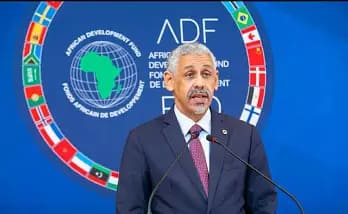
Dr. Sidi Ould Tah argues that Africa’s position in the global economy will no longer be defined by the raw materials it ships abroad, but by the value it creates before those exports leave the continent.
That position is beginning to shape continental policy.
Industrialisation, regional trade, domestic capital markets and value addition are moving to the centre of Africa’s economic strategy as governments seek greater influence over global supply chains instead of remaining suppliers of unprocessed commodities.
Africa Trade Is Strengthening the Continent’s Global Bargaining Power
Africa’s commodity base is becoming a source of negotiating leverage rather than export dependence.
From cocoa, coffee and agricultural products to copper, cobalt, lithium, manganese and rare earth minerals, the continent supplies resources that have become increasingly important to global manufacturing, energy transition and technology supply chains.
Dr. Sidi Ould Tah’s position reflects a broader policy direction already taking shape across the continent.
Africa is seeking greater influence over the terms of trade by negotiating collectively, strengthening regional institutions and linking its resource base to industrial development.
Trade is no longer measured only by export volumes but by the bargaining power those exports create in global markets.
Africa Trade Must Retain More Value Before Export
Africa Trade will gain greater leverage when processing, manufacturing and commercial activity take place closer to the source of production.
Finished and semi-processed exports would retain more earnings, industrial capacity and supply-chain activity within African economies.
Dr. Ould Tah’s position places value creation at the centre of Africa’s negotiating strength.
Owning commodities provides leverage; transforming them before export converts that leverage into production, employment and stronger export revenues.
Industrial Policy Is Redefining Africa’s Export Competitiveness
Industrial policy is becoming the defining force behind Africa Trade.
Domestic crude refining in Nigeria and Ghana, expanding cocoa processing in West Africa and growing mineral beneficiation across several African economies reflect a broader commitment to retain more economic activity before exports enter global markets.
The African Development Bank’s African Economic Outlook 2025 identifies industrialisation and value addition as central to strengthening Africa’s position in regional and global value chains.
Dr. Sidi Ould Tah’s position extends that agenda beyond economic development into geopolitical influence. Africa’s export competitiveness will increasingly be measured by what it produces before export rather than by the volume of raw commodities it ships abroad.
Value Addition Will Redefine Africa’s Export Market
Successful implementation would reshape the commercial logic of Africa Trade.
Investors would direct more capital toward refineries, processing plants, manufacturing facilities and regional supply chains, while exporters would compete increasingly through finished and semi-processed goods rather than raw commodity shipments.
Africa’s competitive advantage would increasingly be measured by industrial output rather than resource ownership alone.
The next phase of Africa Trade will belong to the economies that retain more value before exports reach global markets.


Recent Comments