

Featured Summary:
- Washington wants the IMF to confront economic imbalances and the World Bank to reconsider restrictions on energy financing
- Europe has adjusted the timetable for Basel III market-risk rules amid differences in implementation across major banking jurisdictions
- The Basel Committee is pressing ahead with international standards, although national regulators determine how they are applied
- Developing economies could face changes in lending priorities and cross-border financing conditions as major economies pursue different policies
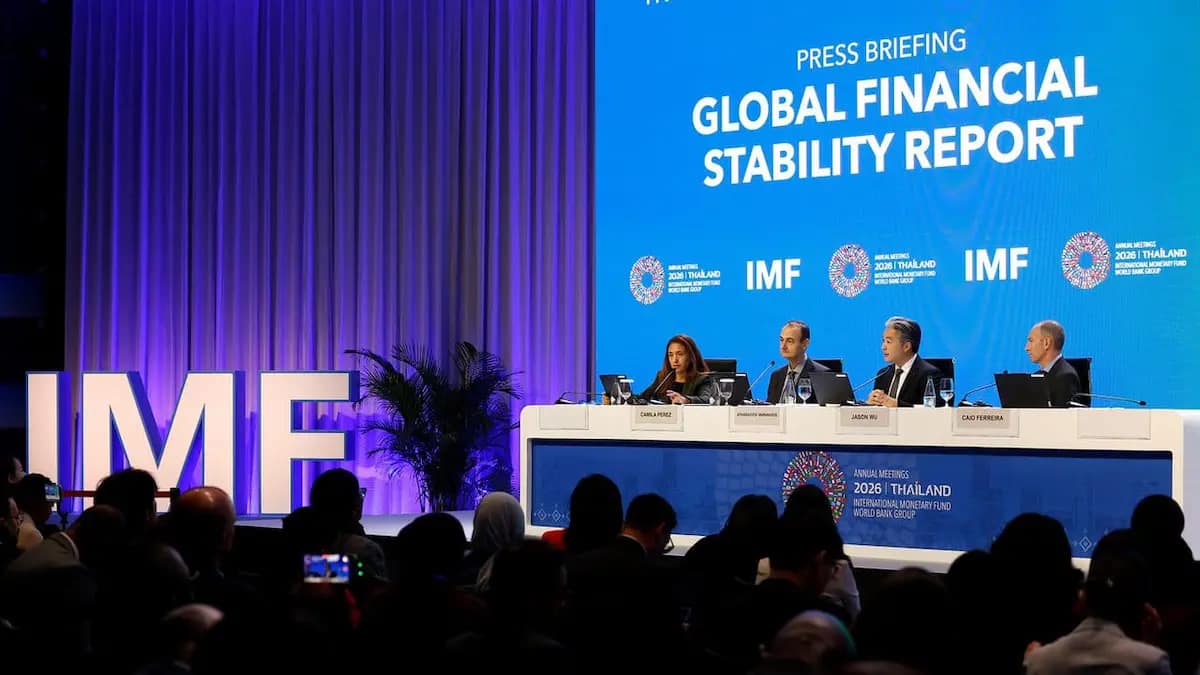
U.S. Treasury Secretary Scott Bessent called on the International Monetary Fund on October 14 to intensify scrutiny of global economic imbalances and non-market policies.
He also urged the World Bank to remove restrictions on financing upstream oil and gas projects and expand support for critical minerals.
The European Commission has adjusted the implementation of Basel III trading-book capital requirements, citing concerns that European banks could face stricter rules than competitors in jurisdictions where the standards have been delayed.
The Basel Committee reported on October 5 that three-quarters of its 27 member jurisdictions had published final rules adopting the full Basel III framework.
The committee sets international banking standards, but their implementation and enforcement remain the responsibility of national authorities.
Washington Seeks Greater Influence Over IMF Oversight and World Bank Lending
China’s industrial subsidies, production overcapacity and exchange-rate practices have drawn sustained criticism from Washington.
The Treasury wants the IMF to examine how such policies contribute to global economic imbalances, particularly when government intervention affects international trade.
The proposed World Bank changes also include reducing lending to countries such as China and Poland, expanding support for critical minerals and revising procurement requirements.
The Bank committed in 2017 to ending financing for new upstream oil and gas projects after 2019, allowing limited exceptions for natural gas in the poorest countries.
The United States holds approximately 16.5% of voting power at the IMF, enough to block major decisions requiring an 85% majority.
Its share at the World Bank’s International Bank for Reconstruction and Development is about 16%, giving Washington considerable influence without unilateral authority over lending policies.
The dollar accounted for approximately 56.7% of global foreign-exchange reserves in the second quarter of 2026, according to IMF data.
The Fund projected U.S. general government debt at about 126% of GDP in 2026. Neither figure establishes a direct connection between Washington’s reform proposals and efforts to preserve dollar-denominated oil trade.
Changes to IMF surveillance priorities and World Bank lending policies remain subject to decisions by their governing bodies.
Europe Adjusts Basel III Trading Rules as U.S. and UK Timetables Diverge
The European Commission introduced temporary changes to Basel III trading-book requirements on June 4, scheduled to apply from January 2027 through December 2029.
The Commission said existing EU law did not permit another postponement after an earlier two-year delay.
The changes followed concerns that European banks would face higher capital charges on trading activities than competitors in jurisdictions still operating under older requirements.
The affected business includes trading in government bonds, foreign exchange and derivatives.
U.S. banking regulators proposed revised capital rules in March, including changes to market-risk calculations for banks with substantial trading operations. The proposals remain under consideration.
Britain’s Prudential Regulation Authority has scheduled most Basel 3.1 requirements for January 1, 2027, with its new internal-model approach for market risk following in January 2028.
The different schedules could affect how banks price and allocate capital to international trading business, particularly where institutions compete across financial centres under separate regulatory requirements.
Basel Committee Tracks Uneven Adoption of Global Banking Rules
The Basel Committee’s October 5 report found that the full set of final Basel III standards was in force in 47% of its member jurisdictions at the end of September.
Revised credit-risk and operational-risk requirements, along with the output floor for risk-weighted assets, had taken effect in around 85%. Market-risk rules were effective in just over 40%.
Nearly all member jurisdictions have announced plans to apply the remaining standards by April 2027 or earlier.
The committee expects implementation to be nearly complete during the first half of that year, four years after the agreed January 2023 starting date for the final reforms.
The committee monitors national adoption through its Regulatory Consistency Assessment Programme, which also examines whether domestic regulations comply with Basel standards.
It can identify shortcomings and publish assessments, but its decisions have no legal force. National authorities retain responsibility for making the requirements binding on banks.
For internationally active banks, differences in implementation can mean separate capital calculations for comparable trading exposures across jurisdictions.
The Basel framework sets common minimum requirements, but member authorities determine how those standards enter domestic law and may impose stricter rules.
Developing Economies Face Financing Decisions Made Beyond Their Borders
Low- and middle-income countries paid $741 billion more in external debt service than they received in new financing between 2022 and 2024, according to the World Bank’s 2025 International Debt Report. It was the largest such gap in at least 50 years.
Changes to IMF oversight and World Bank lending priorities could affect governments seeking multilateral financing.
International banks may also adjust cross-border lending as capital requirements change, adding to the pressures on borrowers already exposed to dollar-denominated debt and exchange-rate movements.
Washington’s proposals require approval within the IMF and World Bank, while national regulators retain authority over the remaining Basel III reforms.
The countries most dependent on external financing will have to respond to those decisions without comparable influence over how they are made.


Recent Comments