

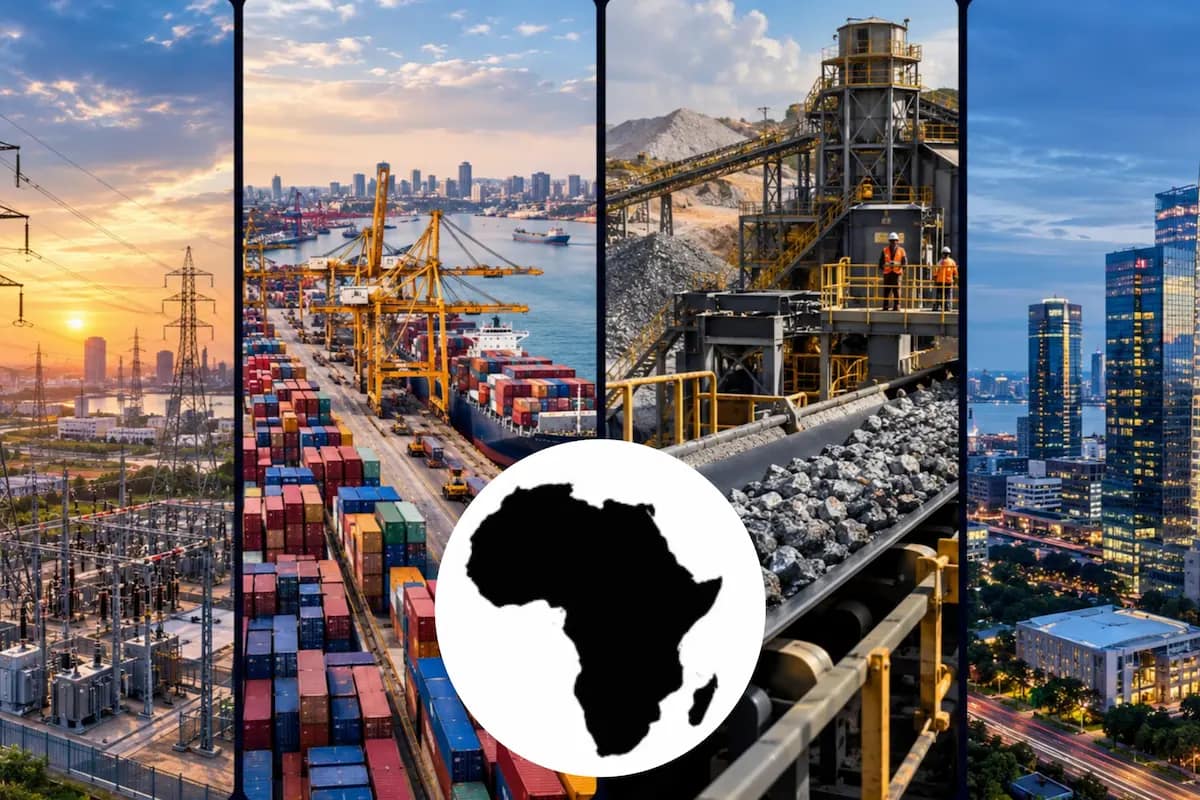
Featured Summary:
- Power infrastructure stands out as a major destination for long-term capital
- AfCFTA could open more investment across a connected continental market
- Mineral processing could keep more resource value within the continent
- Digital investment could bring more Africans into the productive economy
Mission 300 aims to connect 300 million Africans to electricity by 2030. About 600 million people in sub-Saharan Africa were still without electricity in 2024, and fewer than 19 million gained access during the year. In 2019, the increase was 23 million.
Less than $2.5 billion was committed to electricity access in 2023. The IEA estimates about $15 billion is needed each year to reach universal access within the next decade.
Electricity consumption averaged 377 kilowatt-hours per person in sub-Saharan Africa in 2023. The European Union recorded 5,998 kWh per person in 2024 and the United States 12,839 kWh.
African financial institutions hold more than $4 trillion in domestic savings and assets. Infrastructure needs run between $130 billion and $170 billion a year. Between $68 billion and $108 billion of that remains unfunded.
Africa’s Capital Is Missing Its Infrastructure Opportunity
Less than 2.7% of African institutional balance-sheet assets goes into infrastructure and other long-term productive investment on the continent, according to the African Development Bank.
Bills and bonds accounted for an average 44.4% of pension portfolios at the end of 2023. Federal government securities held 64.9% of pension assets in Nigeria; the share in Ghana was 81%.
GEL raised ₦13 billion in Nigeria through a 15-year infrastructure bond paying 15.15%.
InfraCredit and USAID provided guarantees, helping the bond secure AAA local credit ratings. Ten domestic pension funds were among the 12 institutional investors that subscribed.
GEL borrowed in naira, limiting the currency exposure attached to foreign financing, while the guarantees covered part of the credit risk.
The pension funds accepted exposure extending 15 years. More infrastructure capital depends on projects reaching terms that fund managers can accept for money they are required to protect.
AfCFTA Trade Barriers Are Raising the Cost of African Investment
Intra-African trade reached $220.3 billion in 2024, up 12.4% from the previous year. AfCFTA expands the market available to companies producing within Africa, including manufacturers seeking customers beyond their home countries.
Pension funds investing in those businesses gain exposure to revenues generated across a wider regional market.
Road transport accounts for about 29% of the price of goods traded within Africa, according to UNCTAD, against 7% for goods shipped outside the continent.
The World Bank estimates that about 60% of Africa’s trade costs originate within individual countries. Customs procedures and non-tariff barriers add expenses as companies move goods between markets covered by the agreement.
A factory financed with pension money may serve customers in several countries while production remains in one. Delays at the border increase transport charges, keep inventory in transit longer and affect the revenue expected from those sales.
AfCFTA allows businesses to report non-tariff barriers through its reporting mechanism, but resolution still rests with the countries involved. Those costs remain on the books of the businesses receiving the investment.
Africa’s Mineral Wealth Needs Processing Capital and Predictable Policy
Africa exported $176 billion of critical minerals in 2024, according to UNCTAD data covering 60 minerals.
The Democratic Republic of the Congo supplied almost two-thirds of the world’s mined cobalt that year. About three-quarters of global cobalt refining took place in China.
A battery-precursor project studied for the DRC and Zambia was estimated at $2.7 billion. Projects at that scale do not have to be financed entirely from mining-company balance sheets.
Pension funds can provide long-term debt through corporate or infrastructure bonds issued to finance processing plants.
They can also invest through private-market funds where pension regulations permit it. The underlying plant then produces the cash flow used to service that capital.
The length of the investment brings government policy into the financing. Zimbabwe now charges 10% VAT on exports of unbeneficiated lithium ore and concentrates, while lithium sulphate exports are zero-rated.
A pension fund buying long-dated debt issued for a processing plant remains exposed to changes in those rules during the life of the investment.
Mineral processing can absorb long-term capital, but the financing has to survive beyond the policy in place when the plant is built.
Africa’s Capital Has to Build the Consumers and Workers Behind Its Returns
Internet use reached 36% of Africa’s population in 2025, according to the ITU, while mobile-phone ownership was 66% in 2024.
The difference puts connectivity investment alongside the other physical assets competing for long-term capital on the continent.
MTN served 317.7 million customers across 19 markets by June 2026. It committed almost R20 billion in capital expenditure during the first half of the year, after investing R38 billion in networks and platforms in 2025.
That spending provides a record of private capital building telecommunications infrastructure across multiple African markets.
Pension and insurance funds can participate in the financing of networks and other digital infrastructure where the assets produce investable cash flows.
Education and skills remain a separate financing problem, but they shape the workforce and consumer market using that infrastructure.
Africa’s $4 Trillion Capital Pool includes money with obligations to pensioners, policyholders and other beneficiaries. Part of it will remain in foreign assets.
A larger domestic allocation depends on African projects meeting the investment terms required by the institutions managing that money.


Recent Comments