

Featured Summary:
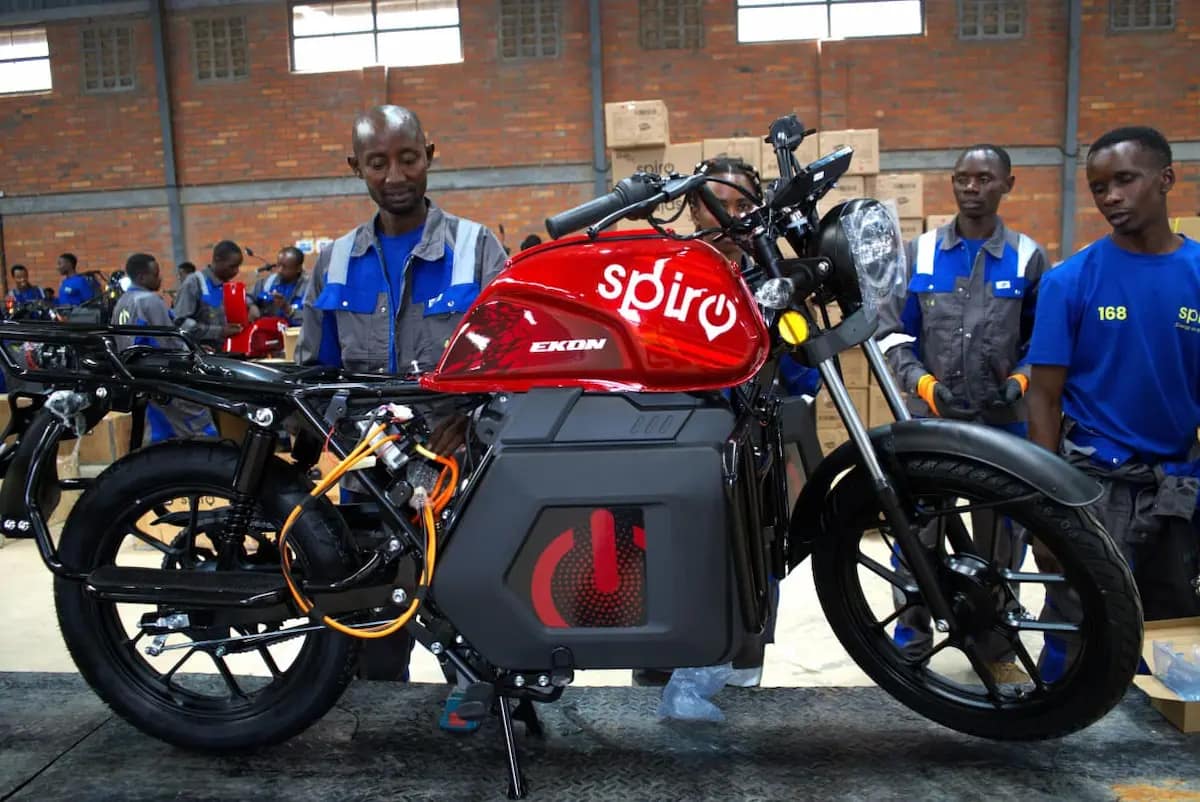
- Spiro Electric Motorcycles are moving from fleet expansion into deeper engineering control.
- Spiro’s Coexlion acquisition supports product design, validation, localisation, and R&D capacity.
- Battery swap stations remain central to Spiro’s expansion across African mobility markets.
- African EV competition is shifting from imported technology toward local capability and product ownership.
Africa’s electric mobility sector is entering a harder phase.
The first test was whether electric motorcycles could work inside African transport markets.
The next test is whether African EV companies can control the technology behind them.
Spiro’s acquisition of UK engineering and design firm Coexlion puts that question at the centre of the continent’s mobility race.
The deal supports Spiro’s plan to build its first African R&D centre in Nairobi and signals a larger move from vehicle deployment toward engineering ownership.
Are Spiro Electric Motorcycles Built for Africa?
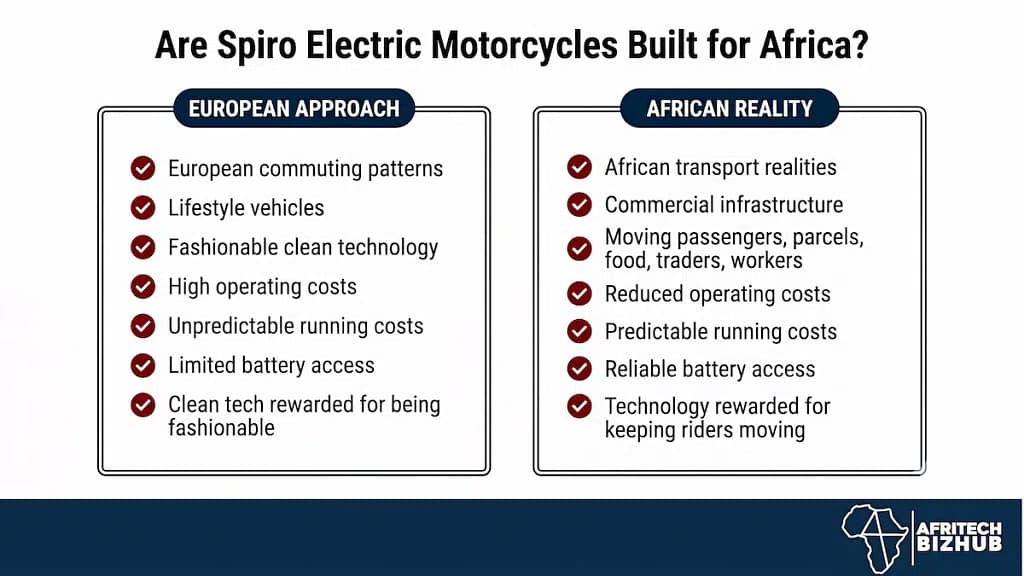
Electric motorcycles only work in Africa if they reduce operating costs, limit downtime, and survive demanding commercial use.
Spiro’s model is built around that pressure point.
Its motorcycles target riders whose income depends on vehicle availability, battery access, and predictable running costs.
The opportunity is large, but unforgiving. African mobility does not reward clean technology because it is fashionable. It rewards technology that keeps riders moving.
Electric motorcycles only work in Africa if they reduce operating costs, limit downtime, and survive demanding commercial use.
Spiro’s model is built around that pressure point.
Its motorcycles target riders whose income depends on vehicle availability, battery access, and predictable running costs.
The opportunity is large, but unforgiving.
African mobility does not reward clean technology because it is fashionable.
It rewards technology that keeps riders moving.
Why Is Spiro Shifting to R&D Control?
The Coexlion acquisition is not just another expansion headline.
It is a control move.
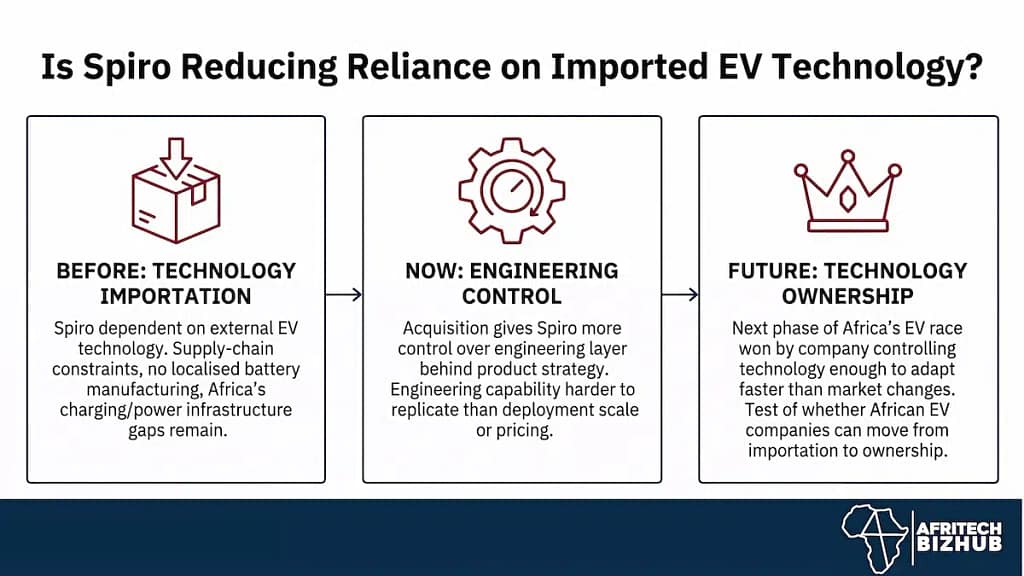
Spiro is buying engineering capability at a time when African EV companies face a strategic ceiling.
Importing vehicles, assembling parts, and deploying fleets can build market presence.
It does not automatically build technology power.
Coexlion gives Spiro access to specialist two-wheeler and EV engineering capacity, including product design, validation, and development support.
That matters because Spiro’s long-term challenge is not only to sell more motorcycles.
It must adapt vehicles, batteries, and systems to African roads, rider behaviour, climate conditions, and cost pressures.
Spiro Electric Motorcycles cannot depend indefinitely on imported design logic.
The company is moving closer to the part of the value chain where real competitive advantage is built.
Do Battery Swap Stations Power Spiro Expansion?
Vehicles alone will not decide Africa’s electric mobility market.
Infrastructure will.
Battery swap stations sit at the centre of Spiro’s growth model because they address the biggest operational weakness in electric two-wheel transport: downtime.
Commercial riders cannot afford to wait hours for charging.
They need rapid battery replacement, predictable access, and dense station coverage.
That is why battery swap is not a side feature.
It is the operating system of Spiro’s expansion.
Reports on Spiro’s African operations point to tens of thousands of deployed electric motorcycles, millions of battery swaps, and a growing network of swap stations across multiple markets.
Those numbers matter because EV adoption in Africa will rise only where infrastructure keeps pace with vehicle deployment.
A motorcycle without reliable battery access is not a mobility solution.
It is stranded hardware.
How Does Global Mobility Reshape African EVs?
Global mobility is moving toward electrification, but Africa’s position within that transition remains unsettled.
According to the International Energy Agency’s Global EV Outlook 2025, electric vehicle adoption continues expanding across major markets, supported by falling battery costs, growing investment, and wider deployment of charging and energy infrastructure.
While Africa currently represents a relatively small share of global EV sales, the report reinforces a broader reality: electrification is becoming a structural part of the global transport industry rather than a niche market trend.
For Spiro Electric Motorcycles, that shift creates both opportunity and pressure.
African EV companies can benefit from advances in battery technology, engineering expertise, and global investment flowing into electric mobility.
At the same time, excessive dependence on imported technology leaves manufacturers vulnerable to supply-chain disruptions, pricing pressures, and limited influence over future product development.
This is where Spiro’s acquisition becomes strategically significant.
The company is not simply expanding its engineering resources.
It is positioning itself closer to the technology layer that increasingly determines competitiveness within the global EV market.
Global mobility will not automatically create African industrial capability. That capability must be built, acquired, and defended.


Recent Comments