


Featured Summary:
- FairMoney is shifting credit from short-term borrowing toward productive assets.
- Mobility financing is turning transport access into a credit product.
- Entrepreneurs are gaining earlier access to income-generating finance.
- Loan apps are competing to fund business activity, not repeat borrowing.
FairMoney is shifting credit away from short-term cash access and toward assets that generate income.
The move places the company inside one of Nigeria’s most persistent economic constraints: access to productive transport and business infrastructure.
For many entrepreneurs and SMEs, growth is not blocked by demand alone.
It is constrained by movement, asset affordability, and slower access to formal finance.
Mobility financing changes that relationship by tying borrowing more directly to earning capacity.
The stronger signal is broader than one lender.
Nigeria’s credit market is beginning to reward productivity over consumption.
How Does FairMoney Expand Mobility Financing Access?
Transport access increasingly behaves like a financing constraint before it becomes an infrastructure constraint.
Many small businesses lose growth opportunities long before they run out of customers.
Delivery costs rise, operating radius stays limited, and expansion slows because productive assets remain expensive to acquire.
Mobility financing changes the entry point.
Instead of waiting to accumulate capital, borrowers gain access to assets that support work, transport activity, logistics, and business continuity.
FairMoney enters this segment at a time when digital lending faces stronger pressure to prove economic outcomes rather than loan volume.
Financing mobility changes underwriting logic.
Existing asset ownership becomes less important than expected cash generation.
The result is a lending model tied more directly to productivity than consumption.
What Drives FairMoney’s Digital Lending Innovation Strategy?
FairMoney’s lending strategy is moving closer to how customers generate income.
Short-duration lending created scale across Nigeria’s digital credit market but exposed a limit: loan growth does not automatically produce stronger repayment quality.
Platforms increasingly need borrowers who earn more, retain longer, and repay more consistently.
That pressure is pushing lending models toward transport, business operations, payments, and productive assets.
FairMoney’s direction shows a wider shift inside digital lending.
Future growth depends less on issuing more credit and more on financing assets that strengthen customer earning power.
Credit quality and productivity are becoming harder to separate.
How Is Digital Lending Expanding Credit Access For Entrepreneurs?
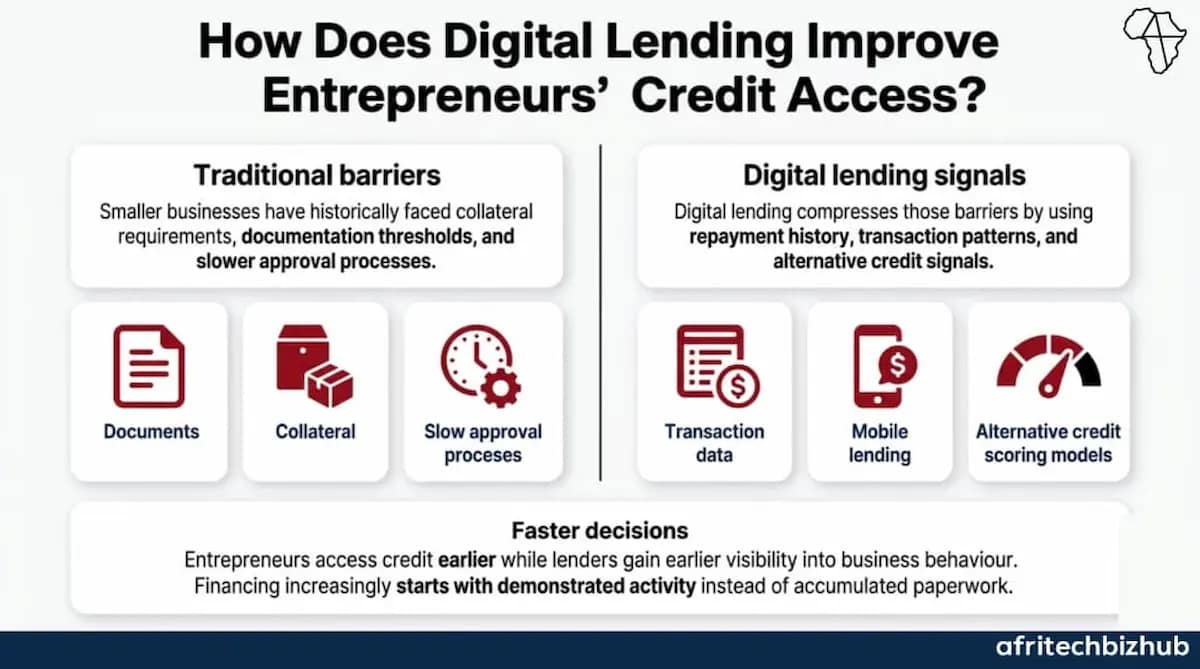
Entrepreneurs credit is increasingly being built through economic activity rather than traditional qualification barriers.
Smaller businesses have historically faced collateral requirements, documentation thresholds, and slower approval processes that restrict access to finance.
Digital lending compresses those barriers by using repayment history, transaction patterns, and alternative credit signals to accelerate decisions.
The World Bank continues to identify digital financial services as an important driver of financial inclusion and access expansion for underserved populations and smaller enterprises.
The implication is practical.
Entrepreneurs access credit earlier while lenders gain earlier visibility into business behaviour.
Financing increasingly starts with demonstrated activity instead of accumulated paperwork.
What Role does Loan App in Nigeria Play for SMEs?
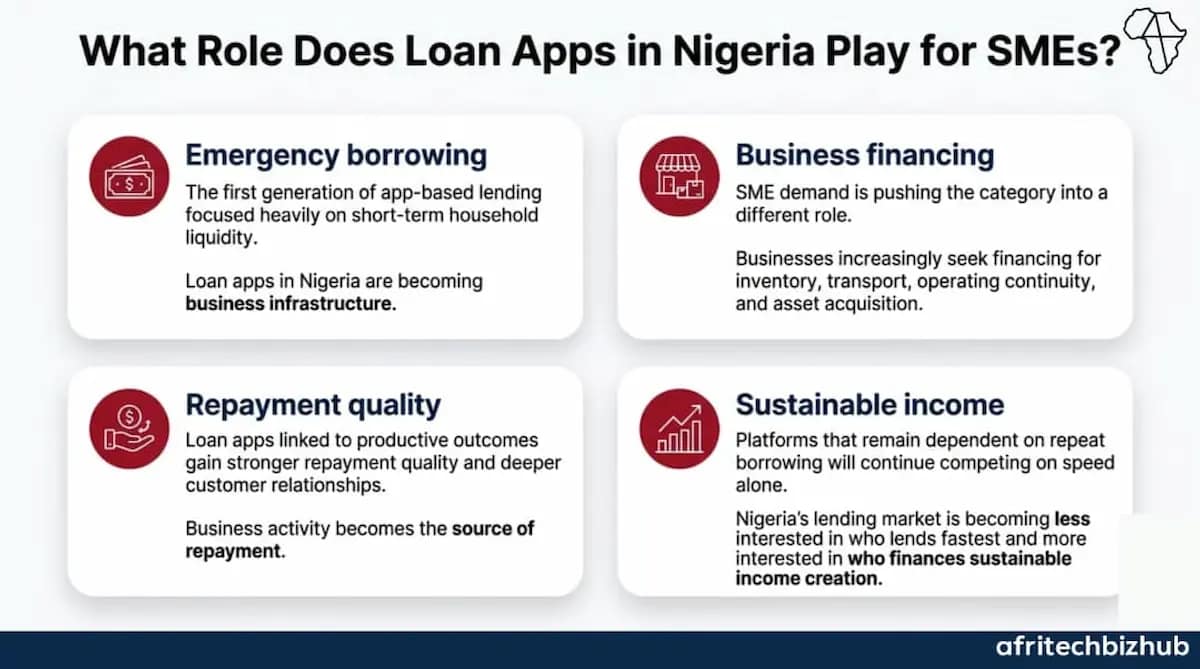
Loan apps in Nigeria are becoming business infrastructure.
The first generation of app-based lending focused heavily on emergency borrowing and short-term household liquidity.
SME demand is pushing the category into a different role.
Businesses increasingly seek financing for inventory, transport, operating continuity, and asset acquisition rather than temporary consumption.
That transition matters for platforms such as FairMoney.
Lending platforms that remain concentrated around short-duration borrowing will continue competing on speed alone.
Platforms linked to productive outcomes gain stronger repayment quality and deeper customer relationships because business activity becomes the source of repayment.
Nigeria’s lending market is becoming less interested in who lends fastest and more interested in who finances sustainable income creation.


Recent Comments