


Featured Summary:
- African Startups are expanding across payments, logistics, AI, climate technology, healthcare, and digital commerce.
- Bloomberg African startups to watch reflects rising global investor interest in scalable businesses solving major market inefficiencies.
- African innovation growth continues attracting international capital while local institutional participation remains limited.
- Venture capital in Africa is becoming more selective, rewarding startups with stronger business models and regional expansion potential.
The conversation around African startups has changed.
A decade ago, investors focused on potential.
Today, they focus on execution.
Across the continent, startups are building businesses around payments, logistics, healthcare, artificial intelligence, climate resilience, and digital commerce.
Venture funding has slowed from the peak years of global liquidity, yet investor attention has not disappeared.
The reason is straightforward.
Many African startups are solving commercial problems that remain unresolved across some of the world’s fastest-growing markets.
That combination continues attracting capital, talent, and international interest despite a more difficult funding environment.
How Are African Startups Accelerating Continental Economic Transformation?
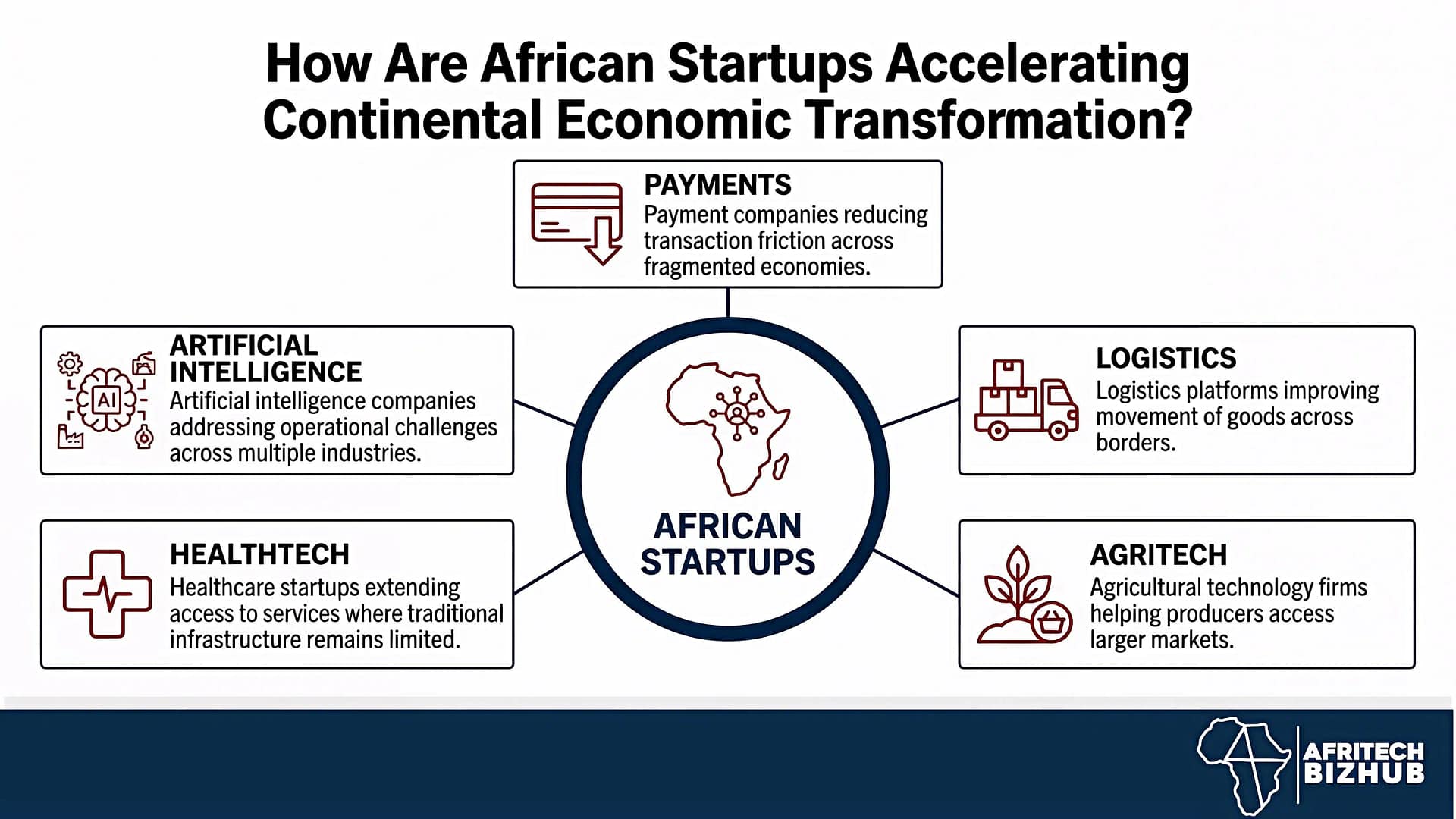
African Startups are increasingly operating inside sectors that directly influence economic productivity.
Payment companies are reducing transaction friction.
Logistics platforms are improving the movement of goods.
Agricultural technology firms are helping producers access larger markets.
Healthcare startups are extending access to services where traditional infrastructure remains limited.
Artificial intelligence companies are beginning to address operational challenges across multiple industries.
The significance extends beyond technology.
Many of these businesses are building commercial infrastructure around structural gaps that have constrained economic activity for decades.
They are creating systems that improve efficiency, lower costs, and expand market access across fragmented economies.
African innovation growth is increasingly becoming an economic story rather than a technology story.
The startups attracting attention are often solving practical commercial problems at scale.
Why Are Bloomberg African Startups to Watch Gaining Global Attention?
Global investors rarely allocate capital based on geography alone.
They allocate capital where they see growth opportunities.
The Bloomberg African startups to watch narrative has gained momentum because several African companies operate within markets where digital adoption continues expanding, competition remains fragmented, and customer demand remains underserved.
These are conditions investors actively seek.
Africa’s demographic profile strengthens that case.
The continent hosts one of the world’s youngest populations, rapidly increasing smartphone penetration, expanding digital payment usage, and growing participation in digital commerce.
Investors are not watching African startups simply because they are based in Africa.
They are watching because some of these companies are building businesses capable of serving large and expanding markets while addressing challenges that remain commercially significant.
The attention follows opportunity.
Can African Innovation Growth Attract More Local Investors?
African innovation growth continues attracting international investors, but domestic participation remains comparatively limited.
This remains one of the ecosystem’s most important contradictions.
African pension funds, insurance assets, family offices, and institutional investors collectively manage significant pools of capital.
Yet startup financing across many markets continues relying heavily on foreign venture capital and international investment vehicles.
The International Finance Corporation has repeatedly highlighted entrepreneurship, innovation, and technology-enabled businesses as important drivers of productivity, job creation, and private-sector development across emerging markets.
The institution’s position reflects a broader reality.
Sustainable startup ecosystems typically strengthen when domestic capital participates alongside international capital.
Local investors often understand market conditions, regulatory environments, and consumer behaviour better than foreign investors.
The next phase of African innovation growth may depend as much on local capital mobilisation as it does on technological innovation itself.
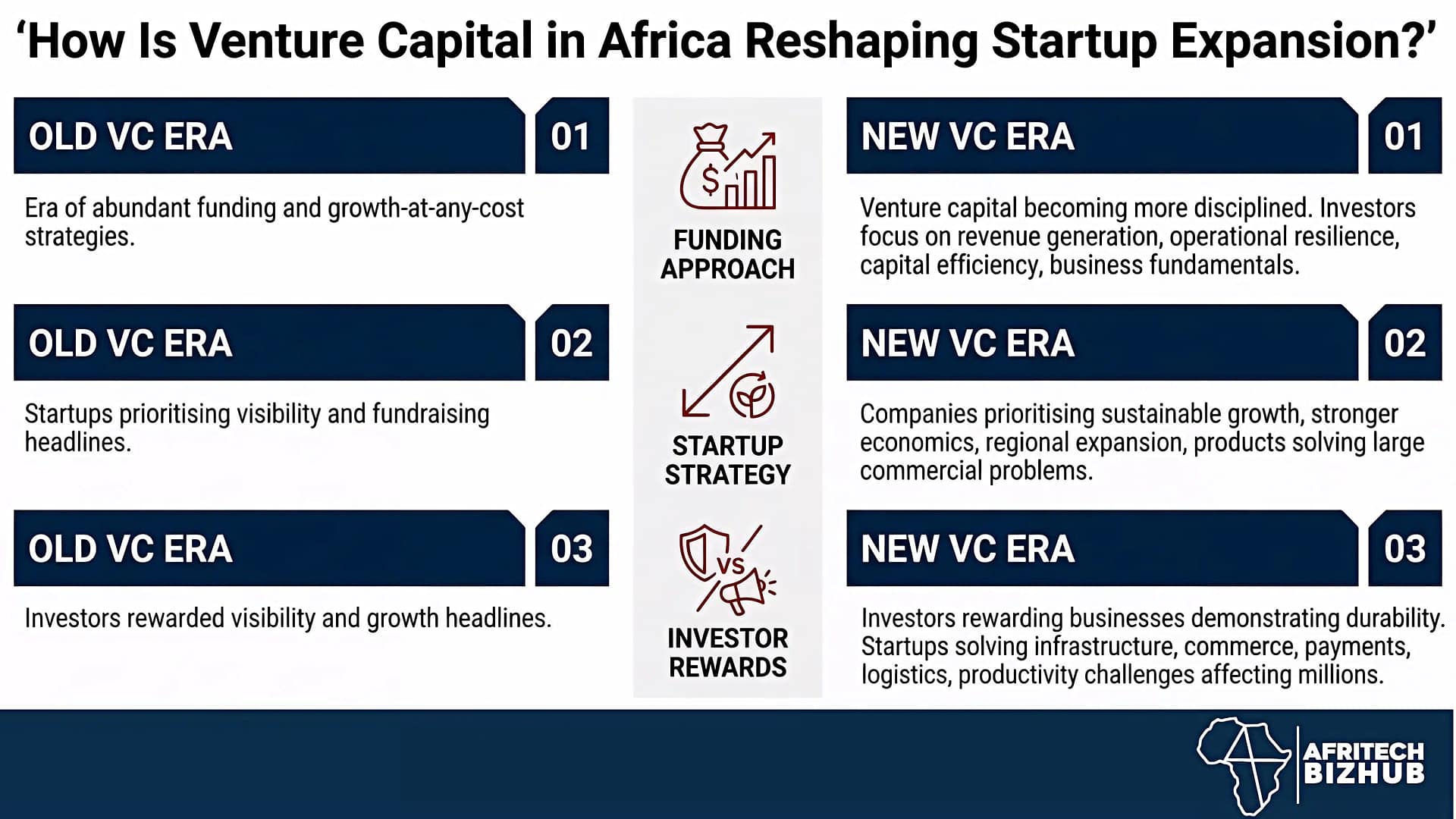
How Is Venture Capital in Africa Reshaping Startup Expansion?
Venture capital in Africa is becoming more disciplined.
The era of abundant funding and growth-at-any-cost strategies has weakened.
Investors increasingly focus on revenue generation, operational resilience, capital efficiency, and business fundamentals. Funding remains available, but expectations have changed.
That shift is influencing how startups expand.
Companies are prioritising sustainable growth, stronger economics, regional expansion strategies, and products capable of solving large commercial problems.
Investors are increasingly rewarding businesses that demonstrate durability rather than visibility.
This is not necessarily a setback for the ecosystem.
Markets mature when capital becomes selective.
The startups attracting funding today are increasingly solving infrastructure, commerce, payments, logistics, and productivity challenges affecting millions of people across the continent.
The next generation of African startups will not be defined by fundraising headlines.
They will be defined by their ability to build durable businesses across fragmented markets and convert innovation into economic value.


Recent Comments