


Featured Summary:
- MTN revenue shows Nigeria generated more service income, but Ghana delivered a larger tax contribution.
- MTN financial results demonstrate that revenue and taxes do not always align.
- Telecom taxes depend on fiscal frameworks, regulatory fees, and sector-specific levies beyond revenue alone.
- Observed patterns indicate governments capture telecom value differently, influencing fiscal outcomes across African markets.
MTN Nigeria generated higher revenue than MTN Ghana in 2025, serving a larger population and operating in Africa’s biggest telecom market.
Yet MTN Ghana paid more in taxes and levies, revealing a tension between business scale and fiscal contribution.
Observed across African telecom markets, revenue does not automatically dictate tax outcomes.
Differences in regulatory frameworks, tax structures, sector levies, and reporting obligations shape how operators contribute to public finances.
The MTN financial results demonstrate that fiscal policy design, not just market size, determines government revenue from telecom operators.
Why Did MTN Nigeria Pay Less Tax?
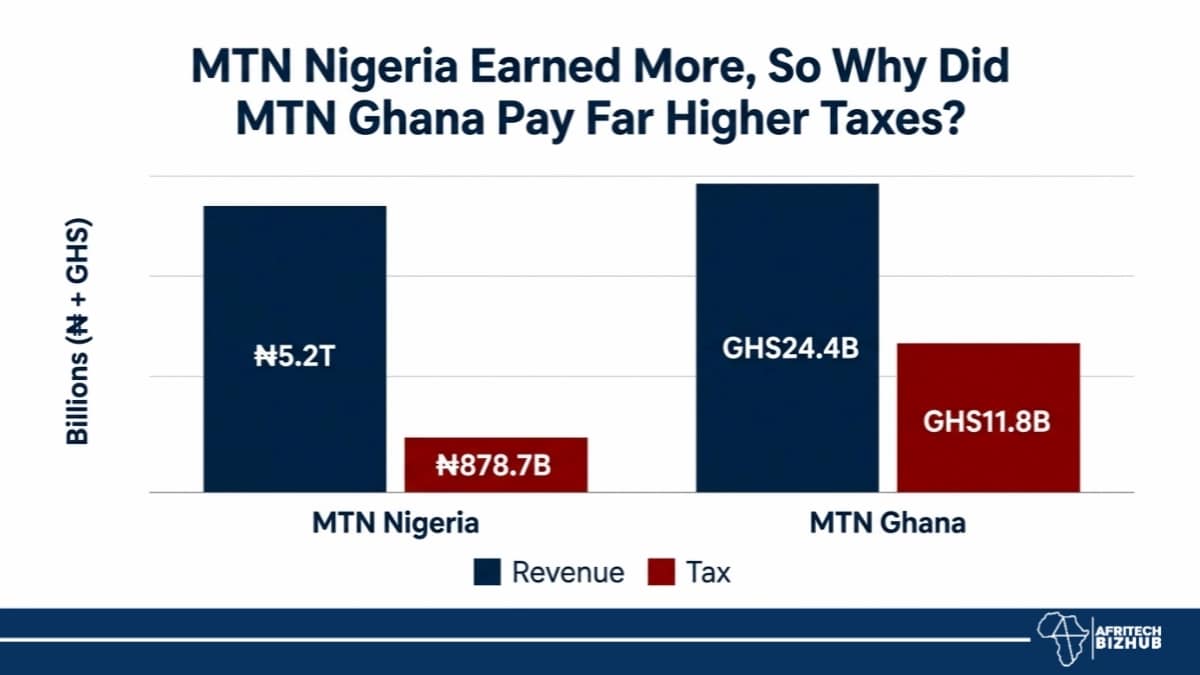
MTN Nigeria reported ₦5.2 trillion in service revenue for 2025 and returned to profitability following FX pressures.
It paid ₦878.7 billion in taxes and levies.
Revenue alone did not drive this outcome.
Corporate income tax, indirect taxes, and regulatory levies differ from market to market, influencing total fiscal contribution.
Larger revenue does not necessarily translate into higher tax payments.
Patterns show that MTN revenue and tax contributions capture distinct dimensions of business performance: one reflects commercial activity, the other how governments extract value from that activity.
How Did MTN Ghana Generate Higher Taxes?
MTN Ghana reported GHS24.4 billion in service revenue for 2025, lower than Nigeria.
Yet it contributed GHS10.5 billion in direct and indirect taxes, plus GHS1.3 billion in fees and levies.
The discrepancy illustrates how fiscal frameworks, sector-specific levies, and regulatory obligations can amplify tax contributions irrespective of overall revenue.
Across African telecom markets, these mechanisms allow smaller operators to contribute proportionally more.
Observed patterns show tax collections depend as much on policy design and levy combinations as on total service revenue, creating structural differences across jurisdictions.
What Do MTN Financial Results Really Reveal?
MTN financial results reveal that revenue is only one measure of business scale.
Investors watch revenue for growth signals, but governments track taxes for fiscal value.
The Nigeria-Ghana comparison underscores that revenue alone cannot predict fiscal contribution.
Telecom operators influence public finances not just by earning but through the structure of obligations imposed on them.
Across African markets, large operators’ economic impact extends beyond connectivity to government revenue generation.
Why is MTN Revenue Not Driving Taxes?
MTN revenue alone does not determine tax outcomes because fiscal frameworks differ significantly across African markets.
The Nigerian Communications Commission (NCC) data shows that total tax contributions vary by how governments structure levies, regulatory fees, corporate taxes, and sector-specific charges rather than by revenue alone.
Observed patterns indicate that two subsidiaries within the same corporate group can generate different fiscal outcomes.
Revenue signals business scale, but total taxes reflect regulatory design, levy combinations, and compliance obligations set by authorities like the NCC.
This illustrates a broader continental lesson: governments capture value differently across jurisdictions, and fiscal frameworks are as decisive as revenue in shaping actual public contributions.
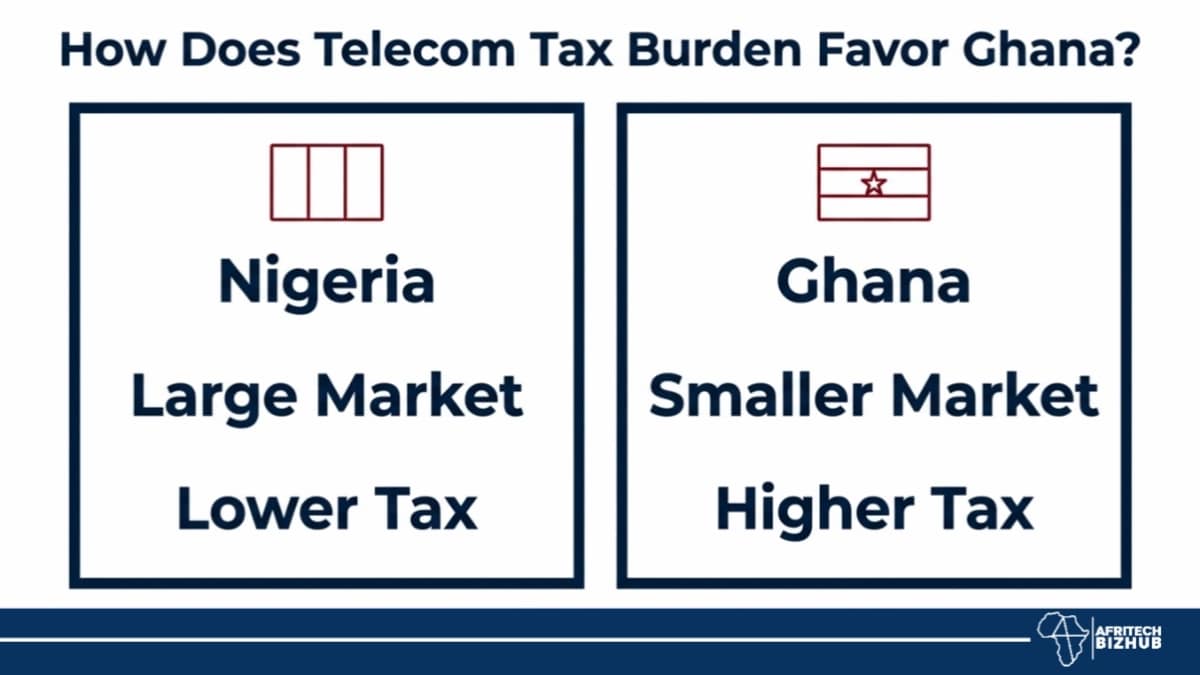
How Does Telecom Tax Burden Favor Ghana?
From a fiscal perspective, Ghana extracted more revenue from MTN despite a smaller market.
Direct and indirect taxes, sector levies, and regulatory fees collectively produced a higher total contribution than MTN Nigeria.
This demonstrates that governments capture telecom value differently.
Observed patterns across African markets suggest that fiscal design, not market size, is the primary driver of tax outcomes.
Telecom taxation is therefore a structural tool, with MTN Ghana’s higher contribution reflecting policy choices rather than sheer revenue volume.


Recent Comments