


Featured Summary:
- Google Transit integration by Shuttlers is improving route visibility, reducing commute uncertainty, and streamlining urban transport.
- Shared Mobility solutions are expanding rapidly as city residents demand convenience and digital-first services.
- Urban Transport patterns in Nigeria and across Africa are shifting toward app-based, trackable, and professional commuting.
- Google Maps plays a pivotal role in enabling real-time routing and access, boosting Shuttlers’ adoption among professionals.
Commuters in Nigeria and across African cities face unpredictable travel times, congested routes, and limited transparency in traditional public transport.
Shuttlers’ adoption of Google Transit introduces a new model where app-based tracking, real-time updates, and professional scheduling reduce uncertainty.
Observed patterns suggest that commuters are quickly shifting to digital-first transport options, challenging legacy commuting systems and signaling a structural change in how urban mobility operates across Africa.
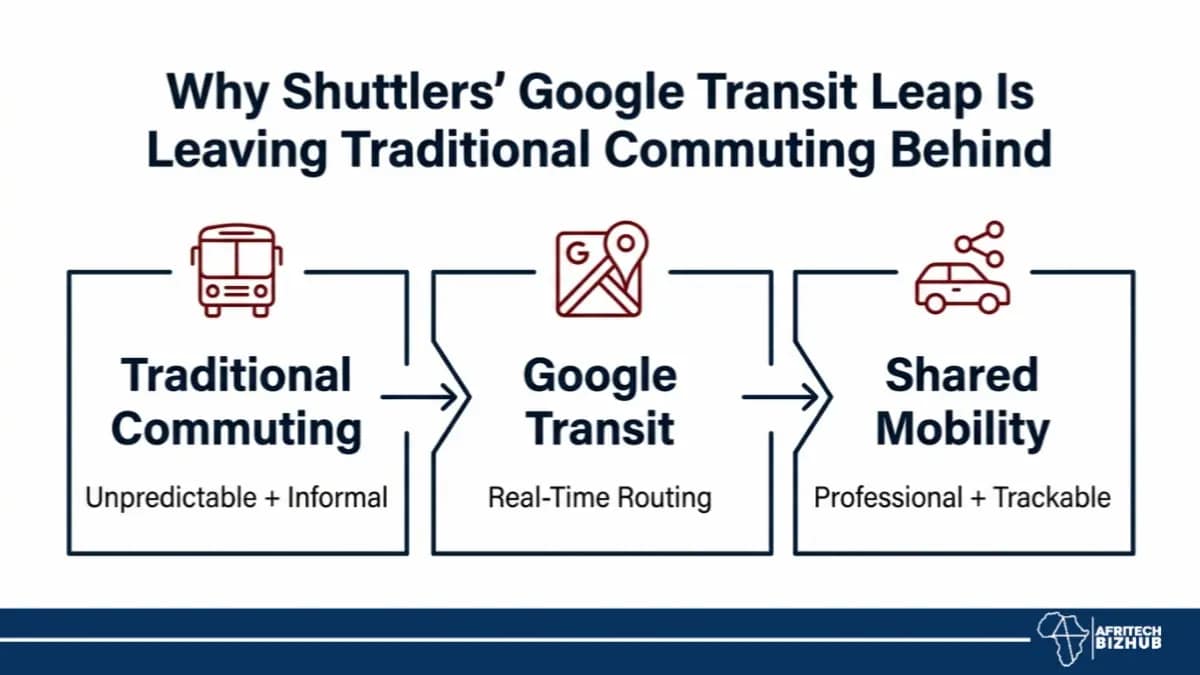
How Does Google Transit Improve Daily Commuting in Africa?
Google Transit integrates public transport schedules, route mapping, and real-time traffic data to create a seamless commuting experience.
With Shuttlers, commuters can visualize optimal routes, estimate arrival times, and plan multi-leg journeys across cities.
Observed adoption patterns show that route predictability increases commuter confidence, reduces time lost in transit, and enhances scheduling reliability.
In congested urban corridors, the ability to track vehicles and estimate arrival times changes daily commuting from uncertain to structured.
Across African cities, the integration of Google Transit with Shared Mobility platforms demonstrates that digital visibility transforms user behavior, shifting preference away from informal or manual route planning to professional, app-based options.
Why is Shared Mobility Gaining Momentum Fast?
Shared Mobility platforms like Shuttlers are expanding quickly due to convenience, affordability, and digital integration.
Users increasingly prefer predictable travel schedules and cashless, trackable payments.
Observed trends indicate that adoption accelerates when platforms combine mobility with real-time tools like Google Maps.
Shared vehicles can be scheduled efficiently, reducing downtime and optimizing route coverage.
The broader shift across African urban transport reflects a growing preference for digital-first solutions where operators provide reliable, professional services and users gain control over their commuting experience.
How is Urban Transport Evolving Across Nigeria and Africa?
Urban transport is moving from informal, untracked systems toward structured, app-enabled networks.
Professional commuter services, like Shuttlers, are using Google Transit to integrate multiple transport modes, improving reliability and efficiency.
Data shows that commuters increasingly favor predictable and safe services, which encourages investment in fleet management, digital ticketing, and professional scheduling.
This evolution is mirrored in Lagos, Nairobi, Accra, and Cape Town, highlighting a continental trend where tech-enabled urban transport is displacing traditional, informal options.
Observed behavior suggests that cities adopting digital-first mobility solutions experience faster uptake, higher commuter satisfaction, and a measurable shift in modal preferences.
Why is Google Maps Key To Transit Access?
Google Maps provides the routing backbone that enables Shuttlers to offer real-time transit visibility.
By mapping routes, showing traffic conditions, and integrating public and private transport data, it allows users to plan trips efficiently.
Observed usage shows that commuters rely on Google Maps to select optimal pick-up points, minimize delays, and track vehicle locations.
Access to these tools accelerates the adoption of professional commuting services and encourages users to transition from informal transport networks.
Institutional support and urban mobility research indicate that platforms leveraging Google Maps increase route reliability, reduce congestion impact, and improve commuter experience.
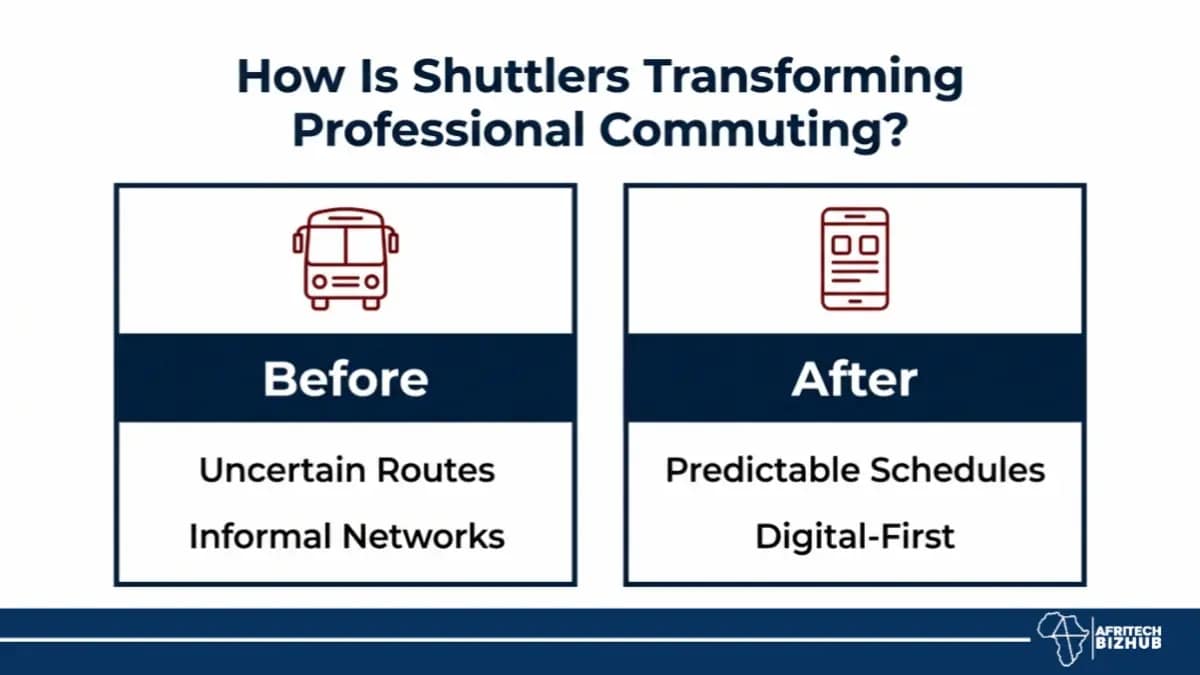
How is Shuttlers Transforming Professional Commuting?
Shuttlers’ integration of Google Transit and app-based booking transforms professional commuting by offering predictable schedules, real-time updates, and cashless payments.
Observed patterns suggest that daily commuters now optimize travel time, reduce uncertainty, and rely on verified routes rather than informal networks.
Across Nigerian and other African cities, professional commuters are increasingly shifting to structured, technology-enabled mobility solutions.
The broader impact shows that Shuttlers is not just moving passengers; it is reshaping urban transport behavior, reinforcing digital-first commuting, and setting new standards for reliability and accessibility.


Recent Comments