

Featured Summary:
- Africa Infrastructure Financing is expanding through AfDB, AFC, Afreximbank, ATIDI, and growing institutional capital pools
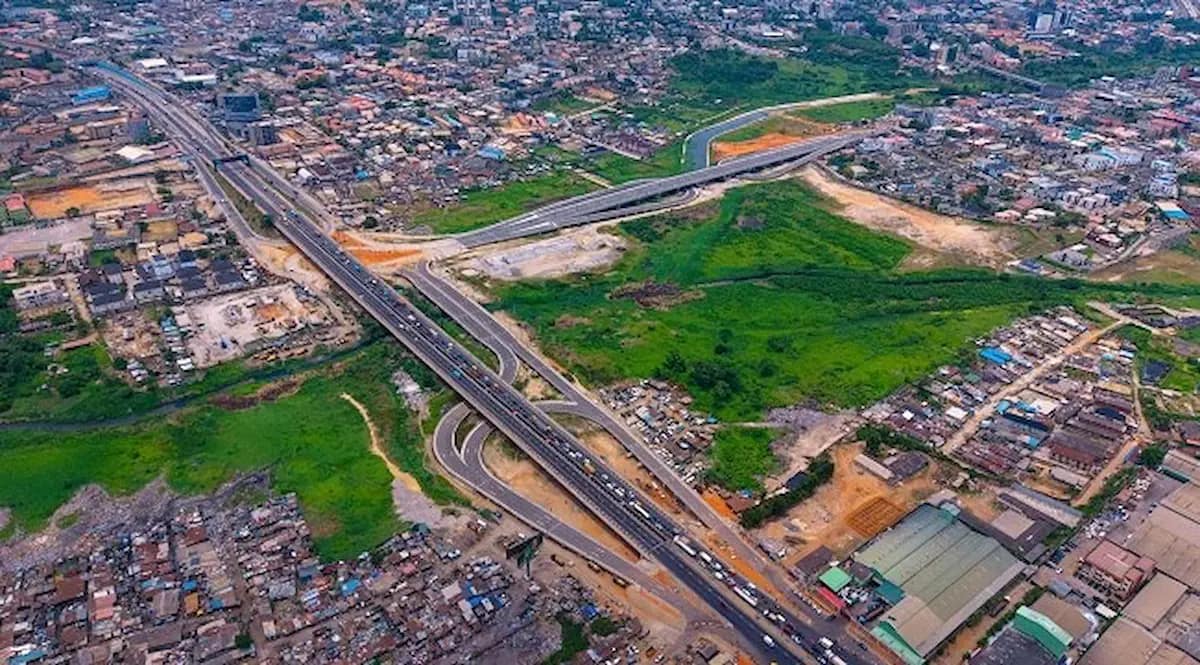
- Lagos’ ₦4 trillion investment push reflects a familiar pattern across the continent: cities continue marketing projects independently despite larger capital pools emerging across Africa
- The rise of continental financing institutions raises a new question about how infrastructure projects are sourced, structured, and presented to investors
- As Africa mobilises more capital, the relationship between project development and project financing is coming under closer scrutiny
Africa has spent the past two years building larger pools of infrastructure capital.
AfDB, AFC, Afreximbank, ATIDI, and other institutions have expanded their financing capacity while governments continue searching for new ways to close the continent’s infrastructure gap.
By most measures, the conversation around capital mobilisation has become bigger, not smaller.
Yet a different pattern persists. Across Africa, infrastructure projects are still largely marketed through city-level investment campaigns, state-level summits, and standalone fundraising initiatives.
Lagos’ latest ₦4 trillion investment push reflects a model that remains common across the continent.
The contradiction is difficult to ignore. If Africa Infrastructure Financing is becoming more continental, why are projects still being marketed city by city?
Is Africa Infrastructure Financing Still Constrained by Capital?
Africa’s infrastructure debate has long been framed around a shortage of capital.
Roads were not built because funding was unavailable. Power projects stalled because financing could not be secured.
Infrastructure gaps were often discussed as capital gaps.
Recent developments suggest a more complicated reality.
AfDB continues raising capital through international markets. AFC recently secured a record syndicated facility.
Afreximbank is expanding its financing capacity across trade and infrastructure. ATIDI is widening guarantee support while policymakers continue highlighting the scale of domestic institutional assets sitting within African financial systems.
The signal is difficult to miss.
Some of Africa’s largest financial institutions are mobilising capital at a scale that would have been difficult to imagine a decade ago.
Yet infrastructure deficits remain a defining feature of the continent’s economic landscape. That raises a different question altogether.
Why Are Projects Still Marketed City by City?
Infrastructure projects do not begin at the continental level.
They begin with land approvals, planning authorities, permits, procurement processes, and local governments.
Cities remain responsible for turning infrastructure ideas into investable projects.
That reality explains why investment summits continue appearing across Africa.
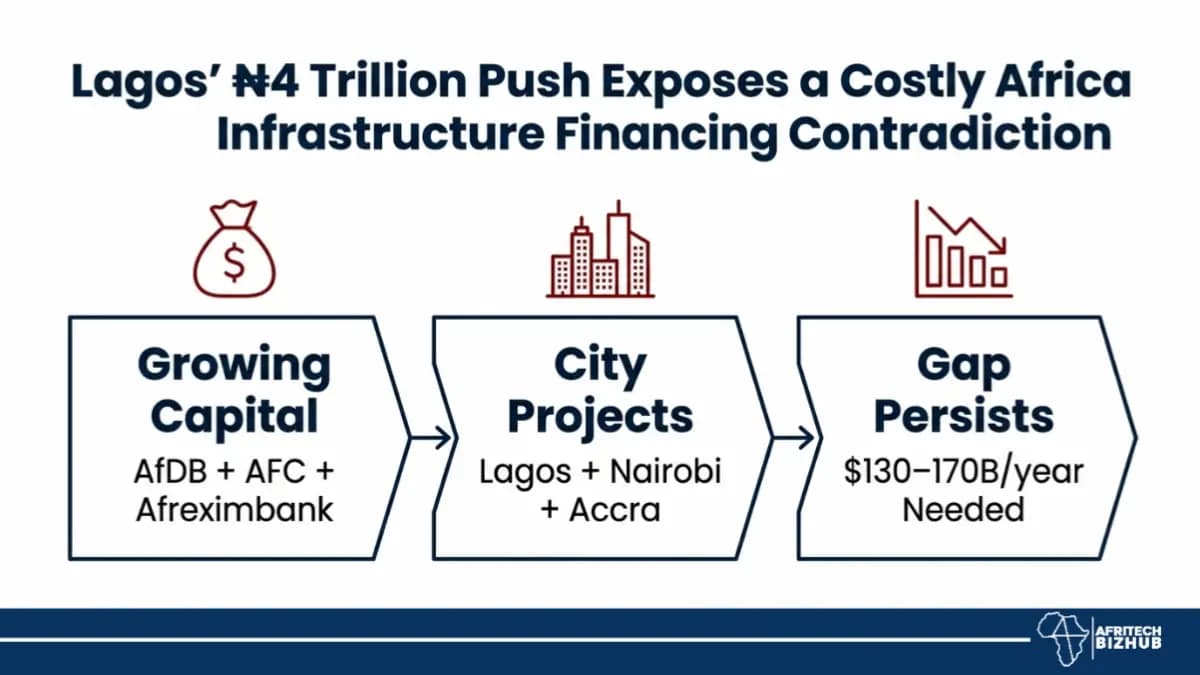
Lagos markets Lagos. Nairobi markets Nairobi. Accra markets Accra. Investors ultimately finance projects, not concepts, and most projects still originate within specific jurisdictions.
The result is a financing structure that operates on two different levels.
Africa Infrastructure Financing is becoming larger, more regional, and more institutional.
Projects, however, continue to originate within cities, states, and local jurisdictions.
For now, both realities exist side by side.
What Makes Infrastructure Projects Attractive to Large Capital Pools?
The existence of capital does not automatically guarantee financing. Capital still needs projects that meet specific requirements.
Large financial institutions, infrastructure funds, and development financiers typically look for projects that can generate predictable returns, operate at scale, and remain viable over long periods.
That creates a natural filter. Some projects are important to a city but difficult to finance at scale.
Others serve wider economic activity, connect markets, support trade, or unlock industrial growth.
Those projects tend to attract greater attention because their impact extends beyond a single location.
The result is a gap between available capital and finance-ready projects.
Money may be available. The question is whether projects are being structured in ways that large capital pools are prepared to support.
As Africa Infrastructure Financing expands, that question may become more important than the availability of capital itself.
Why Does Africa’s Infrastructure Gap Persist Despite Growing Capital Pools?
Africa is building larger financing institutions. AfDB continues expanding its lending capacity. AFC recently secured a record syndicated facility.
Afreximbank is increasing support for trade and industrial development, while AfCFTA is pushing deeper economic integration across the continent.
Yet the infrastructure challenge remains substantial.
The African Development Bank estimates that Africa requires between $130 billion and $170 billion in infrastructure financing each year, leaving a significant annual funding gap.
The scale of that requirement remains far larger than any single financing announcement.
This is where the contradiction emerges.
Africa Infrastructure Financing is expanding, yet many of the continent’s biggest infrastructure gaps remain visible.
Roads, energy systems, industrial facilities, logistics networks, and processing capacity continue to lag economic ambitions.
The issue is no longer explained by a shortage of institutions or a shortage of projects. Something else sits between capital formation and project execution.
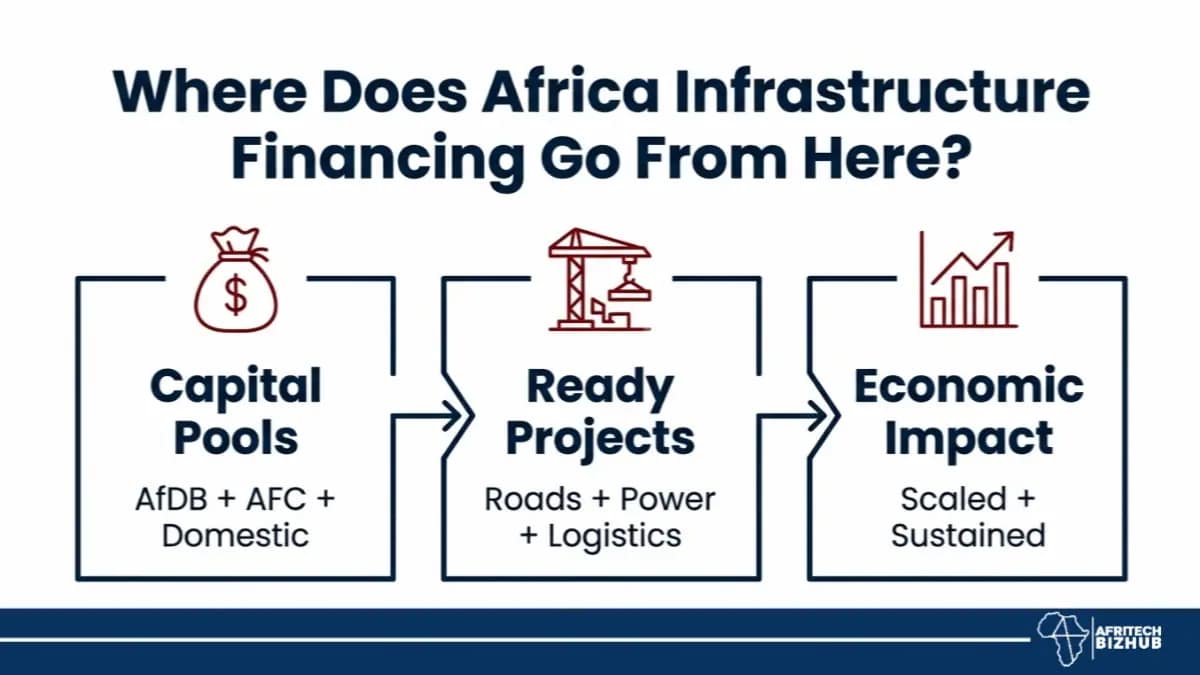
Where Does Africa Infrastructure Financing Go From Here?
Africa’s infrastructure challenge no longer appears to be defined solely by the availability of capital.
Larger financial institutions are emerging. New financing facilities are being created.
Domestic capital pools continue expanding. The continent is building more financing capacity than it had a decade ago.
The next test is whether that capital can move efficiently into projects that deliver measurable economic value.
Infrastructure financing and infrastructure development are not the same thing.
One raises money. The other turns money into roads, power systems, industrial facilities, logistics networks, and productive assets.
Africa Infrastructure Financing is entering a different phase.
The question is no longer how many institutions can raise capital.
The question is how effectively that capital reaches projects capable of changing the continent’s economic trajectory.
The next chapter of African development may depend less on creating new pools of capital and more on turning existing capital into infrastructure that can be built, scaled, and sustained.


Recent Comments