

Featured Summary:
- Angola port is evolving beyond maritime transport into an integrated export and industrial gateway.
- Industrial zones are strengthening the connection between manufacturing, logistics and international trade.
- China infrastructure development is supporting broader regional trade corridors across Africa.
- Foreign direct investment is helping build long-term industrial capacity rather than transport infrastructure alone.
Competition among Africa ports is moving beyond cargo handling towards infrastructure systems that connect manufacturing, storage, logistics and export processing.
Maritime capacity still matters, but the stronger economic advantage now lies in shortening the distance between production centres, transport networks and international buyers.
A $900 million private investment agreement for the Barra do Dande port terminal places Angola inside that transition.
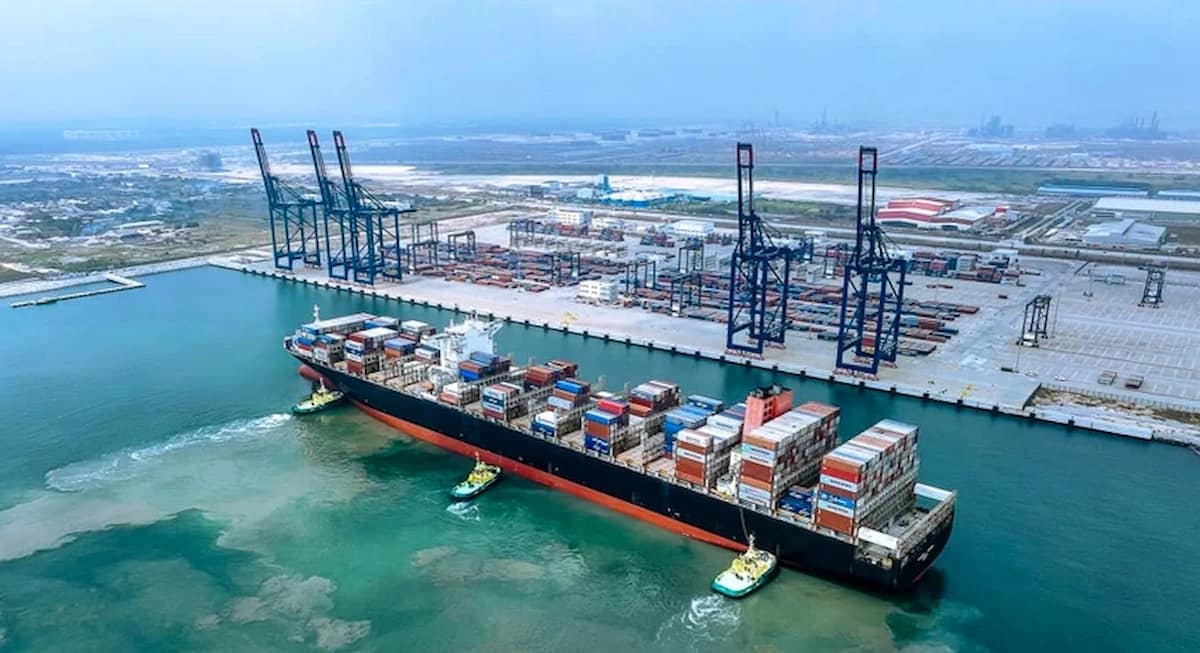
The project connects new maritime infrastructure with an industrial free zone already attracting manufacturing investment, giving the Angola port development a wider purpose than moving cargo alone.
Its long-term value will depend on whether port capacity strengthens industrial output, regional trade flows and export competitiveness.
How Is Angola Port Becoming Africa’s New Export Gateway?
Angola signed investment protocols on July 20, 2026, covering the sub-concession and construction of a port terminal inside the Barra do Dande Integrated Development Free Trade Zone in Bengo province.
The $900 million private investment involves Sociedade de Desenvolvimento da Barra do Dande, Huatong Angola Industry and Berkshire Waterhouse Infrastructure Development under a 25-year sub-concession that may be renewed.
The strategic importance lies in what the terminal is expected to serve.
Industrial facilities inside the free zone currently face limited port logistics capacity, restricting how efficiently finished goods can reach external markets.
The first phase is intended to make the terminal operational for exports from the zone, while the completed facility is designed to receive vessels of up to 80,000 tonnes.
The Angola port project therefore links maritime access with an existing production base rather than treating shipping capacity as an isolated investment.
Barra do Dande can become an export gateway where factories, storage facilities and logistics operators use the same commercial platform to reach regional and international customers.
Modern ports are becoming strategic gateways that support manufacturing, exports and regional trade.
How Do Industrial Zones Transform Modern Africa Ports?
Industrial zones change the economic function of a port by placing production, storage and export services within one operating area.
Barra do Dande already hosts Huatong’s aluminium industrial park and the Sino-Ord Integrated Industrial Park, which includes more than 10 manufacturing units.
An edible-oil refinery is also under construction, while the Angolan government has identified a grain reserve and other industrial facilities as part of the wider free-zone development.
That concentration can reduce the cost and time required to move raw materials into factories and finished goods towards ships.
Manufacturers gain closer access to warehouses, customs processing, energy infrastructure and freight services, while logistics providers gain recurring demand from companies producing goods for domestic and export markets.
The model is changing the competitive basis of Africa ports.
Cargo volumes become more economically valuable when they are generated by industries that process materials, create finished products and retain more value locally before export.
Industrial zones expand the economic role of ports by connecting production directly with export markets.
How Will African Infrastructure Transform Regional Trade Corridors?
A port becomes a regional trade gateway only when goods can reach it efficiently from inland production centres and neighbouring markets.
Roads, railways, border systems and logistics platforms determine whether maritime capacity supports wider commerce or remains concentrated around the coastline.
The Barra do Dande agreement recognises that requirement by extending investment beyond the terminal into access roads and energy facilities serving the zone.
Angola’s wider transport strategy shows how Atlantic infrastructure can support regional commerce.
The Lobito Corridor connects Angola’s coast with mineral and agricultural markets in the Democratic Republic of Congo and Zambia, while the African Development Bank has argued that modern corridors should integrate transport with agriculture, manufacturing, logistics and services rather than operate only as routes for moving commodities.
Barra do Dande will need the same focus on movement if it is to serve customers beyond its immediate industrial zone.
Reliable road access, efficient border procedures, freight services and connections with national transport networks will determine how far the Angola port can extend its commercial reach.
Trade corridors strengthen regional economies by connecting production, logistics and international markets.
How is China Infrastructure Development Supporting Africa’s Trade Strategy?
China infrastructure development at Barra do Dande is being led through private investment tied to an existing industrial position.
Huatong already operates an aluminium plant in the free zone, while Berkshire Waterhouse is participating as its financial partner in the port and supporting infrastructure agreement.
The $900 million is expected to be released in phases as project approvals are secured.
Angola’s official development strategy places the terminal within a wider programme that includes industrial production, food storage, refining, energy and transport access.
The government has identified the Barra do Dande port terminal, national grain reserve, edible-oil refinery, aluminium park and vehicle assembly activity as parts of the same diversification agenda.
The structure shows where Chinese investment can carry greater economic weight across Africa.
Capital and engineering create more durable value when they connect transport assets with businesses that manufacture, store and export goods.
The deal also suggests that Chinese companies Africa can move beyond construction contracts towards financing, operating and supplying integrated industrial systems.
Infrastructure investment creates greater economic value when integrated with long-term trade and industrial strategies.
How does Foreign Direct Investment Drive Angola’s Industrial Growth?
Foreign direct investment contributes to industrial growth when it creates operating assets rather than stopping at signed agreements.
Huatong’s first aluminium-production phase at Barra do Dande involved approximately $250 million, with annual capacity of 120,000 tonnes.
The facility began production in January 2026 and was reported to have created 1,200 direct and 800 indirect jobs.
The broader economic test will be the industries that form around those investments.
Aluminium processing can support fabricated products, construction materials and industrial suppliers, while food refining and other manufacturing facilities can deepen domestic supply chains.
Higher production can also create recurring demand for engineering, maintenance, freight, warehousing and export services.
China’s $900 million agreement can establish Barra do Dande as a new export gateway, but the investment figure alone will not deliver that position.
The Angola port will reshape regional competition only if factories produce at commercial scale, transport systems move goods efficiently and exporters secure durable international markets.
Foreign direct investment has the greatest economic impact when it builds productive industries that strengthen export competitiveness and long-term growth.


Recent Comments