

Featured Summary:
- Angola investment is expanding beyond oil as the government strengthens partnerships in agriculture and industrial development.
- Serbia agriculture cooperation could improve productivity, skills transfer, and long-term agribusiness capacity.
- The Angola economy is pursuing diversification through sectors capable of generating sustainable growth.
- Agribusiness development could create wider benefits for the Africa economy if implementation keeps pace with ambition.
Angola is trying to change what drives its economy.
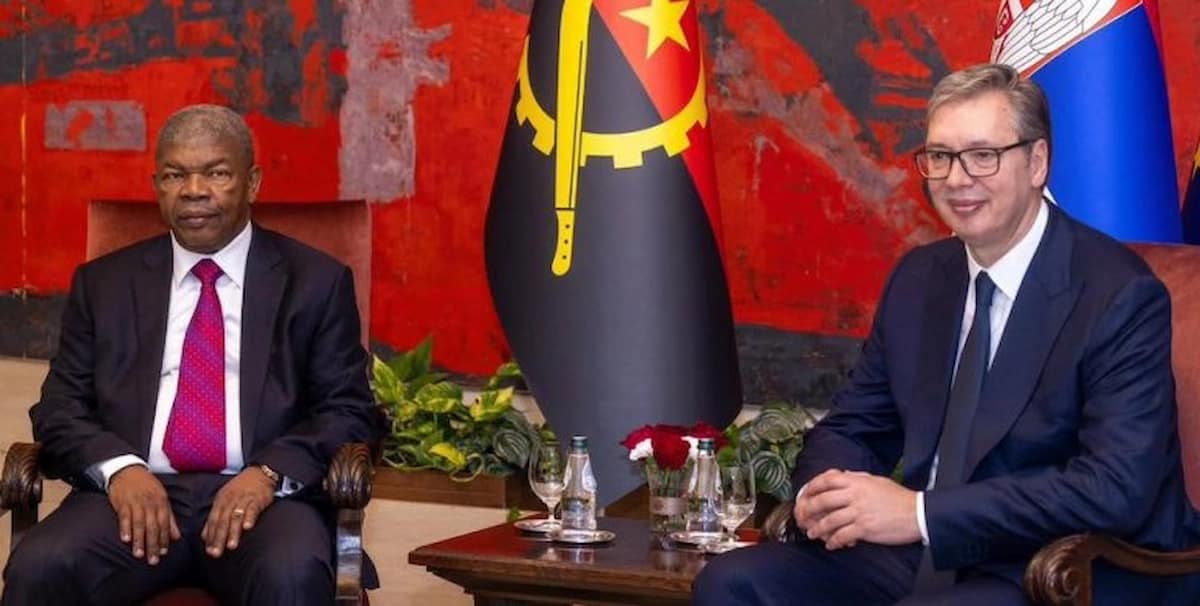
Its latest engagement with Serbia shifts attention away from hydrocarbons and toward agriculture, productivity, and industrial capacity.
The significance lies less in the agreement itself than in what it suggests about national priorities.
Angola investment is increasingly being directed toward sectors capable of generating value beyond resource extraction, reinforcing a strategy that seeks to strengthen resilience through production rather than commodity dependence.
How Will Angola Investment Deals Reshape Regional Growth Prospects?
Angola investment is moving toward productive sectors that can generate long-term economic returns rather than temporary financial inflows.
Capital deployed into agriculture, logistics, processing, and manufacturing creates supply chains that support employment, exports, and domestic value addition.
The latest partnership with Serbia reflects that approach by focusing attention on industries capable of expanding productive capacity instead of relying solely on extractive activities.
The wider implication extends beyond Angola’s borders.
Stronger productive industries can stimulate regional trade, improve supply networks, and encourage greater economic integration across Southern Africa, making Angola investment relevant to the broader Africa economy.
Can Serbia Agriculture Expertise Transform Angola’s Food Production?
Serbia agriculture expertise is being positioned as a tool for productivity rather than simply bilateral cooperation.
Improving agricultural output depends on technical knowledge, efficient farming practices, research collaboration, and stronger value chains alongside financial investment.
Angola’s partnership with Serbia creates opportunities to transfer expertise in areas that directly influence yields, post-harvest management, and agribusiness development.
The long-term value lies in institutional learning.
Better farming systems, stronger training programmes, and improved operational practices can increase productivity while reducing avoidable losses across the food system, creating benefits that extend beyond individual projects.
Why Is the Angola Economy Turning Toward Strategic Partnerships?
The Angola economy is reducing its dependence on hydrocarbons by pursuing partnerships that strengthen agriculture, manufacturing, and value addition.
Commodity revenues remain important, but heavy reliance on oil leaves growth vulnerable to external market shocks.
Diversification has therefore become an economic necessity rather than a policy preference.
Angola investment directed toward productive industries offers an opportunity to broaden the country’s sources of income and strengthen long-term resilience.
Agriculture occupies a central position in that strategy because it combines domestic resource advantages with employment potential, export opportunities, and industrial linkages capable of supporting wider economic transformation.
Could Africa Economy Benefit From Angola-Serbia Trade Expansion?
The significance of the Angola–Serbia partnership extends beyond bilateral relations.
According to the African Development Bank, economic diversification and agricultural transformation remain essential to strengthening resilience, boosting productivity, and supporting sustainable growth across African economies.
Those priorities align closely with Angola’s efforts to expand productive sectors and reduce dependence on commodity cycles.
Against that backdrop, Angola investment linked to Serbia agriculture expertise carries implications beyond one country.
It demonstrates how targeted international cooperation can strengthen domestic production, reinforce agribusiness value chains, and contribute to broader improvements in the Africa economy.
How Will Agribusiness Cooperation Drive Angola’s Economic Diversification?
Agribusiness is emerging as one of the sectors expected to underpin the next phase of the Angola economy.
The opportunity extends beyond crop production into processing, storage, logistics, packaging, exports, and manufacturing.
Each stage of the value chain creates additional economic activity while reducing dependence on imported goods and commodity revenues.
Angola investment in agribusiness therefore supports a broader industrial strategy rather than an isolated agricultural initiative.
The deeper significance of the Serbia partnership is not that it expands diplomatic ties.
It is that it tests whether agriculture can succeed where decades of resource dependence have struggled.
If implementation matches ambition, agribusiness could become one of the strongest pillars of Angola’s diversification strategy while contributing to a more resilient Africa economy.


Recent Comments