

Featured Summary:
- Nigeria’s economy is projected to grow through 2030, with naira stability improving investor confidence. Household relief remains limited
- Higher global energy prices could keep petrol, transport and food costs elevated despite increased domestic refining
- Nigerian businesses continue to face expensive credit despite CBN rate cuts, while slower inflation has yet to ease household expenses
- Through 2030, stronger employment, rising real incomes and lower business costs will determine how much of Nigeria’s economic recovery reaches households
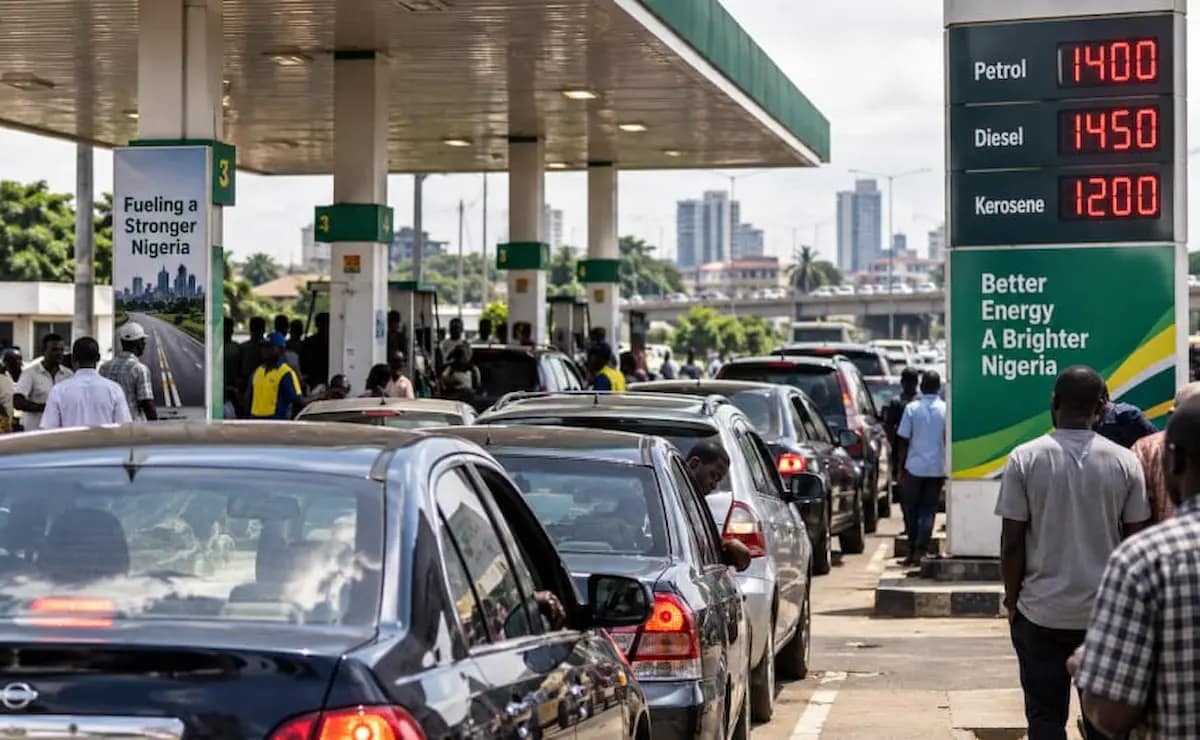
Higher petrol and diesel costs are adding to household expenses in Nigeria, even as the naira recovers against the dollar and inflation slows.
Transport fares and food prices remain a burden for consumers, with recent increases in international energy prices putting further pressure on domestic fuel costs.
The economic outlook is improving. The International Monetary Fund projects growth of around 4% annually through 2030, while the Central Bank of Nigeria has begun cutting interest rates. Currency stability has also improved conditions for foreign investors.
Nigeria’s expanded domestic refining capacity has increased local fuel supply, but petrol and diesel prices remain sensitive to international oil markets.
Households are also paying prices shaped by earlier inflation, leaving limited relief from the recent improvement in economic indicators.
Whether growth brings lower pressure on household budgets will depend on fuel costs easing and employment and earnings improving over the coming years.
Higher Crude Prices Push Up Nigeria’s Petrol and Diesel Costs
Petrol sold for about ₦1,400 a litre in Lagos and Abuja in September, reaching ₦1,500 in parts of northern Nigeria.
Diesel exceeded ₦2,000 a litre at some retail outlets, according to Reuters, following disruptions to Middle East oil supplies.
Brent crude settled at $106.06 a barrel on October 14 and later climbed above $110. The Major Energies Marketers Association of Nigeria put petrol import parity at ₦1,253.40 a litre on October 19, compared with ₦1,246.36 on October 16.
Dangote Refinery raised its petrol gantry price to ₦1,350 a litre in September before cutting it to ₦1,325. Its diesel gantry price fell from ₦1,780 to ₦1,700 a litre on October 7.
The refinery secured at least 16 million barrels of Nigerian crude for October deliveries, Reuters reported.
Nigerian crude continues to be priced against international benchmarks, leaving local refining costs sensitive to movements in the global oil market.
Diesel remains a major expense for businesses operating generators and transporting goods.
Petrol costs also enter passenger fares and the movement of agricultural produce from farms to urban markets, although the contribution of fuel to food-price changes depends on local supply conditions.
Since petrol subsidies were removed, changes in international crude prices and the exchange rate have had a more direct bearing on domestic fuel pricing.
Nigeria’s expanded refining capacity has changed where petrol is produced, without removing the influence of global oil prices on what buyers pay.
Nigeria’s Rate Cuts Leave Businesses Facing High Borrowing Costs
The Central Bank of Nigeria reduced its monetary policy rate from 26.5% to 23% in September.
CBN figures for August put the maximum lending rate at 29.20%, down from 33.16% in July. The prime lending rate fell from 19.06% to 17.86% over the same period.
Banks remained subject to a 45% cash reserve requirement after the September decision. The August lending figures predate the rate cut and do not show how commercial banks have adjusted their loan pricing.
Manufacturers and distributors borrowing to finance inventory and production face substantial interest expenses.
Those costs affect profit margins and can delay investment, especially for companies unable to raise prices without losing customers.
Annual inflation fell to 14.63% in September from 15.39% in August, according to the National Bureau of Statistics. Monthly inflation slowed to 0.06% from 0.71%, while food inflation stood at 19.59%.
Consumer prices remain high after earlier increases, despite the slowdown in inflation. Businesses also continue to service existing loans under their agreed terms, limiting the immediate benefit of lower benchmark rates.
The effect of September’s monetary easing on business financing will become clearer in subsequent CBN lending data.
Lower commercial borrowing rates would reduce interest expenses for companies seeking new credit and could support investment and production.
Nigeria’s GDP Growth Raises Questions About Household Income
Nigeria’s economy expanded 4.43% in the second quarter of 2026, up from 3.89% in the preceding quarter, according to the National Bureau of Statistics. Services accounted for 56.62% of output, agriculture 26.15% and industry 17.23%.
Agriculture grew 4.39% from a year earlier, compared with 2.82% in the second quarter of 2025.
Services expanded 4.60%, supported by telecommunications, trade and financial activities. Industrial growth slowed to 3.96% from 7.46% a year earlier.
Telecommunications and information services contributed an estimated 0.96 percentage points to GDP growth, followed by trade at 0.44 percentage points, according to Credit Direct’s analysis of the NBS figures.
The International Monetary Fund forecasts economic growth of 4.3% in 2027, 4.1% in 2028 and 4.2% in both 2029 and 2030.
Agriculture and trade employ large numbers of Nigerians, making their performance important to household incomes.
Telecommunications and financial services have contributed to economic expansion, but the GDP figures do not establish corresponding increases in wages or employment.
Employment growth and higher earnings will determine how much of Nigeria’s projected expansion reaches households through 2030.
Investment in agriculture, manufacturing and infrastructure could support that outcome, provided businesses increase hiring and pay.
Cheaper Energy and Reliable Power Could Ease Nigeria’s Living Costs
A retreat in international oil prices would bring relief to Nigeria’s fuel market, with lower petrol and diesel costs offering the prospect of cheaper transport and goods distribution.
The size of that relief will depend on how far global price declines reach domestic fuel buyers.
Electricity supply remains a major concern for businesses operating generators to maintain production.
Reliable grid power would reduce fuel spending and improve operating conditions for manufacturers and smaller enterprises.
Cheaper commercial credit would provide further relief as businesses seek financing for production and investment.
The government’s progress on electricity infrastructure and the banking sector’s response to monetary easing will influence how quickly those savings reach the wider economy.
Nigeria’s growth outlook through 2030 remains positive. A sustained reduction in energy and financing costs would give households a better prospect of recovering purchasing power after years of rising prices.


Recent Comments