


Featured Summary:
- Africell is increasing AI deployment across the DRC as telecom operators expand digital infrastructure and network systems
- Network expansion pressure is rising as mobile usage and internet demand continue growing across the DRC economy
- The wireless telecommunications industry is increasing investment in automation and intelligent network systems across African markets
- Africell is strengthening mobile money services as telecom operators push deeper into digital finance and commercial connectivity
Mobile usage across the DRC is growing faster than parts of the country’s telecom infrastructure can comfortably support.
Operators are now under pressure to improve network reliability, widen coverage, and manage heavier digital traffic across one of Africa’s largest underserved telecom markets.
Africell is expanding AI deployment and telecom infrastructure as competition intensifies around connectivity quality, digital services, and financial access across the country.
How Africell Is Expanding AI Network Systems as Mobile Data Demand Climbs in Congo
Telecom operators across Africa are expanding AI-driven network systems as rising mobile banking activity, streaming demand, digital payments, messaging traffic, and internet usage place heavier pressure on telecom capacity.
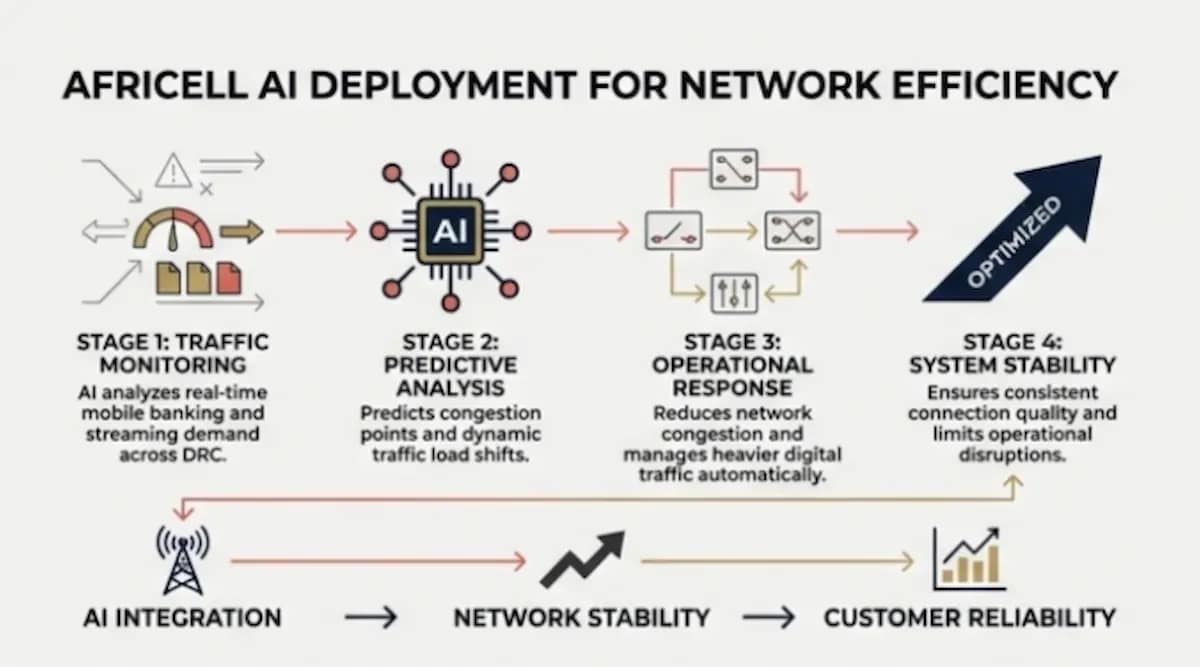
Africell is increasing AI-based network operations across parts of the DRC as operators push for faster traffic management, stronger service reliability, and lower operational disruptions across fast-growing digital markets.
The pressure inside telecom markets is becoming operational rather than theoretical.
Mobile networks across African economies now carry financial transactions, streaming services, e-commerce activity, and real-time communications simultaneously.
AI tools are increasingly being integrated into telecom networks to monitor traffic loads, reduce congestion, improve response systems, and stabilize service performance as internet demand accelerates across the continent.
Why DRC Telecom Expansion Is Becoming More Urgent
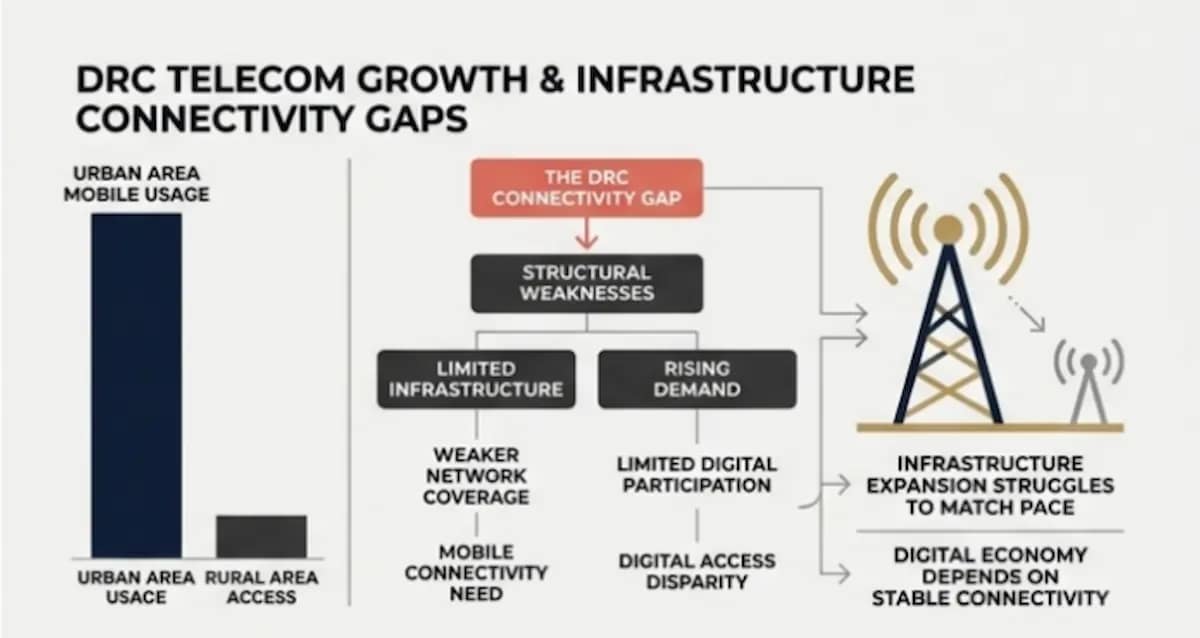
Connectivity gaps remain one of the biggest structural weaknesses inside the DRC telecom sector despite rising demand for mobile internet, digital payments, streaming services, and online communication across both urban and rural markets.
Large parts of the country still operate with weaker network coverage, unstable internet access, and limited telecom infrastructure even as mobile usage expands rapidly across the economy.
The pressure is becoming more visible as banks, businesses, schools, mobile-money platforms, and digital services rely more heavily on stable connectivity to operate efficiently.
Telecom expansion across the DRC is no longer only about improving communication access.
Reliable internet coverage is increasingly becoming necessary for financial access, digital commerce, online services, and broader participation inside Central Africa’s expanding internet market.
Why Advanced Telecom Infrastructure Is Becoming More Important Across Africa
Rising internet usage, digital payments, streaming demand, and mobile banking activity are placing heavier pressure on telecom networks across African markets as digital services expand beyond major cities.
Automation and AI-supported network management are becoming more commercially important as operators push to improve service reliability, reduce congestion, and stabilize performance across rapidly expanding mobile networks.
The World Bank noted in its DRC digital-connectivity discussions that roughly half of the country’s population still lacks broadband access, while internet adoption and network coverage remain heavily constrained by infrastructure limitations.
The institution also stated that a 10% increase in broadband penetration in the DRC could raise GDP growth by about 2.5% and generate nearly 700,000 jobs, reflecting how commercially important stronger telecom infrastructure is becoming across underserved African markets.
How Africell’s Mobile Money Expansion Reflects a Bigger Shift Inside the DRC Economy
Mobile financial services are becoming more commercially important across the DRC as telecom operators expand beyond traditional voice and data services into digital payments, merchant systems, and mobile-commerce infrastructure.
Africell is strengthening mobile money operations as operators compete more aggressively for financial-service users across a market where millions of people still remain outside traditional banking systems.
The DRC’s telecom sector is moving into a more consequential phase where connectivity increasingly shapes financial access, business activity, digital payments, and commercial participation across the wider economy.
The pressure on operators is no longer only about expanding coverage maps or adding subscribers.
Reliable internet access and stable mobile-payment systems are becoming basic commercial infrastructure in a country where large parts of the population still operate outside formal banking networks.
Telecom operators that build stronger network reliability, payment systems, and service consistency outside major cities may ultimately hold far greater influence over the DRC’s next phase of economic integration than the market currently recognizes.


Recent Comments