

Last updated: July 9, 2026
Featured Summary:
- Foreign Reserves remain central to Ghana’s recovery because Eurobond repayments reduce immediate debt pressure but still require strong external buffers.
- Ghana Eurobond payments are improving market confidence after restructuring, but debt management stability depends on sustained fiscal discipline.
- Public financial management will decide whether Ghana government can keep meeting obligations without returning to the same debt pressures.
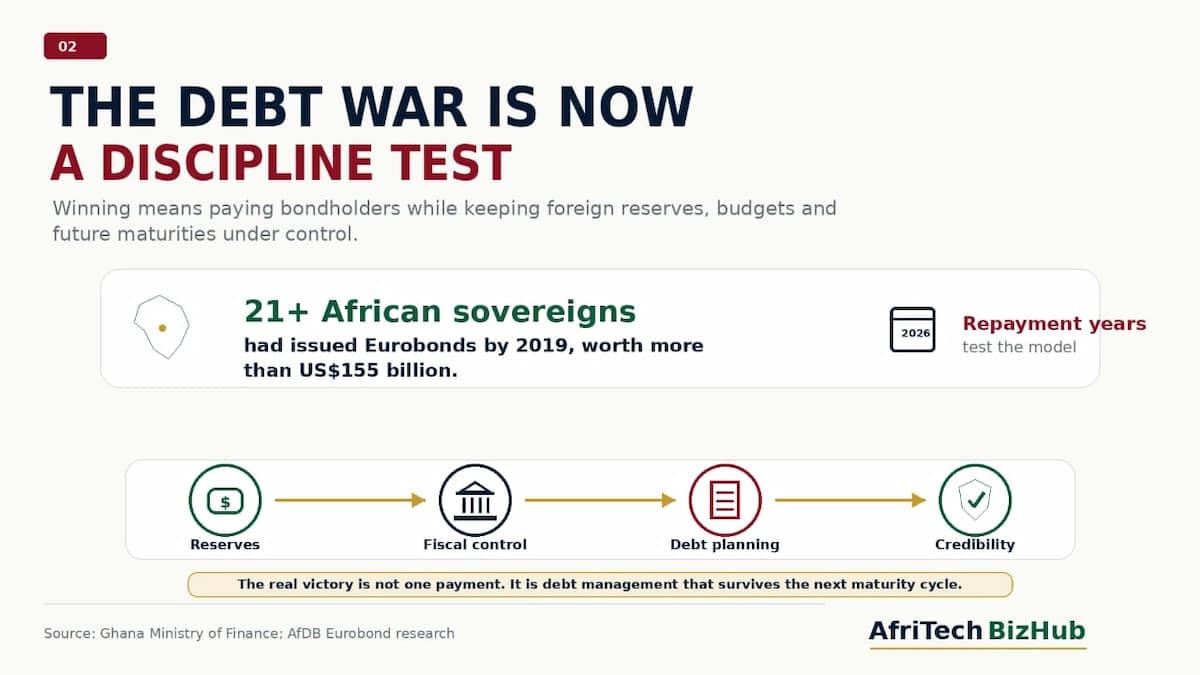
- Eurobond debt is a wider African issue, with at least 21 African sovereigns having issued Eurobonds by 2019, according to AfDB research.
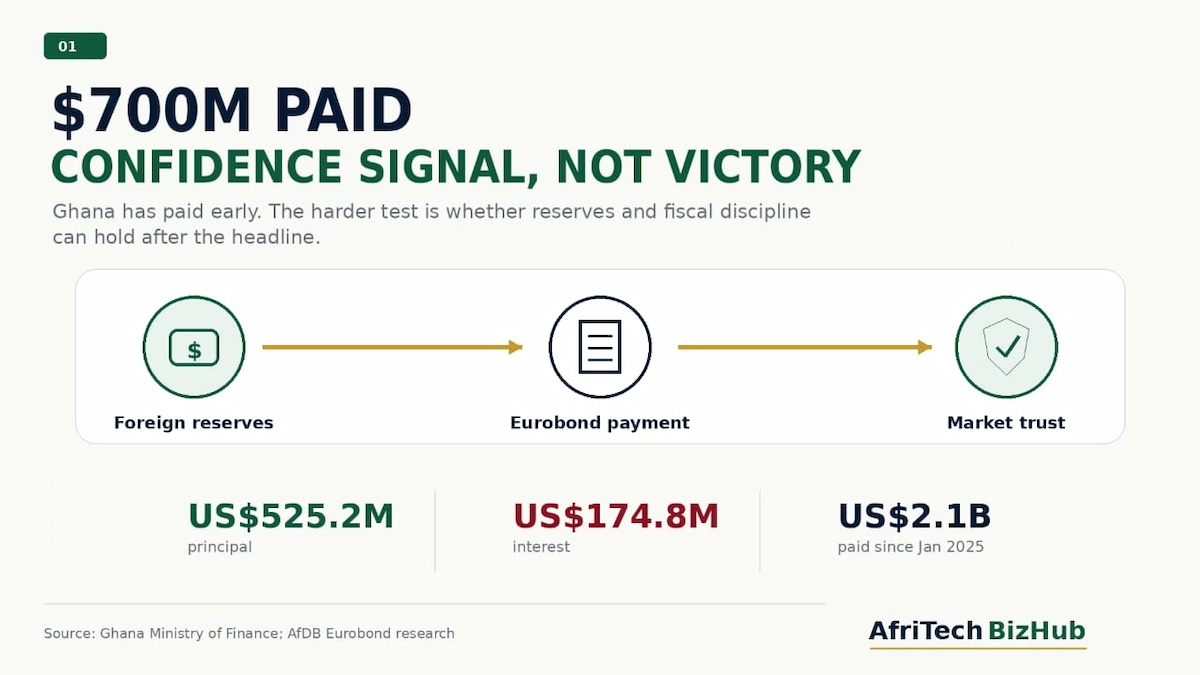
Ghana’s US$700 million Eurobond payment is a confidence signal, not a victory parade.
After years of debt stress, restructuring, and investor caution, the country has shown that it can return cash to bondholders ahead of schedule. That matters for credibility.
It tells markets that Ghana government is trying to rebuild trust after one of the most difficult sovereign debt episodes in its recent history.
The harder question is what happens after the payment.
A Eurobond settlement can reduce pressure for one date, but it does not automatically fix foreign reserves, revenue weakness, import demand, interest costs, or future maturities.
Ghana’s debt story now moves from negotiation to discipline.
The country has to prove that public financial management is strong enough to keep reserves protected, spending controlled, and debt management credible beyond a single headline repayment.
How Is Ghana Economy Managing Foreign Reserves After Eurobond Debt Payment?
Foreign reserves are now Ghana’s first line of defence after the Eurobond payment.
A country can meet a debt obligation and still remain exposed if reserves are too thin to manage imports, currency pressure, and future external repayments.
That is why the payment is important, but not enough on its own.
Ghana’s economy must now balance three pressures at once: keeping bondholders paid, protecting import cover, and supporting confidence in the cedi.
Stronger reserves make it easier for the central bank and government to manage external shocks, commodity-price changes, and investor sentiment.
The Eurobond payment helps the credibility side of the equation.
The reserve test is whether Ghana can continue building buffers while still meeting external obligations without returning to emergency financing.
Can Ghana Government Sustain Strong Public Financial Management in Eurobond Debt Crisis?
The real measure of Ghana’s recovery is not only whether one payment was made.
It is whether the government can maintain the discipline that made the payment possible.
Public financial management becomes critical because debt credibility depends on revenue collection, spending control, transparent reporting, and realistic budgeting.
Ghana government has to avoid the pattern that created the crisis: high borrowing, weak buffers, and repayment pressure arriving faster than fiscal adjustment.
A stronger framework would mean better control over arrears, stronger domestic revenue, more careful project spending, and clearer communication with investors.
If those controls weaken, the Eurobond payment will look like a temporary improvement.
If they hold, Ghana can turn repayment performance into a stronger debt-management record.
Is Ghana Eurobond Debt Strategy Strengthening Long-Term Debt Management Stability?
Ghana’s Eurobond strategy looks more orderly because the country is making payments under the debt exchange framework rather than delaying obligations.
That is important for long-term debt management stability. Investors do not only watch whether a country pays.
They watch whether it pays on time, communicates clearly, and manages future maturities without sudden policy reversals.
Eurobond debt is usually foreign-currency debt, which means repayment pressure can increase if the cedi weakens or reserves fall.
Ghana must therefore treat the current payment as part of a longer debt plan, not as proof that the crisis has ended.
A stronger Ghana Eurobond strategy would combine external repayment discipline with lower borrowing costs, better maturity planning, deeper domestic revenue, and reserve accumulation.
That is how Ghana can move from crisis management toward lasting stability.
How Many African Countries have Eurobonds?
Ghana’s payment sits inside a wider African borrowing pattern.
Eurobonds became attractive to many African governments because they offered access to large pools of international capital when infrastructure needs were high and concessional finance was limited.
They helped countries raise money quickly, but they also increased exposure to foreign-currency repayment risk.
AfDB research says that by the end of 2019, at least 21 African sovereigns had issued about 125 Eurobond instruments worth over US$155 billion.
Ghana’s Ministry of Finance also confirmed that the country settled its US$700 million Eurobond obligation ahead of schedule on July 2, 2026, made up of US$525.2 million in principal and US$174.8 million in interest.
With that payment, Ghana said it had paid US$2.1 billion to Eurobond holders since January 2025 under the Eurobond Debt Exchange Programme.
Ghana’s case therefore matters beyond Accra because it shows the larger African challenge: Eurobonds can provide financing, but they also demand strong debt management when repayment years arrive.
What is Eurobond and How Does it Work?
A Eurobond is a bond issued in a currency different from the borrower’s local currency.
For African governments, this usually means borrowing in US dollars or euros from international investors.
The government receives money upfront and promises to pay interest at agreed dates, then repay the principal according to the bond’s maturity schedule.
The advantage is that Eurobonds can raise large amounts of money for budgets, infrastructure, refinancing, and development plans.
The risk is that repayment must usually be made in foreign currency.
If exports weaken, reserves fall, or the local currency loses value, the debt becomes harder to service.
That is why Ghana’s US$700 million payment is important but not final proof of victory.
Winning the Eurobond debt challenge means paying bondholders while also protecting foreign reserves, strengthening public financial management, and building an economy that can carry future debt without returning to crisis.


Recent Comments