

Featured Summary:
- Africa economic sovereignty depends on industrialisation, but productive businesses still face a financing bottleneck even as large industrial projects secure capital
- George Elombi says Africa must move beyond exporting raw materials and build an industrial economy capable of creating greater value across the continent
- The bigger challenge is no longer raising capital but building financial systems that move investment into productive businesses
- Africa’s industrial future will be determined by how effectively governments and financial institutions connect available capital with enterprise
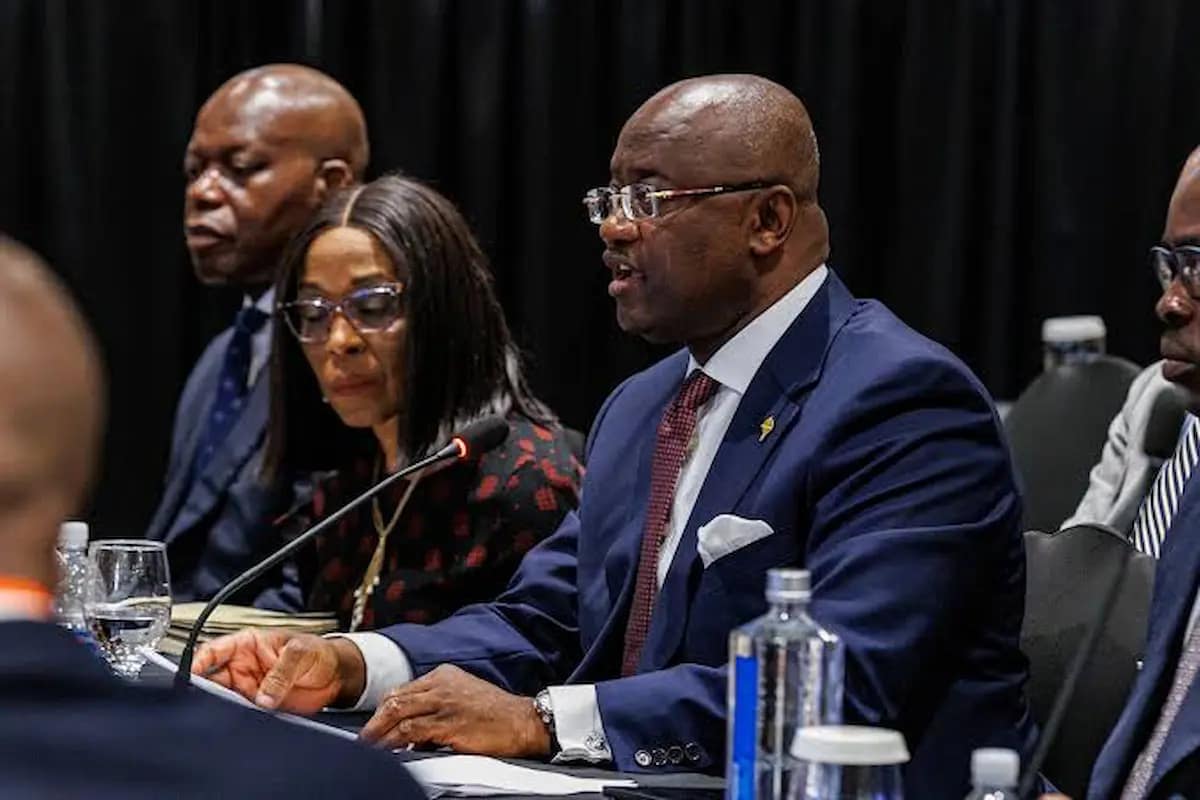
Speaking at Afreximbank’s Annual Meetings, George Elombi argued that Africa’s economic sovereignty will depend on transforming the continent from an exporter of raw materials into an industrial economy that produces greater value at home.
The ambition is difficult to dispute.
The contradiction is that Africa has already demonstrated its ability to mobilise billions of dollars for strategic industries, while many of the productive businesses expected to drive that industrial transformation remain constrained by financial systems that struggle to extend long-term capital beyond large-scale projects.
The debate has therefore moved beyond raising finance.
Africa economic sovereignty will increasingly be determined by whether domestic institutions can create an environment where productive businesses become bankable, investment risks are priced more confidently and long-term capital flows into manufacturing rather than remaining concentrated at the top of the financing chain.
Industrialisation begins with capital, but it succeeds only when that capital reaches the wider productive economy.
Why Does Africa Economic Sovereignty Depend on Industrialisation?
George Elombi’s argument extends beyond expanding manufacturing capacity. It is a call to change Africa’s position in the global economy.
Exporting raw materials while importing finished products leaves more of the value created from African resources outside the continent, limiting industrial growth, employment and domestic production.
Industrialisation offers a different path by increasing the amount of value created before those resources leave African markets.
Recent geopolitical disruptions have made that objective more urgent. Supply chain disruptions, commodity price volatility and shifting global trade patterns have shown the risks of relying heavily on external production for goods that could increasingly be manufactured closer to home.
Africa economic sovereignty therefore depends not only on producing more, but on building industries capable of processing, manufacturing and supplying a larger share of the continent’s own demand.
The transition is no longer simply about economic growth. It is about strengthening Africa’s capacity to remain productive when global conditions become less predictable.
What Does the Dangote Refinery Reveal About Africa’s Financing Capacity?
The Dangote Refinery settled one debate long before George Elombi called for Africa’s industrial transformation.
Africa’s development institutions have already shown they can mobilise financing at a scale capable of supporting projects that reshape production, energy security and regional trade.
The question is no longer whether African capital can support industrial ambition. That evidence already exists.
George Elombi’s vision therefore begins from a position of institutional strength rather than aspiration.
Afreximbank has demonstrated that large-scale industrial financing can be assembled where projects meet commercial and strategic priorities.
The next stage of Africa economic sovereignty depends on extending that financing capacity beyond landmark projects into the wider productive economy, where manufacturers and industrial businesses collectively determine whether industrialisation becomes broad-based economic growth rather than a series of isolated successes.
Where Does Africa’s Financing System Break Down?
Afreximbank and FEDA have demonstrated that institutional capital can be mobilised for industrial platforms capable of reshaping sectors across Africa.
Investments in manufacturing parks, mineral processing, electric mobility and regional infrastructure show that large-scale financing is already reaching projects considered strategic to the continent’s industrial future.
The availability of capital at the institutional level is no longer the central question.
The financing chain becomes less certain further down the economy.
Businesses expected to expand production often rely on domestic lenders that assess risk differently from development institutions, making long-term industrial finance harder to secure.
Between wholesale development finance and grassroots enterprise sits a “missing middle” where productive businesses remain too large for microfinance but too small to attract institutional investment.
Closing that gap may prove as important to Africa economic sovereignty as mobilising capital in the first place.
Building Africa Economic Sovereignty Requires More Than Capital
Industrialisation depends as much on financial architecture as it does on financing itself.
Development institutions can mobilise capital for strategic industries, but productive businesses expand only when domestic systems allow lenders to assess risk with confidence.
Capital moves more freely where governments build predictable commercial environments, strengthen legal protections and reduce the uncertainty surrounding long-term investment.
That places domestic institutions at the centre of Africa economic sovereignty.
Reliable business registries, functioning credit bureaus, digital identity systems, collateral frameworks and consistent policy execution make productive businesses more visible to lenders and improve confidence in long-term financing decisions.
Capital is already available. The greater challenge is building an environment where that capital can move efficiently from institutions into enterprises capable of expanding production, employment and industrial growth.
What Will Determine Whether Africa Economic Sovereignty Succeeds?
Industrialisation has already secured institutional commitment. The next phase will be determined by whether Africa builds financial systems capable of moving that commitment into the productive economy.
Capital becomes transformative only when businesses operating beyond flagship projects can access it under conditions that allow them to invest, expand and compete over the long term.
Africa economic sovereignty will depend on more than industrial ambition or larger financing commitments.
It will be shaped by the quality of the business environment, the predictability of public institutions and the confidence those systems create for long-term investment.
The continent’s industrial future will ultimately be defined not by its ability to raise capital, but by its ability to keep that capital working inside productive African businesses.


Recent Comments