


Featured Summary:
- Africa Agenda 2063 is strengthening the institutional foundations behind regional trade and economic integration
- Industrialisation and value addition are moving closer to the centre of the continent’s trade strategy
- Payment systems, trade finance, and investment resilience are becoming critical components of cross-border commerce
- Africa’s long-term competitiveness will depend on execution as much as ambition
Africa’s trade agenda is entering a more demanding phase. Regional integration is no longer measured only by the number of agreements signed or markets opened.
The conversation is shifting toward payment systems, trade finance, industrial capacity, and the institutions capable of supporting commerce across borders during periods of global uncertainty.
That transition places Africa Agenda 2063 under a different kind of scrutiny. The question is becoming less about vision and more about execution.
The latest Trade and Development Finance Brief released by Afreximbank arrives at that moment.
While external conditions remain volatile, African institutions are expanding the financial and policy infrastructure intended to make regional trade more resilient and less dependent on forces beyond the continent’s control.
Is Africa Quietly Rewriting Its Trade Future?
Africa’s trade architecture is evolving through structural changes that receive far less attention than headline investment announcements.
Cross-border payment mechanisms are expanding, regional financing platforms are gaining prominence, and institutions are aligning around deeper market integration.
These developments are changing how trade is financed and facilitated across the continent, reinforcing objectives that sit at the core of Africa Agenda 2063.
The transformation is advancing faster than many outside observers recognise.
Much of the work is taking place within institutions rather than on factory floors or shipping lanes, but its long-term effect could prove equally significant.
Why Is Africa Agenda 2063 Becoming an Economic Blueprint?
Africa Agenda 2063 is increasingly serving as an operational framework for continental economic policy.
Regional integration, industrialisation, productivity, and market connectivity are moving from strategic aspirations into programmes supported by governments, financial institutions, and multilateral initiatives.
The direction of travel reflects a growing alignment between policy ambition and institutional implementation.
That alignment matters because integration depends on durable systems rather than declarations.
Africa Agenda 2063 is becoming more closely associated with the mechanisms that support commerce than with the rhetoric that originally introduced it.
Can Africa Capture More Value Instead of Exporting It?
The structure of Africa’s exports remains one of the continent’s most persistent economic challenges.
Large volumes of raw materials continue to leave African markets while processing, manufacturing, and higher-value activities occur elsewhere.
The result is a trade pattern that generates export earnings but captures only part of the potential economic value.
The next stage of competitiveness depends on producing more, processing more, and strengthening regional value chains.
Expanding manufacturing capacity and export diversification would allow African economies to retain a larger share of industrial activity while reinforcing the objectives underpinning Africa Agenda 2063.
What Does Afreximbank Reveal About Africa’s Next Growth Phase?
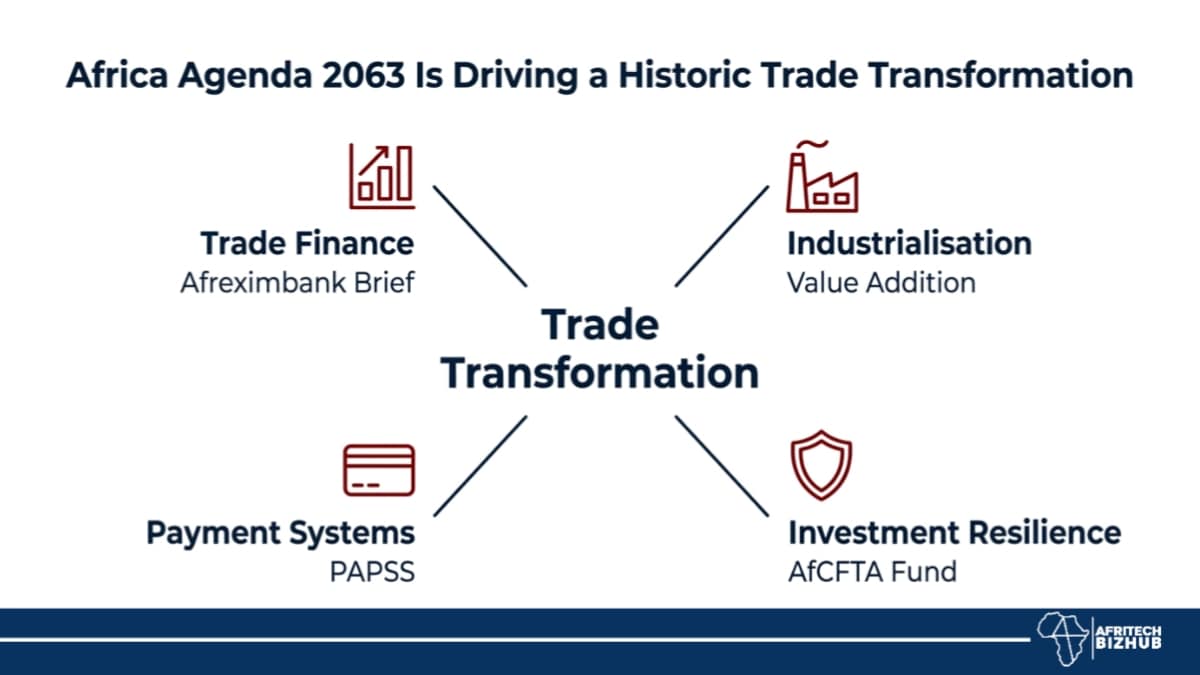
The latest Trade and Development Finance Brief places trade finance, payment infrastructure, investment resilience, and regional financial mechanisms alongside transport and logistics as pillars of continental integration.
Programmes such as the Pan-African Payment and Settlement System (PAPSS), the AfCFTA Adjustment Fund, and broader trade-finance initiatives demonstrate that financial architecture is developing in parallel with physical infrastructure.
The implication is clear: cross-border commerce depends as much on how transactions are financed and settled as on how goods are transported.
Will Africa Agenda 2063 Finally Change How the World Sees the Continent?
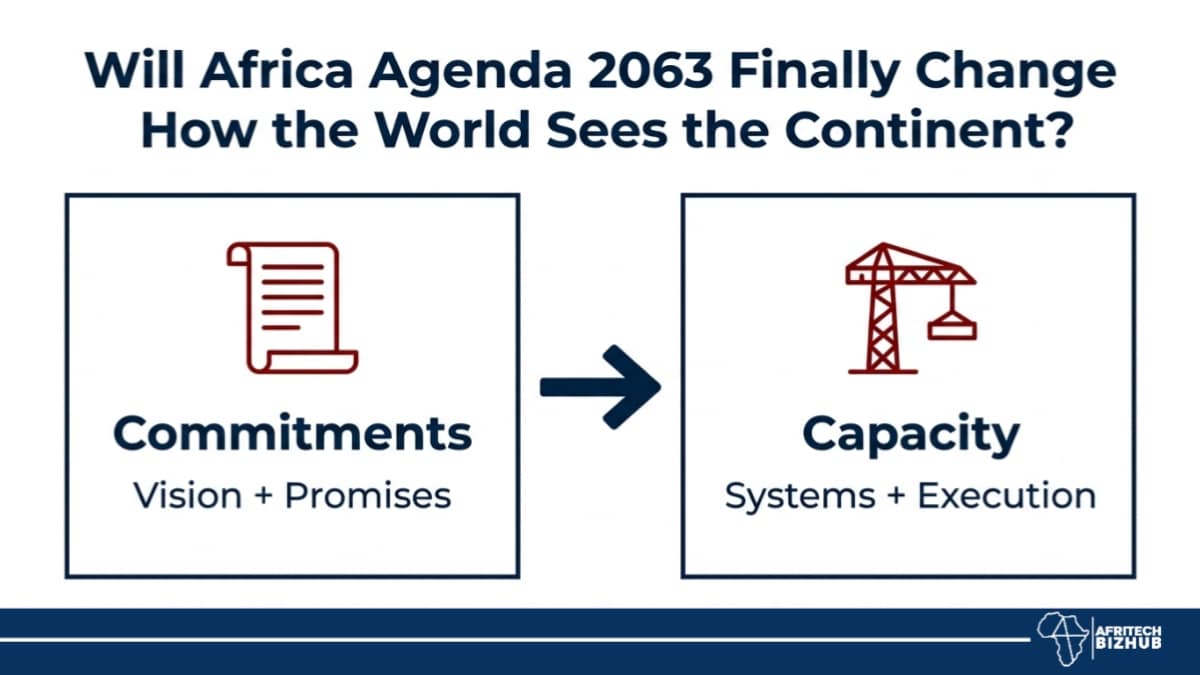
Africa Agenda 2063 is entering a stage where implementation will define its credibility.
Regional markets require functioning payment systems, dependable trade finance, competitive industries, and institutions capable of sustaining integration through changing global conditions.
Those foundations determine whether economic ambition translates into measurable commercial outcomes.
The emphasis is gradually shifting from commitments to capacity.
Infrastructure, manufacturing, finance, and institutional coordination are moving into the foreground of the continent’s trade agenda.
If those elements continue to strengthen together, Africa Agenda 2063 will be measured less by the scale of its vision than by the systems it leaves behind.


Recent Comments