


Last updated: May 17, 2026
Featured summary:
- Africa debt crisis pressure is rising as Nigeria debt servicing remains high despite painful economic reforms.
- African leaders now openly question the risk pricing models driving borrowing costs across the continent.
- Africa’s debt pressure is increasingly colliding with infrastructure, industrial growth, and long-term development.
Africa’s debt pressure is becoming harder to defend as rising borrowing costs continue draining capital away from infrastructure and industrial growth across the continent.
President Tinubu warned at the Africa Forward Summit that expensive debt servicing is weakening Africa’s ability to finance development even after subsidy removals, currency devaluations, and fiscal reforms across major economies like Nigeria.
African leaders are now openly questioning whether global markets continue treating African economies as permanently high-risk borrowers while the continent remains heavily dependent on external debt to finance its growth.
Why Is Nigeria Debt Servicing Rising So Fast in 2026?
Debt pressure continued rising in Nigeria even after subsidy removals, currency devaluations, and fiscal reforms designed to stabilize the economy and restore investor confidence.
Nigeria debt servicing remains elevated as billions continue moving toward repayments while borrowing costs stay high and fiscal space tightens further across Africa’s largest economy.
The reforms reduced pressure in some areas. Financing costs kept climbing.
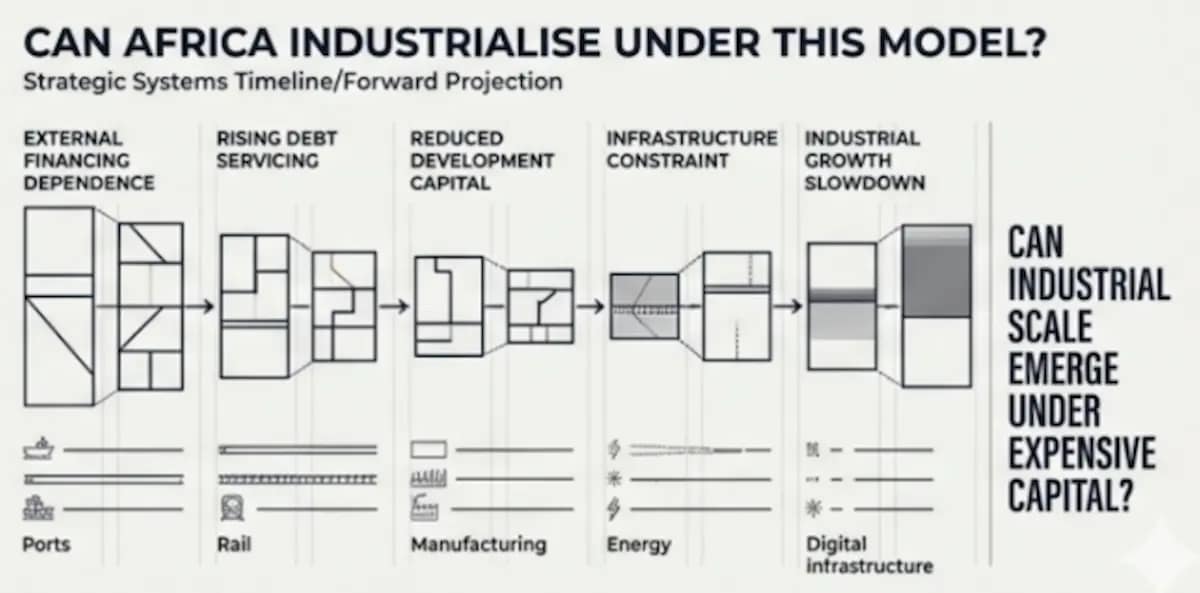
That pressure is increasingly squeezing infrastructure and industrial spending as more government revenue moves toward interest payments and debt obligations.
Capital needed for power, transport, manufacturing, and long-term development is coming under heavier strain as financing costs continue rising across African economies already dependent on external borrowing to sustain growth.
Why Are African Economies Still Treated as High-Risk Borrowers?
Borrowing pressure is becoming one of the biggest fault lines inside Africa’s development debate as governments increasingly question how global markets continue pricing risk across the continent.
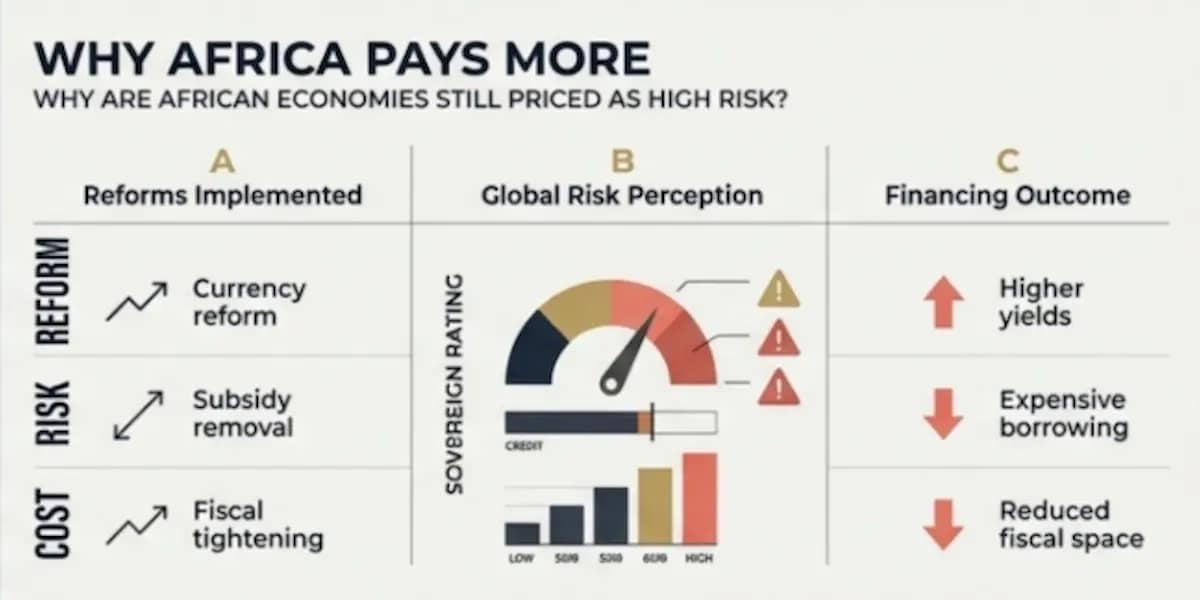
Leaders at the Africa Forward Summit pushed back harder against sovereign ratings and financing models they believe are keeping African economies trapped under expensive borrowing conditions even after reforms, fiscal adjustments, and economic restructuring across several markets.
The frustration goes beyond debt alone. African governments are increasingly arguing that high-risk pricing is now slowing infrastructure expansion, industrial growth, and long-term development across the continent.
Financing costs remain elevated across several African economies even as African leaders argue that some markets facing larger geopolitical conflicts continue accessing capital under less severe borrowing pressure.
How Is Africa Debt Crisis Pressure Slowing Industrial Growth?
Africa’s debt pressure is increasingly colliding with industrial expansion as more government revenue across the continent moves toward debt repayments instead of infrastructure and production capacity.
Nigeria debt servicing is projected to reach $11.6 billion in 2026, tightening pressure on capital that could move into power systems, manufacturing zones, rail infrastructure, logistics networks, industrial parks, and technology expansion.
More financing is moving toward creditors. Less is reaching long-term development.
That pressure is becoming harder for African economies to absorb as industrial ambitions continue rising across the continent.
Governments want stronger manufacturing capacity, larger export industries, digital infrastructure, and regional supply chains, but financing costs continue tightening the fiscal space needed to build them.
Africa cannot industrialize at scale while financing costs keep consuming development capital.
Why Are African Leaders Challenging Global Financing Systems?
Pressure over borrowing costs moved closer to the center of the Africa Forward Summit as African leaders openly questioned the financing models shaping debt across the continent.
President Tinubu and other leaders pushed back against the risk pricing systems used by global markets and credit agencies, arguing that African economies continue facing borrowing conditions that are becoming harder to sustain even after reforms and fiscal adjustments across several countries.
The frustration is increasingly tied to the cost of servicing debt across African economies.
IMF data shows interest payments across parts of Africa have continued rising sharply as governments devote larger portions of public revenue to debt obligations instead of infrastructure and development spending.
African governments still need external financing to support infrastructure, industrial expansion, and long-term development, but leaders at the summit argued that borrowing conditions across the continent are becoming increasingly difficult to sustain.
Can Africa Build Industry Under Expensive Debt Conditions?
Africa still depends heavily on external financing to build roads, rail systems, ports, power infrastructure, industrial zones, and digital networks across the continent.
The problem exposed at the Africa Forward Summit is that the cost of financing that development is becoming harder for African economies to sustain.
Nigeria debt servicing projected at $11.6 billion for 2026 has become one of the clearest signals that no economy can industrialize aggressively while such large portions of public revenue continue moving toward debt obligations and interest payments.
African leaders are increasingly pushing for lower borrowing costs and softer financing conditions, but the pressure now goes beyond debt pricing alone.
Much of the continent still struggles to generate enough domestic revenue to finance long-term infrastructure and industrial expansion independently.
The summit exposed growing frustration that too much development revenue continues flowing outward through debt servicing while infrastructure gaps across the continent remain wide.
Africa’s industrial ambitions are accelerating. Financing pressure is accelerating with them.


Recent Comments