


Last updated: May 28, 2026
Featured Summary:
- Africa infrastructure financing took center stage at the Africa Forward Summit as leaders pushed back against the global risk models shaping investment across the continent.
- African governments are seeking greater control over borrowing costs, infrastructure financing terms, and foreign investment conditions.
- Africa’s infrastructure gap continues widening as high-risk pricing slows long-term development across the continent.
Africa’s infrastructure financing debate is entering a more confrontational phase as governments push back against the global risk models shaping borrowing costs and long-term development across the continent.
The Africa Forward Summit in Nairobi unfolded against growing pressure over how Africa is priced by international credit agencies and financial institutions, with several leaders accusing global rating systems of inflating financing costs across African markets.
The summit also saw France deepen infrastructure, trade, and security negotiations with Kenya as Paris seeks to rebuild influence beyond parts of West Africa where relations have deteriorated.
Africa’s development ambitions are accelerating, but much of the continent still remains heavily underbuilt in energy, transport, logistics, and industrial infrastructure.
Why Is African Infrastructure Financing Still So Expensive?
Financing pressure is increasingly reshaping Africa’s infrastructure development push as governments across the continent struggle to fund large-scale transport, energy, industrial, and logistics expansion under expensive global financing conditions.
Large parts of Africa still remain underdeveloped despite rising demand for infrastructure across fast-growing urban economies, trade corridors, and industrial markets.
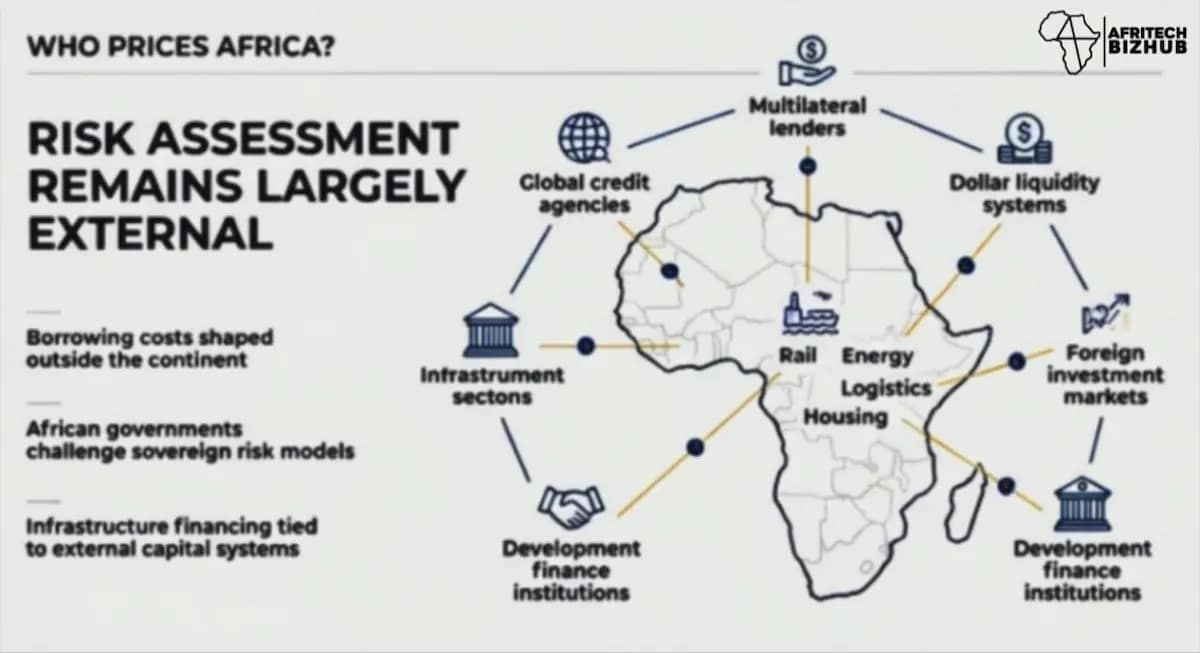
Infrastructure development across several African countries continues depending heavily on foreign capital, multilateral lenders, and external financing systems largely priced outside the continent.
Dollar dominance across African trade and financing systems is also increasing pressure on long-term infrastructure costs.
Many African economies still rely heavily on dollar liquidity to finance major projects, exposing infrastructure development to currency volatility, higher repayment pressure, and rising external financing costs.
Regional payment systems such as PAPSS and other local-currency settlement initiatives are expanding across parts of the continent, but Africa’s infrastructure financing gap continues widening faster than current financial integration systems can close it.
Why Do African Countries Pay Higher Borrowing Costs Than Other Regions?
Risk pricing is becoming one of the biggest fault lines inside Africa’s infrastructure financing debate as governments increasingly challenge how global credit agencies and financial institutions assess the continent.
Leaders at the Africa Forward Summit compared Africa’s borrowing conditions with other regions, arguing that several African economies continue facing higher financing costs despite carrying lower levels of geopolitical conflict than some global markets.
The criticism comes as infrastructure financing needs continue rising across transport, energy, logistics, and industrial sectors across the continent.
Global credit agencies maintain that sovereign ratings reflect debt exposure, fiscal conditions, governance pressure, and external financing vulnerabilities, even as African governments continue challenging how risk across the continent is assessed.
But frustration is growing across African governments as borrowing costs remain elevated even in relatively stable economies seeking long-term infrastructure capital.
Africa’s financing debate is becoming increasingly tied to who determines how risk across the continent is priced.
Can Africa Take Greater Control of Its Infrastructure Development?
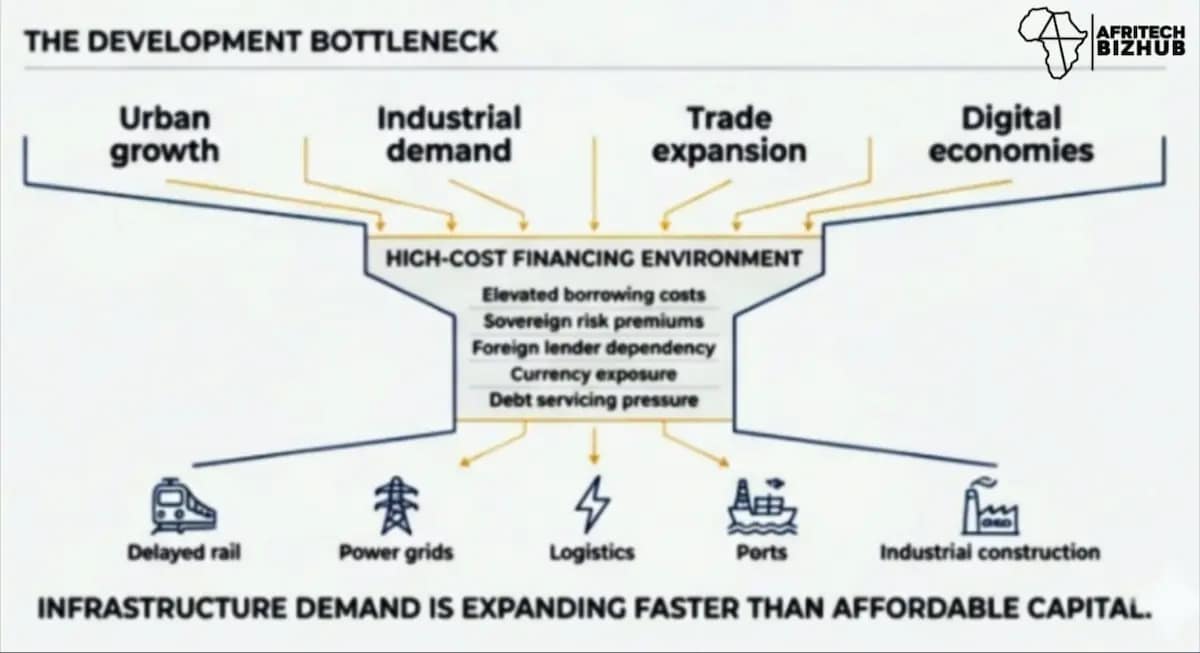
Pressure is rising across Africa’s infrastructure financing debate as governments push back against the global financial systems shaping borrowing costs and long-term development across the continent.
Leaders at the Africa Forward Summit focused heavily on risk assessments, financing conditions, and the cost of capital flowing into African markets as frustration grows over how infrastructure across the continent continues to be priced.
Africa’s infrastructure pressure is no longer only about access to funding. Large parts of the continent still remain heavily underbuilt in transport, energy, logistics, housing, and industrial systems despite rising urban growth and expanding digital economies.
African governments continue relying heavily on foreign lenders, external financing structures, and investment agreements negotiated largely outside the continent.
Leaders at the Africa forward summit pushed more openly for greater influence over how African infrastructure risk is priced as financing pressure continues slowing development across several markets.
Africa Forward Submit: Can Africa Finance Its Infrastructure Without Foreign Dependence?
Africa’s infrastructure expansion still depends heavily on foreign capital, multilateral lenders, development finance institutions, and external investment partnerships.
The Africa Forward Summit did not signal a continent preparing to separate itself from global financing systems.
The stronger message from leaders in Nairobi was pressure for softer financing conditions, lower borrowing costs, and fairer risk assessments as infrastructure demand across the continent continues rising.
Much of Africa still remains underdeveloped in transport, energy, industrial capacity, housing, and logistics despite years of economic expansion and population growth.
Foreign investment remains critical to how large parts of Africa finance roads, ports, power systems, industrial zones, rail projects, and digital infrastructure.
But frustration is growing over the cost attached to that capital and the financing conditions shaping long-term development across the continent.
Africa’s infrastructure ambitions are accelerating. The pressure to finance that growth at lower cost is rising with them.


Recent Comments