


Featured Summary:
- Neobank Africa expansion increasingly depends on partnerships instead of full-stack ownership.
- Africa digital banking growth is creating pressure for lower customer acquisition and faster service delivery.
- Digital banking platforms are competing around access and usability rather than branch scale.
- Banking platform scalability may influence which financial models reach underserved markets sustainably.
Building a bank and reaching customers are no longer the same challenge.
Financial institutions can launch products quickly and still struggle to lower acquisition costs, maintain engagement, or expand beyond concentrated urban users.
That pressure explains why partnerships are becoming central to digital banking across Africa.
Neobank Africa models increasingly combine payment infrastructure, distribution networks, banking capability, and digital wallets to expand reach without rebuilding every operational layer internally.
The larger change sits inside market access.
Financial growth increasingly depends on who reaches customers efficiently rather than who owns the most infrastructure.
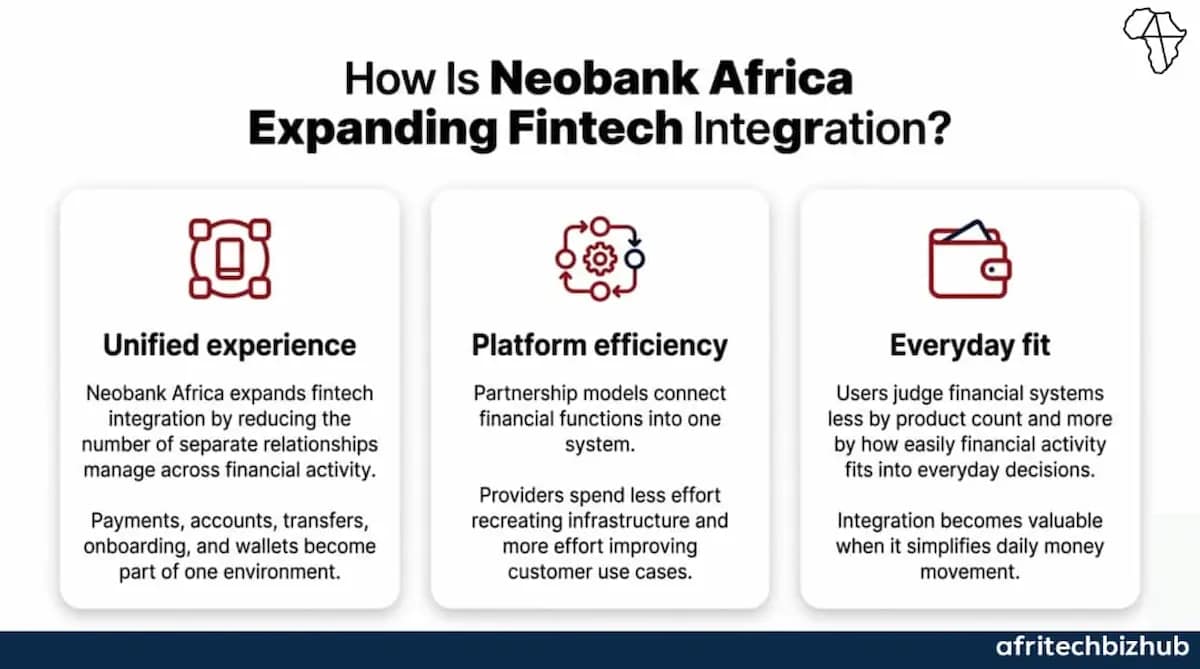
How is Neobank Africa Expanding Fintech Integration?
Neobank Africa expands fintech integration by reducing the number of separate relationships customers manage across financial activity.
Instead of treating payments, accounts, transfers, onboarding, and wallets as separate experiences, partnership models connect those functions into one environment.
That changes platform economics.
Financial providers spend less effort recreating existing infrastructure and more effort improving customer use cases.
Integration becomes valuable because users judge financial systems less by product count and more by how easily financial activity fits into everyday decisions.
Why Is Africa Digital Banking Expanding Through Partnerships?
Africa digital banking growth follows a different pattern from traditional banking expansion.
Physical reach no longer guarantees financial relevance.
Distribution speed, onboarding simplicity, and the ability to launch services without long deployment cycles increasingly determine market growth.
Partnership structures support that shift because they allow providers to reach customers through existing rails instead of building every layer independently.
The stronger models increasingly focus on reducing customer friction while improving service consistency across different markets.
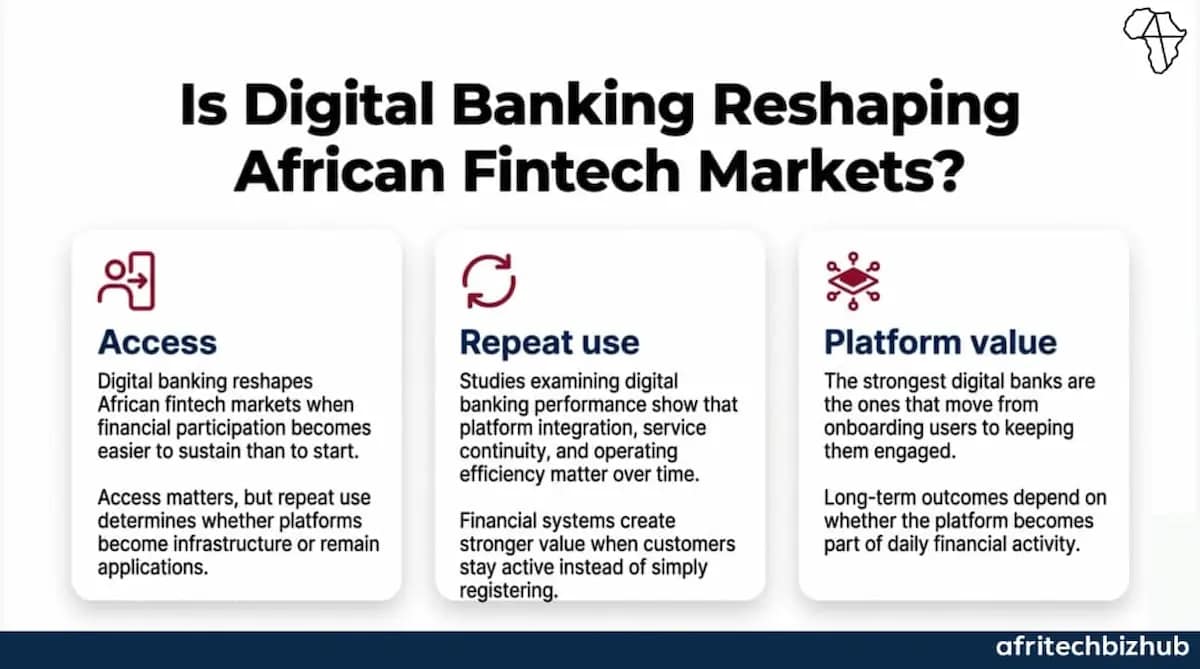
Is Digital Banking Reshaping African Fintech Markets?
Digital banking reshapes African fintech markets when financial participation becomes easier to sustain than to start.
Access matters, but repeat use determines whether platforms become infrastructure or remain applications.
World Bank financial inclusion research continues showing that easier account access and digital financial usage support stronger participation outcomes, but sustained activity depends on reliability, usability, and continued engagement rather than account creation alone.
What Powers Banking Platform Scalability Across Africa?
Scalability starts when growth stops creating operational stress.
Financial platforms expand successfully when more customers do not automatically create slower service, higher acquisition costs, or lower reliability.
The stronger opportunity for Neobank Africa may not come from offering more financial products.
It may come from reducing the operational complexity customers experience while keeping service reliable as usage expands.
Platforms that simplify participation may scale faster than platforms that simply add features.


Recent Comments