


Featured Summary:
- MSME financing is becoming a larger battleground as Ethiopian fintech firms push deeper into small-business credit.
- Ethiopian fintech firms are targeting underserved merchants, informal businesses, and rural entrepreneurs long excluded from traditional banking systems.
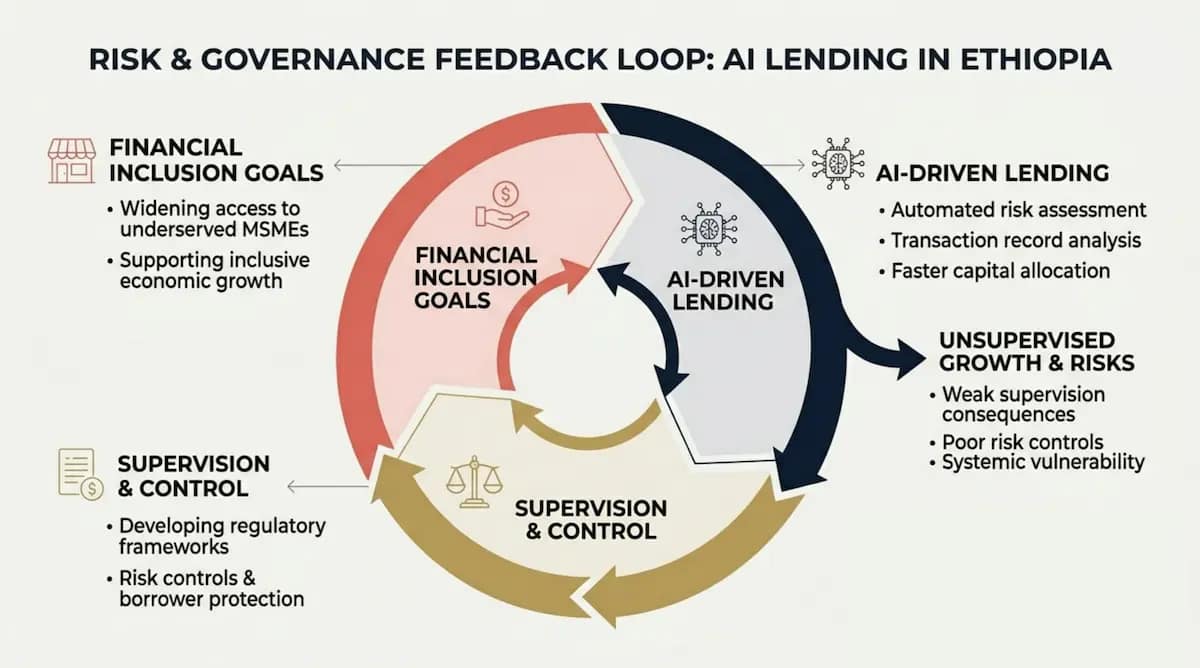
- Digital banking pressure is exposing structural weaknesses inside Ethiopia’s financial inclusion framework, especially around credit access and borrower protection.
- AI-driven lending systems could reshape small-business financing across Ethiopia, but weak supervision and poor risk controls still carry long-term consequences.
Access to business capital is becoming a larger constraint on Ethiopia’s commercial growth than access to payments alone.
Small businesses continue carrying large parts of economic activity while operating inside financing systems shaped by weak collateral structures, limited credit history, slow lending decisions, and uneven banking access.
Ethiopian fintech firms are increasingly moving beyond payments into credit infrastructure as AI-driven banking systems attempt to widen access to businesses traditional financial models continue to overlook.
How Is MSME Financing Reshaping Ethiopia’s Small Businesses?
Small businesses across Ethiopia continue facing structural financing barriers that traditional banks have failed to solve consistently.
Merchants, retailers, transport operators, informal traders, and small manufacturers often struggle to access formal credit due to rigid collateral requirements and limited banking history despite driving employment and local commercial activity across multiple sectors.
That financing gap has opened stronger commercial space for Ethiopian fintech firms using transaction records, payment behaviour, merchant activity, and alternative financial data to assess borrowers differently.
MSME financing now carries greater economic importance as lenders compete for businesses traditional banking systems overlooked for years while Ethiopia’s private-sector economy pushes for broader financial access.
Why Is Ethiopian Fintech Expanding Digital Banking Access?
Digital banking expansion across Ethiopia now reflects larger financial-system pressure rather than consumer convenience alone.
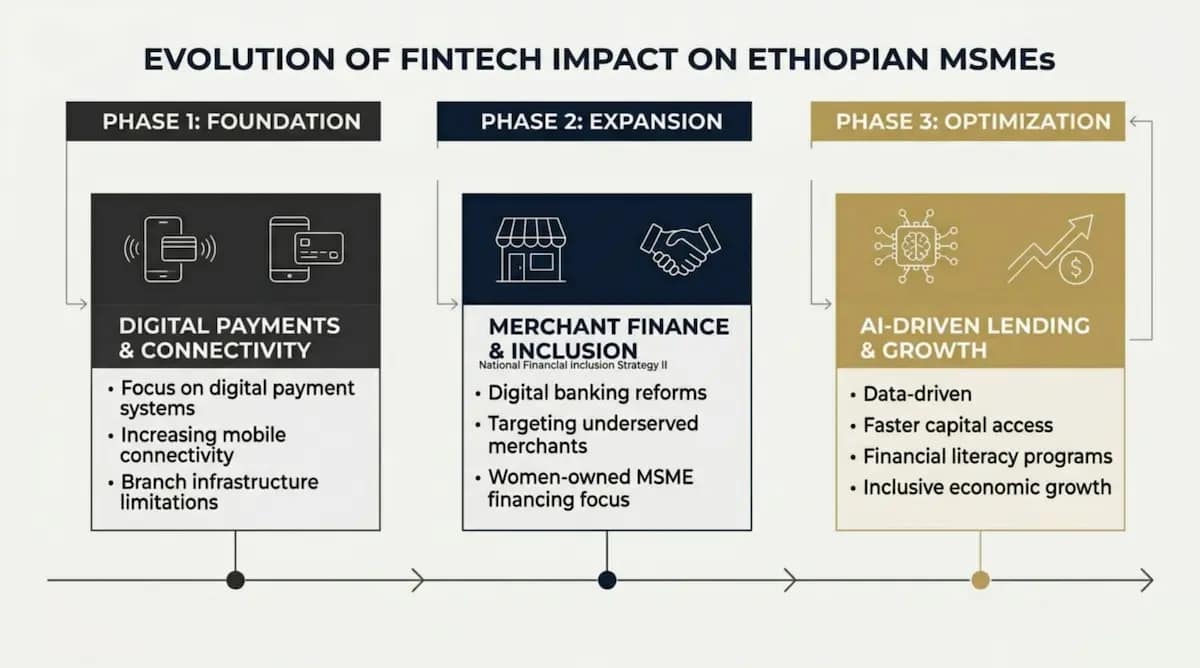
Cash dependency, weak branch infrastructure, and uneven banking access still restrict commercial participation across large parts of the economy despite rising mobile connectivity and financial-sector reforms.
Ethiopian fintech companies now position themselves beyond payment processing into merchant finance, lending systems, savings platforms, digital wallets, and AI-driven financial analysis.
The sector’s direction increasingly points toward full-service financial infrastructure as competition intensifies around who controls access to underserved commercial markets before Ethiopia’s financial liberalisation advances further.
Can Digital Banking Close Ethiopia’s Financial Inclusion Gap?
Financial inclusion across Ethiopia remains uneven despite broader digital banking activity.
Rural communities, women-owned businesses, low-income populations, and informal enterprises still face major barriers around credit access, digital literacy, financial documentation, and formal banking participation.
The National Bank of Ethiopia’s National Financial Inclusion Strategy II identified digital financial services as a central tool for widening formal financial access across underserved populations.
The strategy reflects broader institutional pressure around expanding financial participation beyond urban banking systems into smaller businesses and informal commercial activity tied directly to Ethiopia’s economic growth ambitions.
How Does Inclusive Growth Support Women-Owned MSME Financing?
Inclusive growth increasingly depends on whether more women-owned businesses can move from informal survival into formal economic participation.
Across Ethiopia, financing barriers continue limiting expansion for women operating across retail, services, logistics, agriculture, and small-scale commerce despite their growing contribution to commercial activity and employment.
The next phase of Ethiopia’s MSME financing debate may depend less on expanding digital access alone and more on whether financial systems can widen capital access without reproducing old exclusion patterns through new technology.
Fintech platforms that expand financing into underserved business segments while maintaining discipline may strengthen long-term economic participation.
Those that scale lending without improving inclusion may expand credit volumes without changing ownership, productivity, or economic opportunity in meaningful ways.


Recent Comments