

Last updated: December 12, 2025
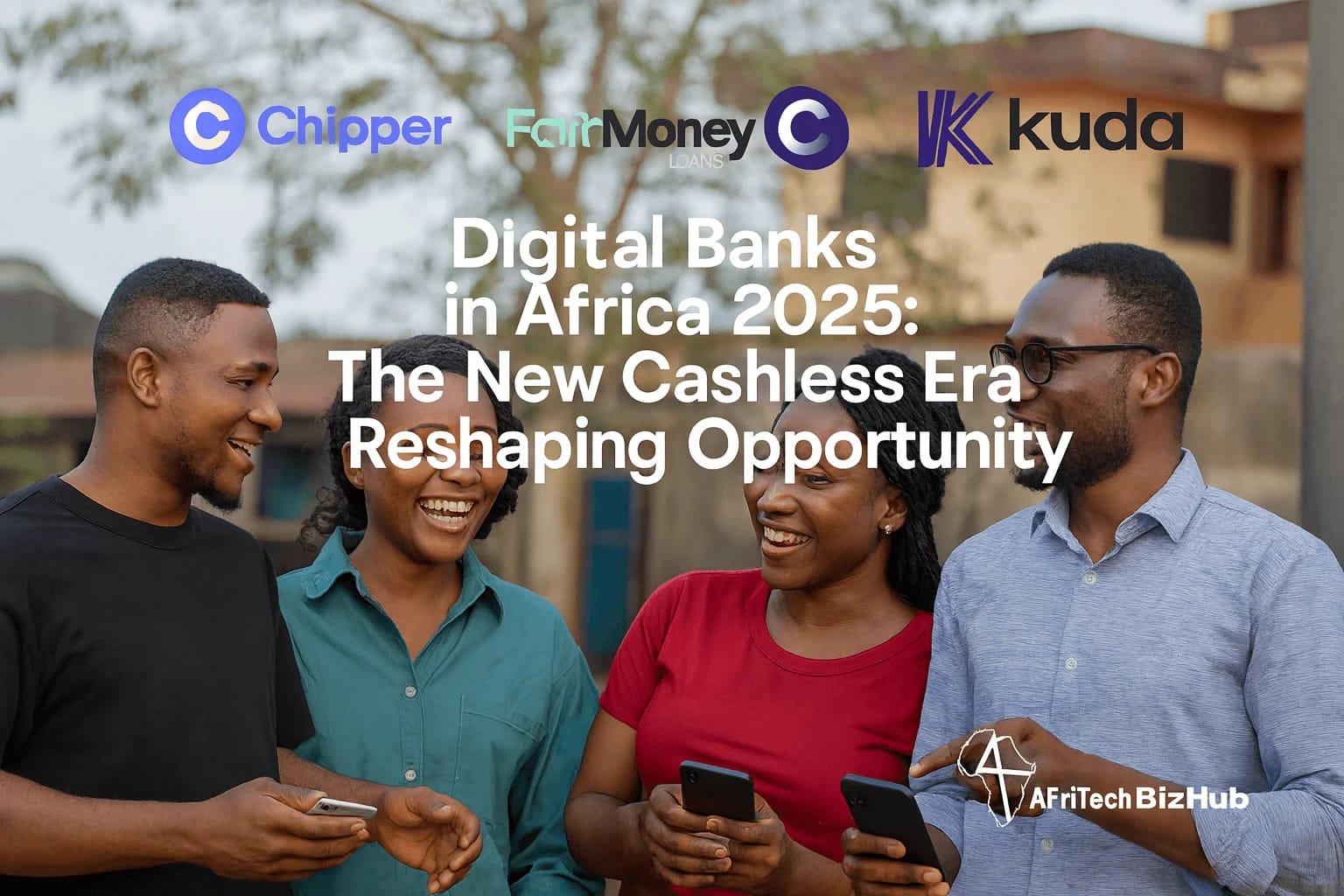
Africa’s banking system is being transformed. Digital banks in Africa 2025 are making it easier to open accounts, access credit, save, and transact—especially for young people poised to drive the continent’s cashless opportunity economy.
Africa has entered a pivotal financial moment. For years, banking access grew slowly, but digital banks in Africa 2025 signal a structural shift. What we are witnessing now is not hype, it is the acceleration of mobile-first, inclusive banking across the continent.
Featured Summary:
Traditional banks in Africa long focused on branches, paper forms, and high fees, leaving millions unbanked and many youth excluded.
In recent years, mobile penetration, real-time payments, and app-based banks started rewriting the rules as Afritech Biz Hub reported in our analysis of Africa’s fintech rise.
The Core Issue or Major Shift
The major shift is that digital banks in Africa 2025 are becoming the primary financial gateway for millions of Africans previously excluded by legacy banks. They open accounts in minutes, provide instant personal loans, and enable savings and payments without physical branches.
According to the Global Findex report, the share of adults in Sub-Saharan Africa with either a bank or mobile-money account rose from 34% to 58% between 2014 and 2024. This builds on our earlier piece on Africa’s Fintech Rise: A New Era of Opportunity in 2025, where we showed that mobile-first banking is central to Africa’s financial transformation.
Continental Perspective
Across Africa, a clear pattern is emerging.
- Nigeria: Kuda, Carbon and FairMoney dominate Nigeria’s digital-banking scene, offering zero-fee accounts, automatic savings and micro-loans to young workers, traders and gig earners.
- Kenya: Building on M-PESA, digital banks such as Chipper offer multi-currency wallets and virtual cards, helping freelancers and remote-workers access global income streams.
- Ghana: Emerging digital banks and fintech wallet-platforms empower youth and small businesses with savings, payments and credit services previously unavailable through traditional banks.
- South Africa: TymeBank deploys an app-only banking model plus retail-kiosks, bringing low-fee savings and digital credit to both township and urban customers.
- Rwanda & Egypt: Smaller markets where digital banks are enabling SMEs and salary advances via apps, connecting to the broader fintech infrastructure we examined in our Africa’s Tech Leap article.
Opportunities Created by This Shift
A. Opportunities for Individuals
- Access to credit: digital banks allow youth and informal-workers to obtain micro-loans and overdrafts based on transaction data rather than collateral.
- Savings and wealth-building: digital banks support automatic savings, goal-based tools and higher interest rates.
- Global income access: platforms like Chipper enable Africans to receive payments from abroad, use virtual cards and participate in the global freelance economy.
- Financial identity: more young Africans now build formal financial profiles through digital banking, improving future access to larger loans.
B. Opportunities for Businesses
- Working-capital access: SMEs now access short-term digital loans based on real-time sales rather than lengthy bank underwriting.
- Lower costs and faster payments: digital bank APIs reduce friction for merchants paying suppliers, staff or receiving payments—tying into regional payment systems covered in our [COMESA payments] article.
- Integration with digital tools: SMEs connect digital banking with e-commerce and SaaS platforms, part of the digital ecosystem described across our fintech and tech articles.
C. Opportunities for Africa as a Whole
- Faster, cheaper financial infrastructure enabling regional trade and inclusion.
- Cash-use reduction leading to better transparency, tax collection and economic efficiency.
- A more inclusive financial system creating opportunities for women, rural entrepreneurs and youth across markets.
Data, Trends, and Future Outlook
Digital banks in Africa 2025 reflect early growth of a major long-term shift.
Predictions
- 2025: Digital banking users across Africa will surpass 100 million; mobile-first platforms will dominate new bank-account openings.
- 2027: Over 60% of new accounts in major African markets will be digital-only; digital banks will partner deeply with cross-border payments infrastructure such as PAPSS.
- 2030: Africa emerges as a global case-study in mobile-first banking; digital banks become mainstream, not alternative.
Globally, online banking users will exceed 3.6 billion in 2025, with digital payments hitting over US $20 trillion in value.
Connecting the Dots
When viewed together, from mobile-first apps to regional payment frameworks and SME tools, it is clear: Africa is building a new financial operating system. Digital banks in Africa 2025 are not just rewriting banking, they are enabling the broader shift toward a cashless, opportunity-driven economy.
CONCLUSION
Digital banks in Africa 2025 are more than fintech innovations, they are the financial foundation of a new era of inclusion and opportunity. As millions of Africans use their phones as banks, save, borrow and earn digitally, the continent is positioning itself for growth on its own terms. The next chapter of African banking is unfolding now.


Recent Comments