

Last updated: December 12, 2025
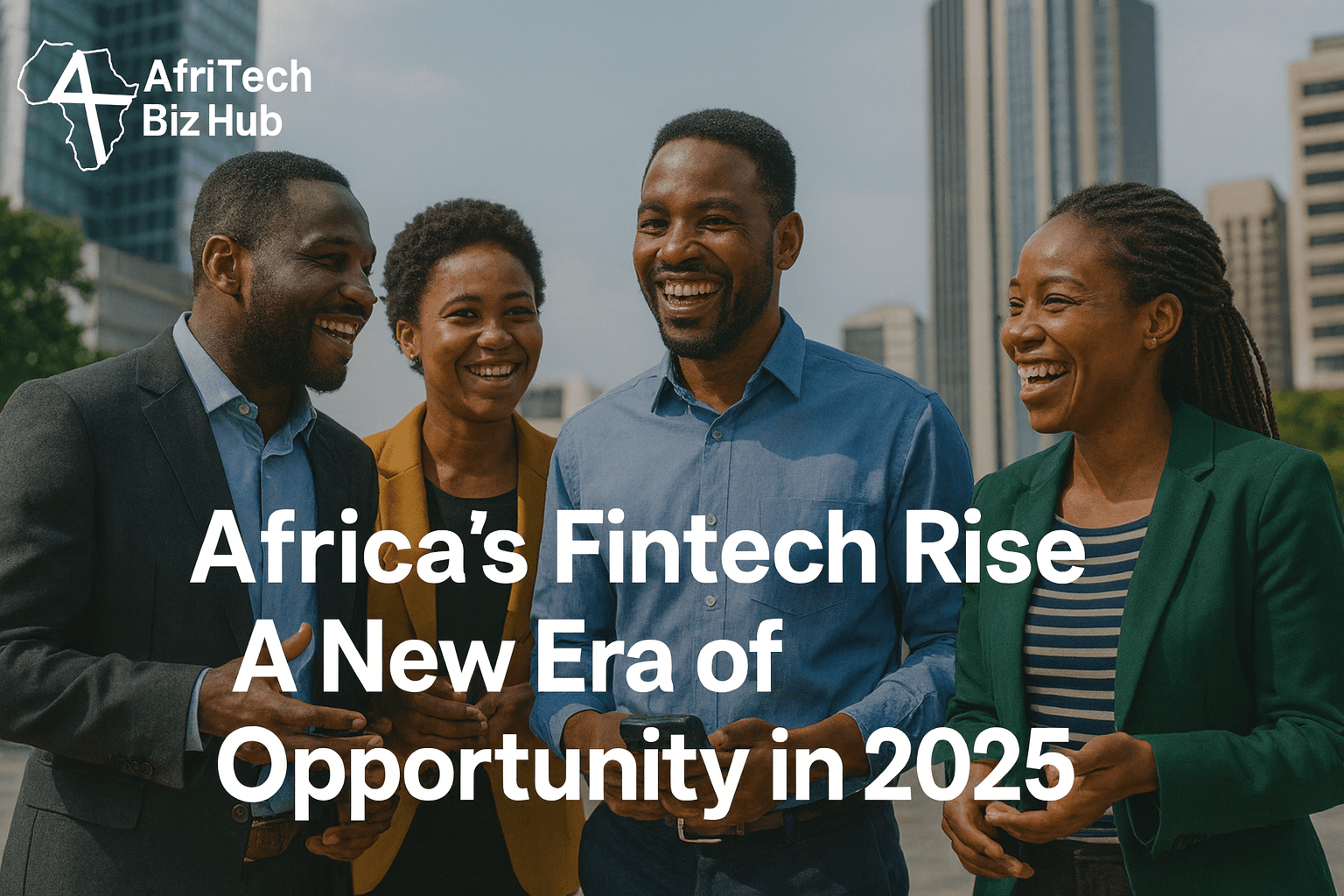
How digital money, AI, and regional payment systems are unlocking a new wave of financial opportunity across Africa’s fast-rising digital economy.
In Nairobi, a boda rider opens the M-PESA app, taps Ziidi Trader, and buys his first shares on the Nairobi Securities Exchange with KSh 100, all in under two minutes. In Lagos, a trader moves money across banks instantly via Nigeria’s real-time payment rail, part of the 12 billion instant transfers processed in 2024. Across Lusaka, Cairo, Kigali, and Accra, new regional payment systems mean small exporters can receive cross-border payments in local currencies, without ever touching dollars. This is no longer “Africa catching up.” This is Africa setting the pace. By 2030, Africa’s fintech revenues are projected to reach $47–65 billion, growing several-fold from early-2020s levels, even as global funding cycles slow. What’s really happening is bigger than “apps” or “startups.” A new financial operating system is forming, one that is:
- Mobile-first
- Real-time
- Regionally connected
- AI-driven
- And increasingly investment-oriented, not just “send money and go”
Featured Summary:
Africa’s fintech revolution is accelerating faster than the world expected. From real-time payments and digital banks to AI-driven credit scoring, stablecoins, M-PESA stock investing, money market funds, and AfCFTA-enabled cross-border payments, a new financial system is forming in 2025. This article breaks down the transformation reshaping everyday life, creating new jobs, and opening unprecedented opportunities for millions across the continent.
Africa’s Fintech in 2025: Big Market, Tough Funding, Real Users
The numbers are loud:
- Africa’s fintech market is one of the fastest-growing in the world, with revenues projected to grow roughly fivefold between 2023 and 2028 to about $47 billion, and as high as $65 billion by 2030 in some scenarios.
- The ecosystem has expanded from a few hundred players to 1,000+ fintech firms across payments, lending, insurtech, wealth, and infrastructure.
At the same time, funding has cooled:
- Fintech funding in Africa fell 37% from 2022 to 2023, and dropped another 50%+ in the first half of 2024 versus the same period in 2023.
On paper, that sounds like a slowdown. On the street, it feels like the opposite.
- More merchants now accept QR and wallet payments
- More youth receive salaries and freelance income digitally
- More families save, borrow, and invest from their phones
In other words, the capital cycle is down, but adoption is up. That’s the perfect moment for a long-term builder — and for a platform like Afritech Biz Hub — to step in with clarity and direction.
The New Rails: From National Instant Payments to Continental Systems
National Rails: Nigeria Shows What “Instant” Really Means
Nigeria is a case study in how fast behavior can shift when rails are in place:
- In Q1 2025, electronic payment transactions in Nigeria hit ₦284.9 trillion, up 22% year-on-year as more people go cashless.
- In 2024 alone, over 12 billion instant transfers were completed on Nigeria’s instant payment infrastructure, the highest volume on the continent.
This real-time layer underpins:
- Neobanks like Kuda, Opay, PalmPay
- Agent networks and PoS terminals
- Salary, gig, and government transfers
For a small business owner, that means: “I can receive money from a customer in seconds and pay my supplier before the market closes — no more ‘come back in three days.’” Afritech Biz Hub has already explored this shift in pieces (Nigeria’s real-time payment system). This pillar pulls all those threads together and plugs them into the broader continental shift.
Regional Rails: COMESA, PAPSS, and the AfCFTA Layer
The real unlock for Africa’s digital economy isn’t just faster payments within countries — it’s making cross-border payments cheap, instant, and local-currency based.
COMESA’s Digital Retail Payments Platform (DRPP)
In October 2025, the Common Market for Eastern and Southern Africa (COMESA) launched a Digital Retail Payments Platform (DRPP) to:
- Enable businesses to settle cross-border trade in local currencies
- Eliminate the need for U.S. dollar intermediary steps
- Cut transaction costs, with a target of keeping fees under 3%
- Specifically support SMEs, which make up about 80% of businesses and 60% of employment in the region.
The platform is being piloted in corridors like Malawi–Zambia, with more members to follow.
PAPSS: The AfCFTA Engine
The Pan-African Payment and Settlement System (PAPSS) is the backbone for the AfCFTA vision, a continental RTGS that:
- Lets businesses pay each other in their own currencies
- Nets out positions among participating central banks
- Aims to reduce reliance on overseas payment systems for intra-African trade.
With more than a dozen central banks already connected and an FX marketplace rolling out, PAPSS is trying to make “pay across Africa” feel as easy as “send M-PESA.”
Why this matters for opportunity
For a Nigerian agribusiness exporting to Kenya or a Rwandan SaaS startup serving Nigerian clients, this shift means:
- Lower FX spreads
- Faster settlement
- Less dependence on scarce hard currency
It’s not just infrastructure; it’s margin back in the hands of African businesses.
The Rise of Africa’s Digital Banks: Nigeria, Kenya, Ghana, South Africa
Across the continent, digital-only and hybrid banks are becoming the front doors of the financial system.
Nigeria: Neobanks for the Mass Market
Nigeria’s neobank scene includes players like:
- Kuda – a smartphone-native bank offering no-fee accounts, budgeting tools, and savings automation, often described as the “bank of the free.”
- Opay, Vbank, and super-apps like PalmPay, which now reports over 35 million registered users and around 1 million SME clients, positioning itself as a “financial super app” for everyday Nigerians.
These platforms combine:
- Instant transfers
- Bills & utilities
- Savings “pockets”
- Micro-loans
- In some cases, card and PoS solutions for merchants
For many users, this is their first real bank.
South Africa: Digital Banks with Scale
In South Africa:
- TymeBank has grown into one of Africa’s most prominent digital banks, attracting investment from global players like Nubank and reaching millions of customers.
- Bank Zero, Discovery Bank, and others offer app-first, low-fee banking with strong analytics and savings options.
These banks target:
- Salary earners wanting better digital services
- SMEs needing cheaper business banking
- Under-served segments tired of high fees and long queues
Kenya, Ghana, and Beyond
- Kenya’s mobile money ecosystem (M-PESA, Airtel Money, T-Kash) has evolved into a quasi-banking system, now extending into investments and lending.
- Ghana and Francophone Africa have regional players like Eversend and local neobanks that blend wallets, FX, and savings.
The story is the same:
Digital banks are compressing what used to be five different trips — bank, FX bureau, broker, microfinance office, and cash agent — into one app.
From Mobile Money to Mobile Investing: The M-PESA Playbook
If you want to understand where Africa’s fintech can go, look at M-PESA Africa in 2025.
Ziidi Money Market Fund: KSh 100 to Start Investing
Safaricom’s Ziidi Money Market Fund (MMF) lets Kenyans start investing with as little as KSh 100 directly inside the M-PESA app.
That means:
- A mama mboga with irregular daily income can still park small amounts into a regulated money market fund.
- Young workers can auto-save and earn yield without visiting a bank branch or broker.
Ziidi Trader: Turning 34 Million Users into Potential Shareholders
In 2025, Safaricom began piloting Ziidi Trader, a feature inside the M-PESA app that:
- Integrates with the Nairobi Securities Exchange (NSE)
- Lets users buy and sell stocks directly from their phones
- Offers watchlists, real-time alerts, and portfolio tracking
- Is designed around small ticket investing, with communication from Safaricom and ecosystem partners highlighting stock purchases from around KSh 100 upward.
This is one of the clearest examples of Africa’s new opportunity: A platform that once just sent money now quietly turns tens of millions of people into potential stock investors.
Beyond Kenya: Retail Investing via Apps Across Africa
Similar patterns are emerging in other markets:
- App-based brokers like Bamboo in Nigeria and South Africa let users buy local and international stocks with low minimums.
- Digital platforms and banks offer money market funds and T-bill access via mobile channels, expanding beyond wealthy clients into the mass market.
Practical implications:
- First-time investors can test with tiny amounts
- SMEs can park idle cash in MMFs instead of leaving it idle in current accounts
- Young Africans can build investing habits early, not just rely on cash holdings
AI in Credit Scoring: From Thin Files to Data-Rich Profiles
Traditional credit was built for:
- People with payslips
- Formal business registration
- Long banking histories
That model simply never fit most Africans. AI-driven fintech is rewriting that.
Alternative Data + Machine Learning
Fintech lenders are using:
- Mobile phone usage patterns
- Repayment history on small airtime or utility loans
- Merchant transaction history
- Behavioral data from apps
to build risk scores on customers who would otherwise be “invisible” to banks. AI-driven platforms like Optasia, which operates across emerging markets and specializes in micro-credit delivered via telcos, illustrate this shift at scale, serving over 100 million active users and processing tens of millions of daily loan decisions using AI models.
What This Means for Everyday Africans
- A kiosk owner can access short-term working capital at the start of the week and repay from mobile wallet inflows.
- A student with no formal employment record can get a micro-loan for tuition, data bundles, or tools.
- Informal workers can build a digital repayment history that later qualifies them for larger loans, asset finance, or mortgages.
But there’s a caution:
- Poorly designed models can bake in bias.
- Over-lending and aggressive debt collection can harm vulnerable users.
This is where regulators, consumer advocates, and responsible fintechs must shape standards, something Afritech Biz Hub can repeatedly return to as this ecosystem matures.
Stablecoins, Digital Dollars, and Remittances
If you want to understand 2025’s quiet financial revolution, look at stablecoins.
Stablecoins as a New Rail for Africans
By 2024:
- Stablecoins accounted for about 43% of digital asset transaction volume in Sub-Saharan Africa, with Nigeria alone processing nearly $22 billion in stablecoin transactions between July 2023 and June 2024.
For many users and SMEs, stablecoins are not “crypto speculation”; they are:
- Digital dollars for savings in inflation-hit economies
- Remittance channels that avoid high traditional fees
- Working capital tools for import-export businesses
Research shows remittance costs in Sub-Saharan Africa still average around 8–9% for traditional channels, far above the UN’s 3% SDG target, making lower-cost digital alternatives extremely attractive.
Diaspora Money and the Stablecoin Layer
Nigeria’s diaspora alone sent about $19.5 billion home in 2023, roughly a third of all remittances into Sub-Saharan Africa. Add stablecoins into that picture and you get:
- Diaspora workers funding families, tuition, and small businesses more cheaply
- Freelancers in Lagos, Nairobi, Kigali, Accra getting paid in USDT or USDC, then converting locally
- SMEs smoothing FX volatility by holding part of their treasury in digital dollars
There are valid concerns about:
- Regulatory oversight
- Taxation and anti-money-laundering
- The impact on local currency sovereignty
But ignoring this layer is no longer an option; it is already part of Africa’s real financial infrastructure.
Remittances, E-Commerce, and the Everyday Digital Economy
Fintech is not happening in a vacuum. It sits inside a broader digital economy wave:
- E-commerce adoption is reshaping how SMEs sell in major hubs like Lagos and Nairobi, and even in rural corridors where mobile money bridges gaps.
- Mobile money agents and apps have become the transaction backbone of everyday life, from transport to agriculture.
Tie this to remittances and we see three levels of impact:
- Household stability
- Families absorb shocks better when remittances arrive quickly and cheaply.
- SME growth
- Small businesses use remittances and digital inflows as seed capital, often circulating through wallets and digital bank accounts.
- Local ecosystems
- Every neighborhood kiosk with a PoS or QR code becomes part of the continent’s payment network.
Fintech Jobs and the New African Workforce
This transformation isn’t just creating new apps; it’s creating entire categories of work.
Direct Fintech Roles
- Software engineers, data scientists, and AI/ML engineers building scoring models, risk engines, and payment gateways.
- Product managers and designers crafting mobile experiences for low-bandwidth users.
- Compliance, risk, and operations teams ensuring systems stay safe and legal.
Many of these roles are:
- Remote-friendly, allowing Africans to work for local or global fintechs
- Paid in hard currencies in some cases, creating a new middle-class segment across Lagos, Nairobi, Accra, Kigali, Cape Town, and beyond.
Ecosystem Jobs
Fintech also powers jobs that don’t look like “tech” at first glance:
- Agent bankers and PoS operators
- Call center and support staff
- Field sales & merchant acquisition teams
- Trainers and financial literacy educators
As rankings like the Financial Times’ “Africa’s Fastest-Growing Companies” show, fintech and software companies dominate the list, meaning job-rich growth.
Skills Africans Should Be Thinking About
For young Africans, the opportunity sits at the intersection of:
- Data + Finance (analytics, risk, modeling)
- Product + UX (designing for local realities)
- Sales + Support (onboarding SMEs, educating mass-market users)
Everyday Transformation: What This Looks Like in Real Life
Let’s bring it down to street level.
A. The Hawker in Accra
She:
- Accepts QR payments from customers
- Saves daily profits into a mobile wallet
- Pushes part of it into a money market fund inside an app
- Uses a micro-loan to restock before festive season
B. The Developer in Lagos
He:
- Works for a Pan-African fintech remotely
- Is paid in naira, sometimes in stablecoins
- Sends a portion to family via low-fee remittance apps
- Invests small amounts monthly into U.S. and local stocks using a digital broker
C. The Teacher in Nairobi
She:
- Uses M-PESA for everyday payments
- Puts KSh 100 at a time into Ziidi MMF for savings
- Tries her first stock purchase via Ziidi Trader
- Isn’t a “trader”, just someone who finally has access
These stories are not “future scenarios.” They’re 2025 realities in pockets across the continent. The gap — and the opportunity — is to make them normal everywhere.
Where Africa’s Fintech Goes Next: The Big Themes
Looking ahead to the next decade, a few themes will define winners:
- Interoperability and regional scale
- Tapping into COMESA’s DRPP, PAPSS, and AfCFTA rails, not just national systems.
- Responsible AI and data governance
- Using AI to unlock credit without trapping people in over-indebtedness.
- Wealth-building, not just payments
- Retail investing (M-PESA Ziidi, app brokers)
- Money market funds, T-bills, and structured savings accessible from KSh 100 or ₦1,000 tickets.
- Regulatory clarity on stablecoins & digital assets
- Turning today’s stablecoin usage into transparent, well-regulated financial rails.
- Talent pipelines and digital skills
- Training millions of Africans for fintech roles, from coding to customer success.
Africa’s fintech story is no longer just about “catching up” with the rest of the world. It’s about inventing a new playbook for how billions of people — many of them young, mobile-first, and globally connected — will earn, move, save, and grow money over the next decade. That’s the story this pillar is designed to tell. And it’s the story Afritech Biz Hub is uniquely positioned to own.


Recent Comments