


Featured Summary:
- African fintech firms are accelerating cross-border payments as trade activity between Africa and China continues expanding.
- B2B payments are becoming more important as businesses demand faster settlement and lower transaction friction.
- Payment infrastructure gaps still slow parts of Africa and China commercial activity despite growing trade volumes.
- African fintech platforms are positioning themselves deeper inside international trade and digital financial systems.
Trade between Africa and China has expanded far faster than the payment systems supporting many of those transactions.
Businesses moving goods across both regions still face settlement delays, currency friction, transfer costs, and fragmented banking processes that slow commercial activity.
African fintech firms are increasingly stepping into that gap as companies search for faster cross-border payments and more reliable B2B payments infrastructure capable of supporting rising trade volumes.
How Are African Fintech Firms Transforming Cross-Border Payments?
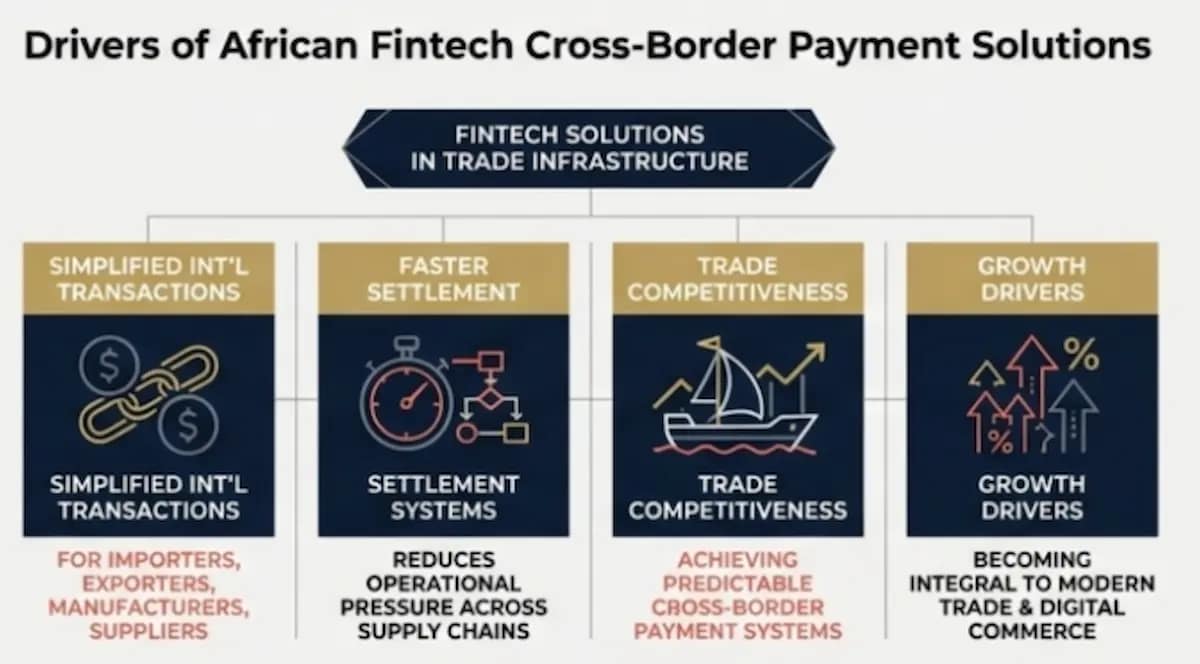
African fintech companies are increasing focus on cross-border payments as businesses demand quicker settlement systems across regional and international markets.
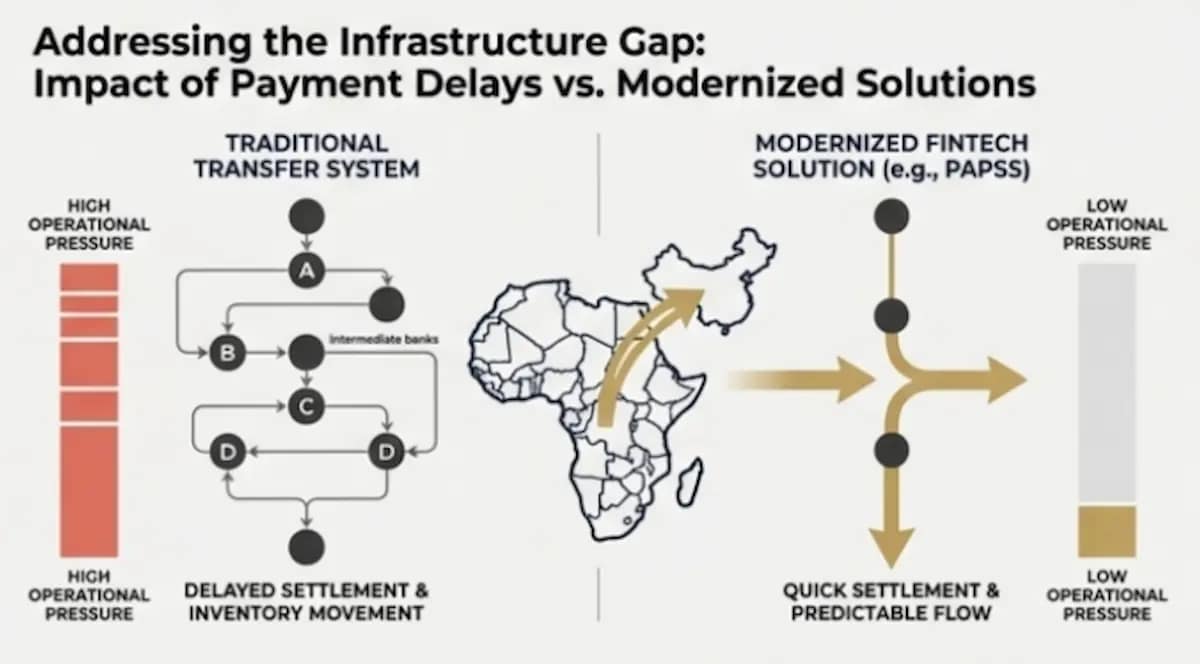
Traditional transfer systems often remain slow, expensive, and heavily dependent on multiple intermediary banks, creating delays that directly affect commercial activity between Africa and China.
That pressure is creating space for fintech platforms capable of simplifying international transactions for importers, exporters, manufacturers, suppliers, and logistics operators.
African fintech firms are increasingly positioning themselves not only as payment companies, but as part of the infrastructure supporting modern trade and digital commerce across emerging markets.
Why Are B2B Payments Expanding Between Africa and China?
Commercial trade between Africa and China now stretches across manufacturing, electronics, logistics, construction materials, machinery, and industrial supply chains.
As transaction volumes grow, businesses are placing heavier attention on how quickly payments move across borders and how much friction exists inside settlement systems.
B2B payments are becoming more commercially important because delays inside payment systems often create delays across entire supply chains.
Importers waiting for confirmation, suppliers waiting for settlement, and logistics operators waiting for clearance all increase operational pressure for businesses already operating inside volatile currency and shipping environments.
Faster settlement systems are becoming part of trade competitiveness itself.
Can Payment Infrastructure Solve Africa and China Trade Delays?
Payment infrastructure limitations continue slowing parts of commercial activity between Africa and China despite the scale of trade between both regions.
Currency conversion pressure, fragmented banking systems, settlement delays, compliance checks, and varying financial regulations still create friction for businesses attempting to move money efficiently across borders.
PAPSS does not directly solve Africa-China settlement by itself, but it shows how African payment infrastructure is being modernized as businesses demand faster settlement systems across regional and international trade corridors.
How Do Cross-Border Payments Boost African Fintech Growth?
African fintech companies are moving deeper into international settlement systems as businesses search for faster transaction speeds, lower transfer costs, and more reliable payment infrastructure.
Cross-border payments are no longer functioning only as financial services.
They are increasingly becoming part of the infrastructure supporting trade itself between African businesses and global commercial partners.
Trade between Africa and China continues expanding, but businesses are becoming less patient with slow settlement systems that delay inventory movement, supplier payments, and commercial transactions.
Faster payment infrastructure is gradually becoming part of business competitiveness, not just financial convenience.
Fintech firms solving that problem consistently are beginning to position themselves closer to the center of Africa’s evolving trade economy, especially as companies across both regions push for faster and more predictable commercial activity.


Recent Comments