


Featured Summary:
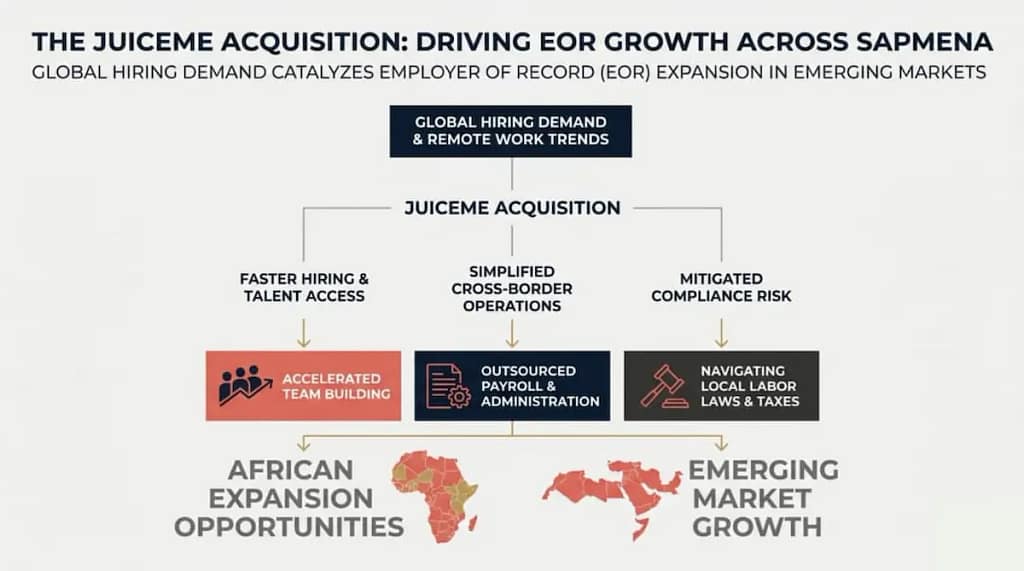
- JuiceMe’s acquisition is expanding Employer of Record operations across SAPMENA markets as global hiring demand increases.
- EOR services are becoming more important for startups managing cross-border hiring and compliance requirements.
- JuiceMe is positioning itself deeper inside startup expansion and workforce management across emerging markets.
- African expansion opportunities are attracting technology firms searching for faster hiring and operational flexibility.
Hiring across multiple countries has become one of the biggest operational challenges facing startups expanding into emerging markets.
Different labor laws, tax systems, payroll structures, and compliance rules continue slowing how quickly companies can build teams across borders.
Employer of Record platforms are increasingly stepping into that gap as startups search for faster ways to hire talent without setting up full legal operations in every country immediately.
JuiceMe’s acquisition reflects how workforce infrastructure is becoming more commercially important across Africa and wider SAPMENA markets.
How Does Employer of Record Support Scaling?
Startups expanding across multiple markets often struggle with payroll systems, labor regulation, employee classification, and local compliance requirements.
Employer of Record platforms are increasingly helping companies hire workers legally across borders without first establishing full local entities inside every market they enter.
That flexibility matters more now as startups attempt to expand faster while keeping operational costs under tighter control.
Expansion across Africa and emerging markets increasingly depends not only on access to customers, but also on how quickly companies can hire reliable local talent without becoming trapped inside slow administrative processes.
What are EOR Services in Global Hiring?
EOR services allow companies to hire employees across different countries without establishing full legal entities in each market.
Employer of Record providers manage payroll administration, tax obligations, labor compliance, employment contracts, onboarding, and local regulatory requirements while employees continue working for the hiring company operationally.
That model is becoming more commercially important as startups expand internationally under tighter cost and execution pressure.
Instead of delaying market entry while building legal infrastructure country by country, companies are increasingly using EOR services to deploy teams faster, reduce administrative friction, and expand into new markets with lower operational complexity.
Workforce infrastructure is increasingly becoming a competitive advantage rather than a back-office function.
How is JuiceMe Driving Startup Expansion?
JuiceMe’s acquisition reflects growing demand for workforce infrastructure that allows startups to move across markets without expanding legal complexity at the same pace.
As hiring becomes more distributed across Africa and wider SAPMENA markets, Employer of Record platforms are increasingly positioning themselves as operational layers that reduce onboarding delays, simplify compliance processes, and accelerate team deployment.
The pressure on startups is becoming less about finding talent and more about activating talent quickly across multiple jurisdictions.
The World Bank’s B-READY 2026 methodology discussions highlighted how regulatory quality, administrative systems, and business-enabling environments continue shaping how efficiently firms expand across developing economies.
JuiceMe’s expansion sits inside that wider shift where hiring speed, compliance execution, and operational readiness increasingly influence how fast startups scale internationally.
Why is African Expansion Attracting Tech Firms?
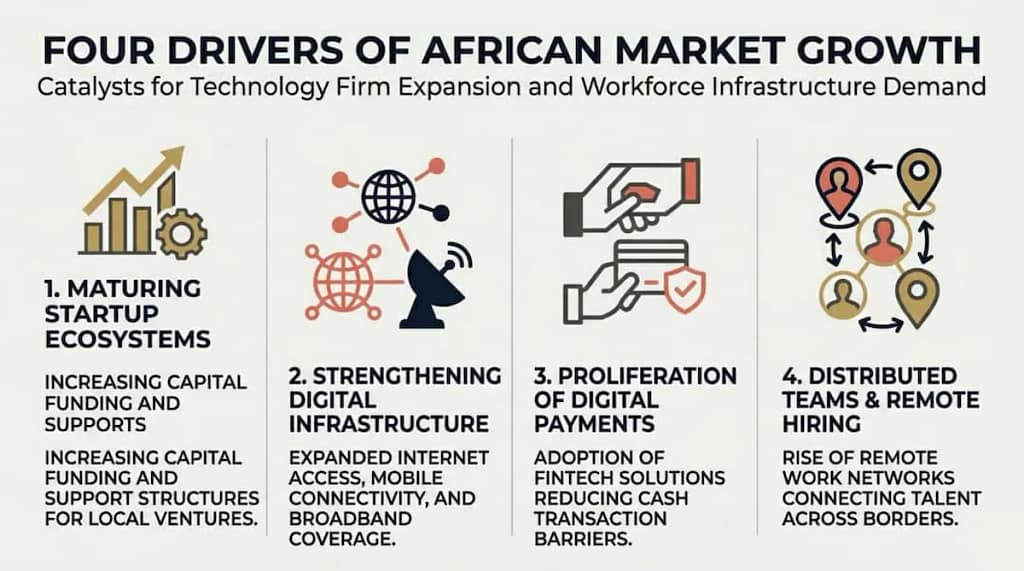
Technology firms are paying closer attention to African expansion as startup ecosystems, digital payments, internet access, and remote hiring networks continue strengthening across multiple markets.
Companies entering African markets are increasingly searching for operational flexibility and access to skilled workers without immediately building full legal structures across every country.
A few years ago, many startups entering African markets focused mostly on speed and growth.
That approach is becoming harder to sustain as operations spread across different countries with different labor systems and regulatory demands.
Companies now want hiring structures that allow them move quickly without creating long-term compliance problems later.
The firms building reliable systems around hiring and workforce management are beginning to stand out much faster than those relying only on expansion momentum.


Recent Comments