

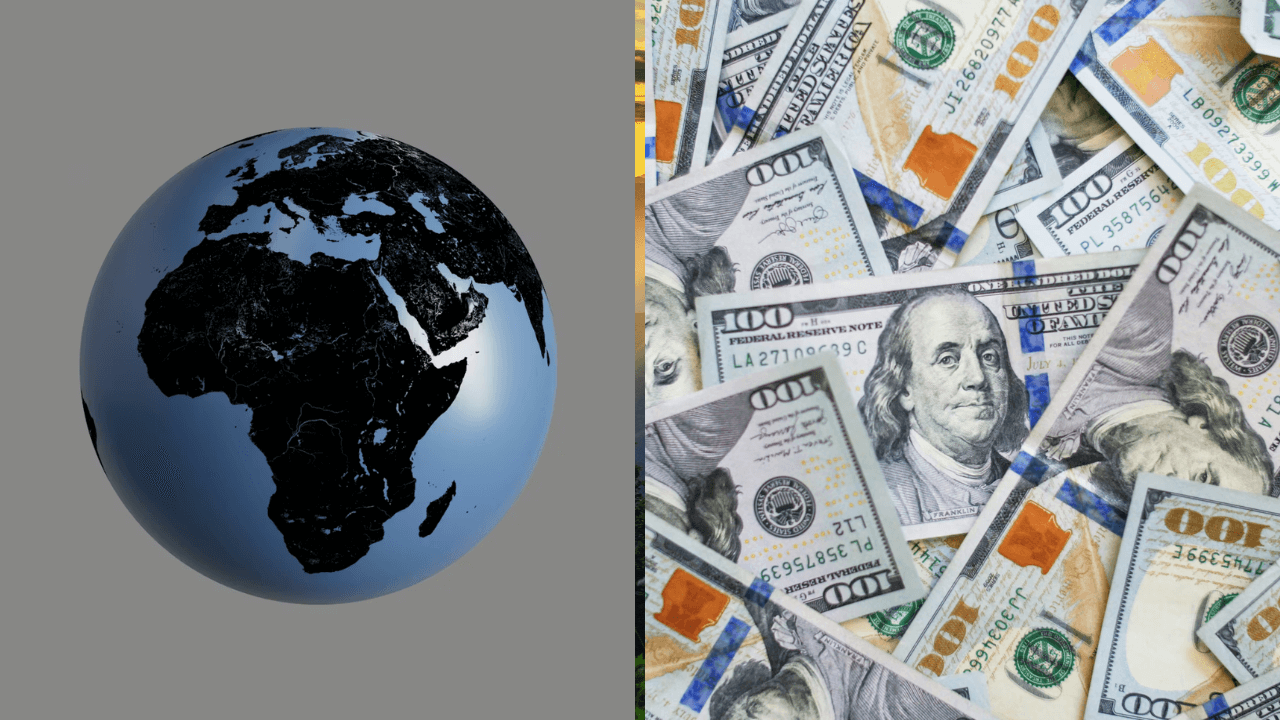
IMF projections point to accelerating growth as easing dollar pressure and fiscal reforms shift Africa from crisis management to cautious expansion.
Featured Summary:
- The IMF projects Sub-Saharan Africa’s growth to accelerate in 2026 after two years of currency and debt disruption.
- Easing dollar pressure and exchange-rate reforms have reduced FX volatility across key economies.
- Nigeria and Egypt illustrate policy-driven stabilization, though debt and refinancing risks remain elevated.
- Africa economy 2026 reflects risk normalization, not a broad expansion cycle.
Africa economy 2026 is entering a measurable rebound phase, according to the International Monetary Fund’s latest growth projections.
After two years defined by currency shocks, inflation spikes and external financing strain, the region’s growth rate is forecast to strengthen as dollar pressures ease and macro adjustments begin to stabilize key markets.
This is not a synchronized boom. It is a recalibration. Inflation is moderating in several large economies, exchange-rate volatility has narrowed in reform-driven markets, and capital conditions are gradually normalizing.
Structural growth drivers, including the continent’s expanding digital payments and services infrastructure, remain intact and continue to deepen financial inclusion across major markets. The shift underway in 2026 reflects stabilization first, acceleration later.
Africa economy 2026 is less about surge and more about repricing risk.
IMF 2026 Data: Growth Returns, but Uneven
The IMF projects Sub-Saharan Africa’s growth to strengthen into the mid-4% range in 2026, outpacing several advanced economies and marking a shift from crisis containment to stabilization.
The upgrade reflects policy adjustments in major markets that have narrowed currency distortions, restored official FX credibility and improved fiscal transparency after the shocks of 2023–2024.
Growth is not accelerating because of sentiment, it is improving where macro corrections have taken effect.
Nigeria’s FX liberalization has reduced parallel-market spreads and improved price discovery, Ghana’s IMF-backed debt restructuring has steadied its currency after peak volatility, and Egypt’s extended reform program has eased external financing pressure.
Inflation remains elevated in parts of the region and debt levels are still high, but volatility has narrowed and external balances are less strained than two years ago. The IMF’s positive outlook is rooted in policy recalibration, not optimism.
The Dollar Cycle Is Shifting
Between 2022 and 2024, aggressive U.S. rate hikes strengthened the dollar, tightened global liquidity and amplified external financing pressure across emerging markets.
For much of Africa, the impact was immediate: currencies weakened, import costs rose, inflation accelerated and external debt servicing became more expensive.
Economies with high import dependency and dollar-denominated liabilities faced acute stress as capital retreated toward U.S. assets.
In 2026, that pressure has moderated. As U.S. monetary tightening has plateaued and the dollar’s upward momentum has eased, currency volatility across several African markets has narrowed and external balance conditions have stabilized.
Import cost pass-through is less severe than during peak dollar strength, and refinancing risks — while still present — are no longer intensifying at the same pace.
The IMF’s improved growth outlook reflects this shift: Africa economy projections are strengthening not because risk has vanished, but because the most aggressive phase of dollar-driven tightening has passed.
How Nigeria and Egypt Are Driving Africa Economy Stabilization in 2026
Nigeria’s exchange-rate liberalization has shifted the trajectory of Africa economy 2026 after two years of acute currency stress.
The compression of parallel-market spreads and improved FX price discovery have reduced distortions that previously amplified inflation and capital flight.
As dollar pressures eased, the naira stabilized relative to crisis peaks, foreign portfolio investors cautiously returned to local equities and debt markets, and macro volatility narrowed. The shift is not expansionary. It is corrective.
Egypt reflects a parallel adjustment. Its IMF-supported restructuring program has tightened fiscal conditions, improved access to external financing and eased balance-of-payments strain.
Inflation remains elevated and debt levels are still significant, but currency instability has moderated compared to 2023 extremes.
These reform-led recalibrations in systemically important economies explain why IMF growth projections for Africa are improving: regional stabilization is being driven by policy shifts, not commodity windfalls.
Africa Economy 2026 Signals Stabilization, Not Expansion
Africa economy 2026 is improving, but the rebound remains moderate by global standards. IMF projections place Sub-Saharan Africa’s growth in the mid-4% range, below the pace of several Asian emerging markets and only modestly above advanced economy averages.
Debt-to-GDP ratios in multiple large economies remain above pre-pandemic levels following recent restructuring cycles, and fiscal space is still constrained.
Political risk, commodity dependence and external refinancing pressures have eased from crisis intensity but have not disappeared.
Structural adjustment is advancing, particularly in digital finance and payment infrastructure, where settlement systems are shifting toward more regulated cross-border integration.
Yet dollar sensitivity continues to shape liquidity conditions, and intra-African trade frictions — including customs costs and fragmented regulatory frameworks despite AfCFTA implementation — still limit capital efficiency.
The improvement in 2026 reflects policy correction and currency normalization, not synchronized expansion. Growth has resumed, but vulnerability remains embedded in the cycle.
What Africa Economy 2026 Means for Investors
Africa economy 2026 reflects risk recalibration rather than risk elimination.
IMF growth projections are strengthening because policy adjustments — including exchange-rate liberalization, fiscal consolidation and IMF-backed restructuring programs — have reduced the distortions that amplified the 2023–2024 crisis cycle.
Currency volatility has narrowed in key markets, inflation pressures are moderating in reform-driven economies and external financing conditions are less strained than two years ago.
The opportunity is not explosive expansion but improved macro visibility. Africa remains exposed to global liquidity and commodity cycles, yet the shift from emergency stabilization toward structured reform gives investors clearer pricing signals and longer planning horizons.


Recent Comments