


Featured Summary:
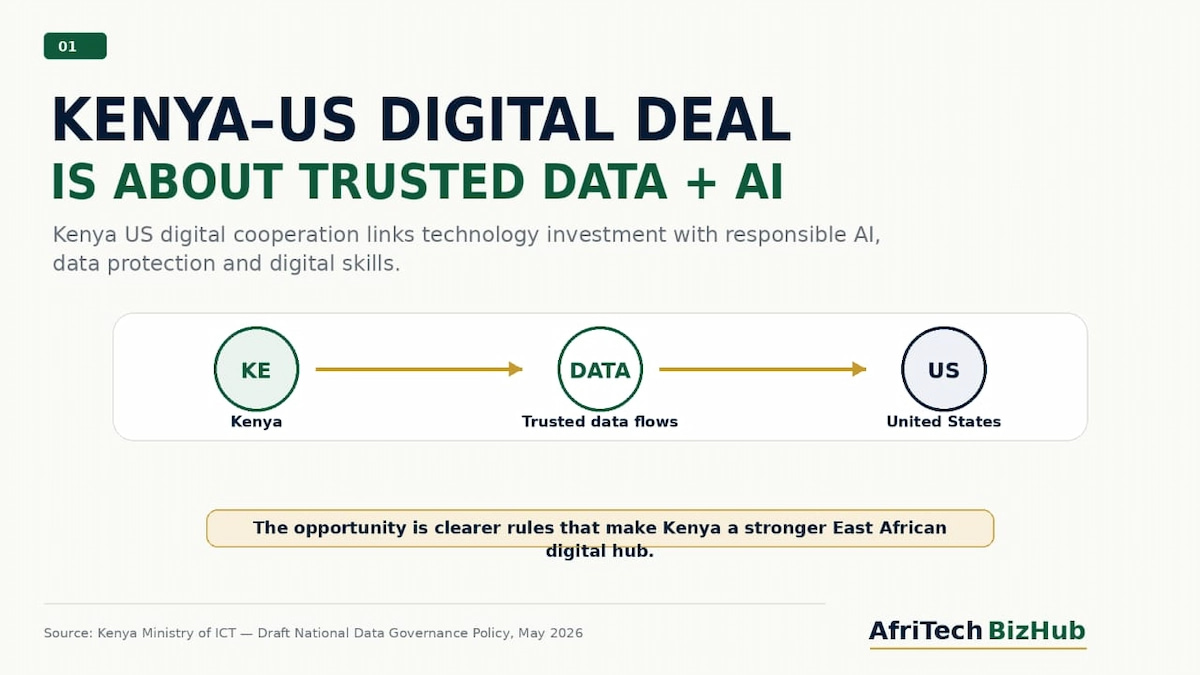
- Kenya US digital cooperation is linking technology investment with trusted data flows and digital skills.
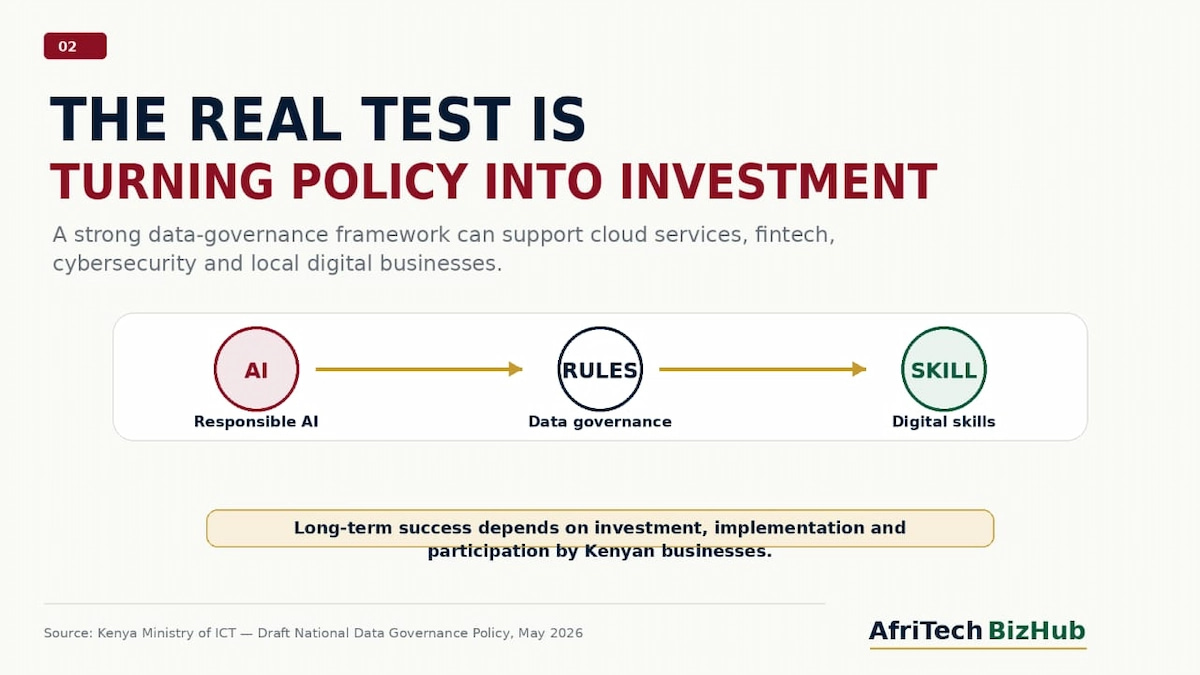
- Responsible AI has become central to the partnership as Kenya strengthens its governance framework.
- Clearer data protection rules could support cloud services, fintech and cross-border digital trade.
- Long-term success will depend on investment, implementation and greater participation by Kenyan businesses.
Kenya’s digital ambitions now extend beyond mobile money, startup growth and internet access.
Attracting the next wave of technology investment requires rules that allow data, capital and emerging technologies to move across borders without weakening privacy, security or national control.
Kenya US digital cooperation brings these priorities together through shared work on artificial intelligence, data protection and digital skills.
The partnership could carry consequences beyond Kenya.
A credible framework for responsible AI and cross-border data transfer would give international companies greater confidence while creating room for Kenyan firms to participate in cloud computing, cybersecurity and digital services.
Kenya’s influence will depend on whether it can convert policy alignment into investment without allowing foreign platforms to dominate the infrastructure and data supporting its economy.
How Will Kenya US Digital Cooperation Boost Tech Investment?
Predictable digital rules could give investors greater confidence in Kenya’s technology market.
Cloud providers, financial technology companies, artificial intelligence developers and outsourcing firms need clarity on how information can be collected, stored and transferred between countries.
Kenya US digital cooperation addresses those requirements by linking investment with data protection, digital skills and secure infrastructure.
Kenya already offers a strategic base for companies seeking access to East Africa, but investment will depend on more than market size.
Clearer cross-border data transfer procedures can reduce compliance costs while creating demand for Kenyan data centres, cybersecurity providers, software developers and legal specialists.
The greater opportunity lies in building a local technology supply chain rather than hosting foreign companies whose most valuable operations remain elsewhere.
Why Are Kenya US Relations Focusing On Responsible AI?
Artificial intelligence has moved into the centre of Kenya US relations because its economic value depends on public trust.
AI systems require large amounts of data, reliable computing infrastructure and rules governing privacy, security and automated decisions.
Kenya’s national strategy places ethical deployment, local innovation, skills and infrastructure at the centre of its ambition to compete in emerging technologies.
Responsible AI also protects Kenya from becoming only a source of data and consumers for foreign technology platforms.
Weak oversight could expose personal information, reproduce discrimination and leave accountability unclear when automated systems affect finance, healthcare, education or public services.
Cooperation with the United States can provide technical expertise and investment, but Kenya must retain the authority to shape standards around its own social and economic priorities.
Can Data Governance Services Strengthen Kenya’s Digital Economy?
Data governance services can strengthen Kenya’s digital economy by giving businesses a trusted system for handling information.
Banks, hospitals, public agencies, telecommunications companies and technology firms require clear procedures for data classification, consent, cybersecurity, storage and lawful cross-border transfer.
These services are no longer administrative support; they are part of the infrastructure required for digital trade.
A functioning governance market would create opportunities for compliance advisers, cloud providers, auditors, cybersecurity specialists and data-management firms.
It would also give investors greater certainty that Kenya can support complex digital operations without weakening individual rights.
Poor coordination or inconsistent enforcement would push valuable processing activity abroad, while trusted governance could keep more technology investment, skills and commercial value within the country.
What Is the Agreement Between the U.S. and Kenya?
The arrangement is a bilateral digital cooperation framework between Kenya’s Ministry of Information, Communications and the Digital Economy and the United States Department of Commerce.
It covers artificial intelligence, trusted cross-border data flows, data protection and digital upskilling rather than establishing a conventional trade agreement.
Kenya’s current policy work gives the earlier partnership a clearer domestic foundation.
The Draft National Data Governance Policy published in May 2026 proposes a harmonised system for protecting rights, coordinating institutions and supporting lawful data use across the public and private sectors.
Its implementation will determine whether bilateral commitments can produce interoperable rules, stronger investor confidence and a trusted environment for emerging technologies.
What Is the Current Relationship Between Kenya and the USA?
Kenya and the United States maintain a strategic relationship spanning trade, security, health, development and technology.
Digital cooperation now carries greater commercial importance because artificial intelligence, cybersecurity and cross-border data rules influence investment decisions across several industries.
Kenya offers the United States a regional technology partner, while Washington provides access to capital, expertise and one of the world’s largest digital markets.
The strength of the relationship will be judged by what it builds rather than what it announces.
Kenya must secure infrastructure, skills and meaningful participation for domestic companies, while the United States must match policy cooperation with sustained investment and technology transfer.
A balanced partnership could establish Kenya as an important African digital hub; an agreement dominated by foreign platforms would leave the country connected to global technology without controlling enough of the value it creates.


Recent Comments