


Featured Summary:
- Africa digital economy is entering a competition over digital-state infrastructure.
- Estonia is exporting governance architecture, not just technical support.
- African governments are digitising services faster than institutional systems are integrating.
- Digital public infrastructure is becoming strategic state infrastructure.
Africa digital economy is moving beyond fintech and connectivity into state infrastructure itself.
Estonia’s growing digital cooperation with African governments reflects a broader geopolitical contest over who helps design the architecture behind digital governance, interoperability, identity systems, and public-service delivery.
Estonia, widely recognised for its e-governance systems and digital-state model, is positioning itself as a technical partner for governments attempting to modernise administrative systems across the continent.
The shift matters because African states increasingly need interoperable digital infrastructure to support taxation, licensing, healthcare, payments, identity management, and public administration.
The next phase of Africa’s digital transformation is no longer only about connecting citizens online.
It is about who builds the operating system behind the digital state.
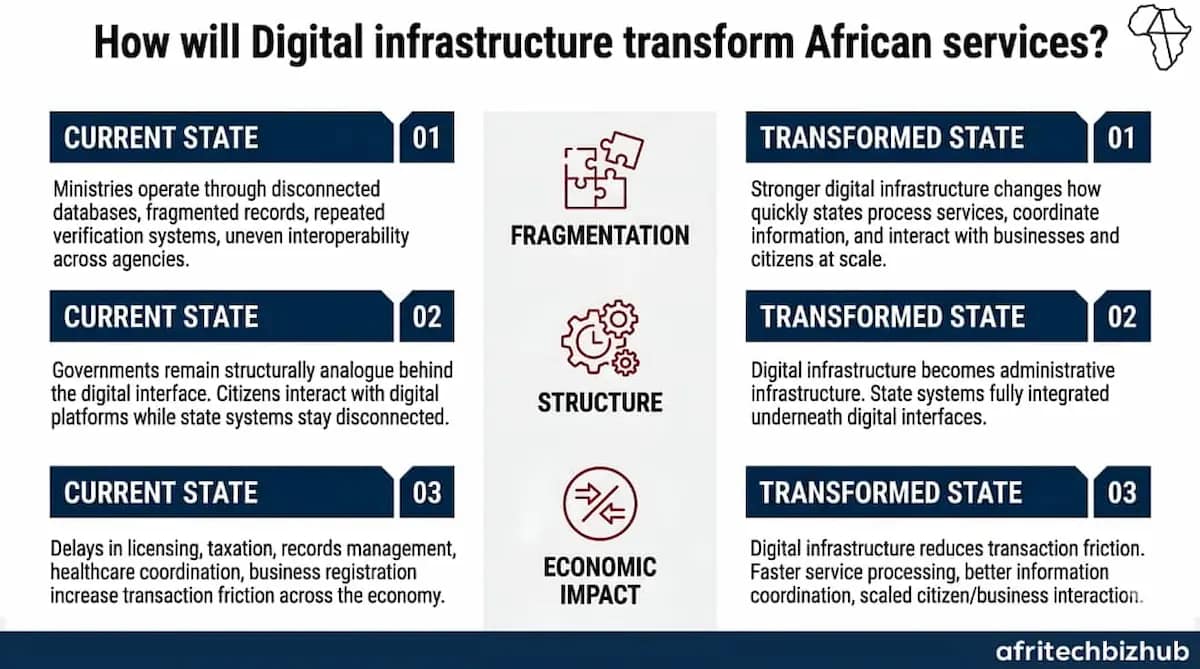
How will Digital Infrastructure Transform African Services?
Digital infrastructure is becoming administrative infrastructure.
Many African governments digitised services before fully integrating state systems underneath them.
Ministries often still operate through disconnected databases, fragmented records, repeated verification systems, and uneven interoperability across agencies.
Citizens increasingly interact with digital platforms while governments themselves remain structurally analogue behind the interface.
That fragmentation carries economic consequences.
Delays in licensing, taxation, records management, healthcare coordination, and business registration increase transaction friction across the economy.
Stronger digital infrastructure changes more than convenience.
It changes how quickly states process services, coordinate information, and interact with businesses and citizens at scale.
What Role Does E-governance Play in Africa?
E-governance is becoming operational infrastructure for African states rather than a modernization accessory.
The first phase of Africa digital economy focused heavily on mobile penetration, payments, and internet access.
Governments are now shifting toward administrative digitisation itself.
Digital identity systems, interoperable records, electronic verification, and integrated public-service systems increasingly determine whether states can operate efficiently at population scale.
Estonia’s relevance comes from architecture rather than branding.
Its governance model was designed around interoperability across institutions instead of isolated digital projects.
That distinction matters because several African governments now face the risk of fragmented digitisation where agencies modernise independently without integrated systems capable of coordinating data, services, and state functions.
The deeper issue is strategic.
Governments seeking digital sovereignty increasingly still rely on foreign technical standards, cloud systems, and governance frameworks to build it.
Why Are Digital Partnerships Critical for Africa’s Digital Growth?
Digital partnerships increasingly determine how African states build public digital infrastructure.
Governments require technical expertise, cybersecurity systems, interoperability standards, digital identity architecture, and administrative integration capacity faster than many public institutions can develop internally.
That pressure is accelerating partnerships with governments and institutions able to export governance systems alongside technical capability.
Institutional backing reflects the direction.
The World Bank and the United Nations Development Programme continue identifying digital public infrastructure and interoperable governance systems as foundational to state capacity, service delivery, and economic participation.
The partnerships matter because Africa’s digital transformation increasingly depends on institutional architecture rather than apps alone.
The governments shaping standards now will influence how African digital systems operate for decades.
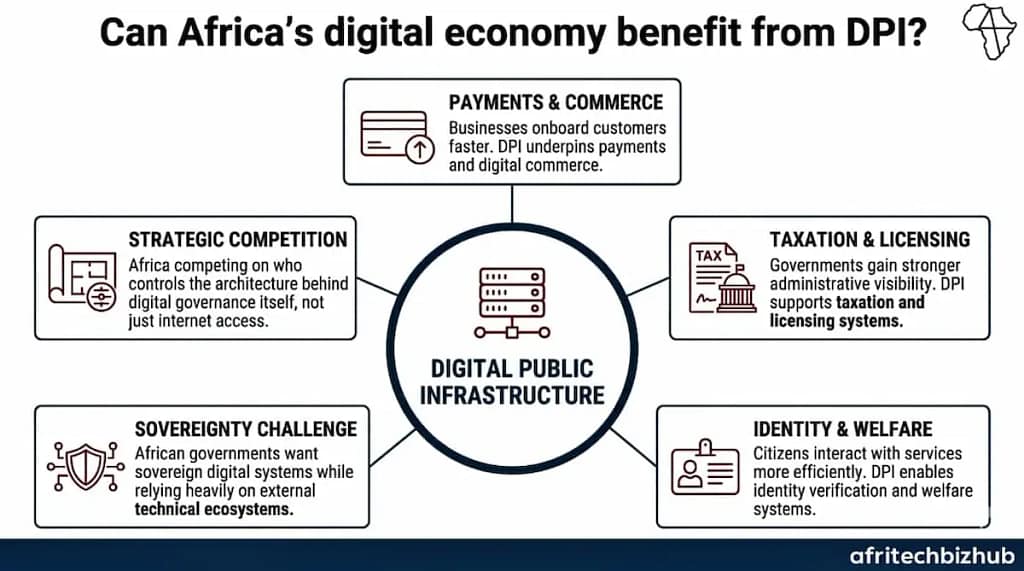
Can Africa Digital Economy Benefit from DPI?
Digital public infrastructure is becoming geopolitical infrastructure.
DPI systems increasingly underpin payments, taxation, identity verification, licensing, welfare systems, records management, and digital commerce.
The value therefore extends beyond public administration into the broader economy itself.
Businesses onboard customers faster.
Governments gain stronger administrative visibility. Citizens interact with services more efficiently.
The strategic competition underneath DPI is becoming clearer.
African governments want sovereign digital systems while relying heavily on external technical ecosystems to build them.
Estonia’s growing cooperation across African digital governance reflects that contradiction directly.
Africa digital economy is no longer competing only on internet access.
It is competing on who controls the architecture behind digital governance itself.


Recent Comments