

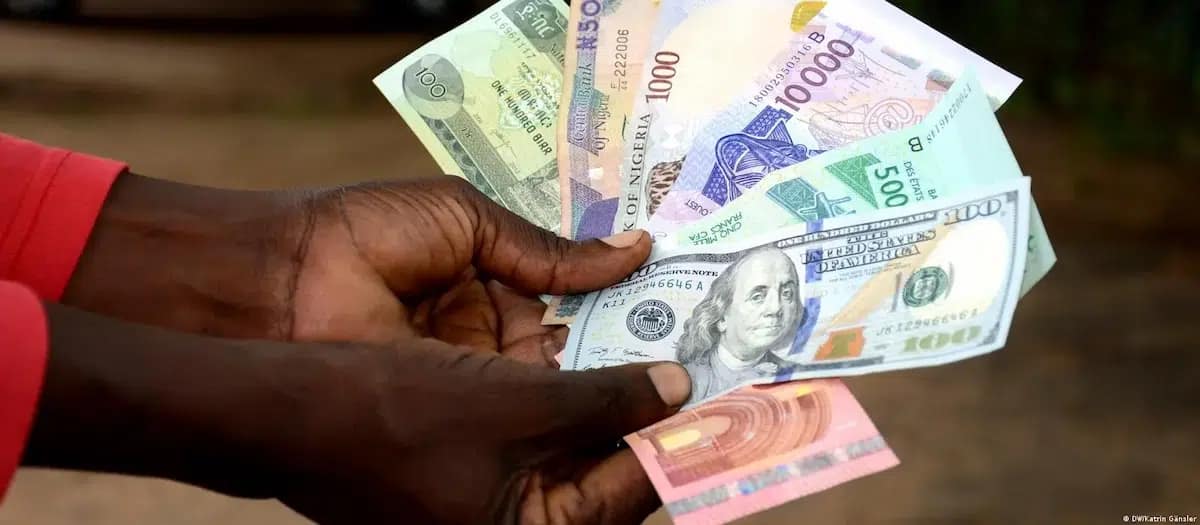
Featured Summary:
- Currency ranking lists often place the São Tomé and Príncipe dobra, Sierra Leonean leone, Guinean franc, Malagasy ariary, Ugandan shilling, Burundian franc, Tanzanian shilling, Congolese franc, Malawian kwacha, and Nigerian naira among Africa’s weakest currencies by nominal exchange value.
- Weak currency pressure affects African economies by raising import costs, weakening purchasing power, and making business planning more difficult.
- African currencies lose global value when foreign exchange inflows are weak, import demand is high, inflation remains persistent, and market confidence declines.
- African inflation becomes more difficult to control when currency weakness raises the cost of food, fuel, medicine, machinery, transport, and industrial inputs.
Africa’s weakest currency rankings are often treated like a simple list of winners and losers, but the real story is more complex.
A low exchange-rate value does not automatically mean an economy is collapsing, and a stronger nominal currency does not automatically mean an economy is healthier.
Currency rankings matter because they show where exchange-rate pressure is most visible, but they need context before they can explain the real state of an economy.
The pressure becomes serious when weak currencies move beyond the forex market and enter everyday costs.
Food imports become more expensive. Fuel prices become harder to manage.
Medicines, machinery, school supplies, spare parts, and industrial inputs rise in cost.
For businesses, this creates uncertainty. For households, it reduces purchasing power. For governments, it makes external debt and import bills harder to manage.
That is why Africa’s weakest currency rankings should be read as a warning about economic strain, not as a headline spectacle.
What Drives Africa’s Currency Ranking Disparities in 2026?
Africa’s currency ranking disparities reflect different inflation levels, exchange-rate systems, reserve strength, export earnings, import dependence, and monetary policy credibility.
Some currencies trade at very high numbers against the dollar because they have experienced long periods of inflation, redenomination challenges, or sustained exchange-rate pressure.
Others appear stronger because they are more tightly managed, supported by reserves, or backed by stronger foreign exchange inflows.
This is why currency ranking must be interpreted carefully.
Currencies such as the São Tomé and Príncipe dobra, Sierra Leonean leone, Guinean franc, Malagasy ariary, Ugandan shilling, Burundian franc, Tanzanian shilling, Congolese franc, Malawian kwacha, and Nigerian naira often appear among Africa’s weakest by nominal exchange value.
But the ranking alone does not explain every economy’s full condition.
Some countries face structural import dependence, while others face inflation, debt pressure, weak reserves, or confidence problems.
The useful question is not only which currency is weakest, but what economic pressure is driving that weakness.
Why is Weak Currency Worsening African Economies?
Weak currency pressure worsens African economies by making imported goods more expensive in local terms.
Many African countries depend on imports for fuel, food, medicine, vehicles, machinery, fertiliser, technology, and industrial raw materials.
When local currencies weaken, businesses need more domestic money to buy the same foreign goods, and those higher costs often move into consumer prices.
The effect can be difficult to manage because currency weakness reaches both households and companies at the same time.
Households face higher prices for basic goods. Businesses face higher costs for supplies and equipment.
Governments face more expensive foreign debt repayments and higher pressure on public spending.
A weak currency can support exports in some cases, but that benefit is limited when a country does not produce enough export-ready goods or still depends heavily on imported inputs.
In many African economies, the costs arrive faster than the benefits.
How do African Currencies Lose Global Value?
African currencies lose global value when demand for foreign exchange becomes stronger than the supply entering the country.
This can happen when imports are high, exports are weak, foreign investment slows, remittances fall, or debt payments rise.
Once companies and households expect more currency weakness, they may try to hold dollars or other hard currencies, which can increase pressure on the local currency.
Policy credibility also plays a major role. Investors and businesses watch inflation, central bank decisions, fiscal discipline, reserve levels, debt costs, and political stability.
If confidence weakens, the currency can come under more pressure even before the economic fundamentals fully deteriorate.
The African monetary system becomes more vulnerable when several countries face the same pressures at once.
At that point, forex Africa becomes more than a market issue.
It becomes a wider concern for prices, savings, investment, and economic stability.
What Risks Dominate African Forex Market Volatility?
African forex volatility is being shaped by a mix of domestic and global pressures.
High import bills, debt-service obligations, climate shocks, political uncertainty, weak reserves, and commodity-price swings can all affect exchange rates.
Countries that rely heavily on imported fuel or food are especially exposed because they need foreign currency even when export earnings are not strong enough.
The IMF’s April 2026 Regional Economic Outlook for Sub-Saharan Africa warned that growth is expected to slow to 4.3 percent in 2026, with wide differences across countries and major downside risks linked to global uncertainty and regional macroeconomic vulnerabilities.
That matters for African forex markets because currency stability depends on more than exchange-rate policy.
It depends on inflation control, fiscal discipline, export strength, external financing, reserves, and confidence in economic management.
When those foundations are weak, African currencies become more exposed to sudden movements.
How does African Inflation Intensify Import Costs?
African inflation intensifies import costs by turning exchange-rate weakness into higher prices across essential goods and services.
When a local currency loses value, importers pay more for dollar-priced goods.
That affects fuel, rice, wheat, medicines, vehicles, spare parts, fertilizer, school materials, household items, and industrial machinery.
Businesses then pass part of that cost to consumers, which keeps inflation pressure alive.
The strain is strongest in countries where wages are not rising as fast as prices.
A weaker currency raises import costs, import costs push inflation higher, and higher inflation can further damage confidence in the currency.
This cycle makes economic planning harder for families, businesses, and governments.
The policy lesson is clear: weak currencies cannot be stabilized through exchange-rate management alone.
African countries need stronger exports, deeper local production, better reserves, credible monetary policy, lower inflation, and stronger fiscal discipline if they want their currencies to hold value over time.


Recent Comments