

Featured Summary:
- Central Africa critical minerals are becoming central to EV batteries, AI infrastructure, and global energy supply chains as demand for cobalt, copper, lithium, and coltan accelerates
- Central African governments are tightening mining controls, but much of the refining and industrial value tied to the minerals still remains outside the region
- Central Africa risks remaining an extraction hub if mineral demand continues rising faster than local processing, electricity, and industrial infrastructure
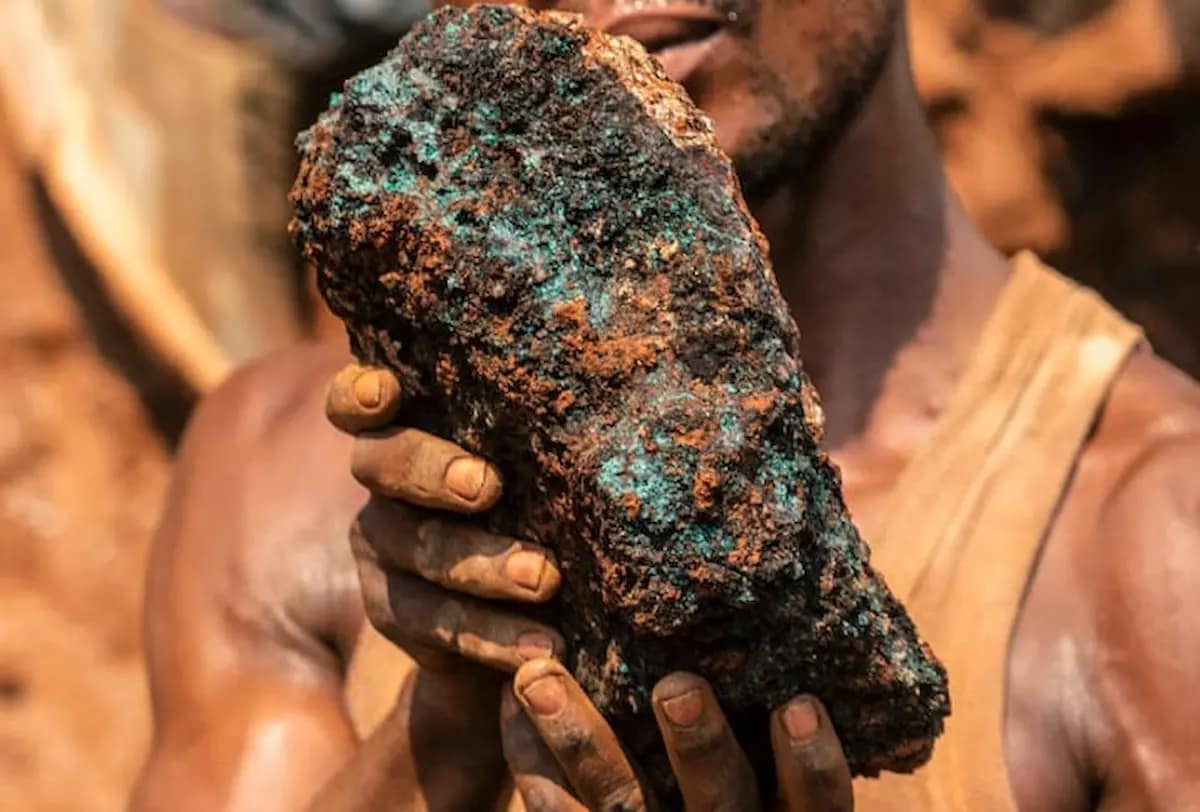
Central Africa critical minerals are rapidly becoming part of the global fight over EV batteries, AI infrastructure, and future energy systems as demand for cobalt, copper, lithium, and coltan continues rising.
The bigger risk for the region is that Central Africa could remain largely an extraction hub while refining, manufacturing, and pricing power stay outside the continent.
The DRC has tightened mining controls and expanded state involvement in cobalt supply, but demand is still growing faster than the region’s industrial infrastructure.
That pressure is becoming the real test of whether Central Africa can convert mineral demand into long-term industrial power.
Why Central Africa Critical Minerals Matter to EV and AI Supply Chains
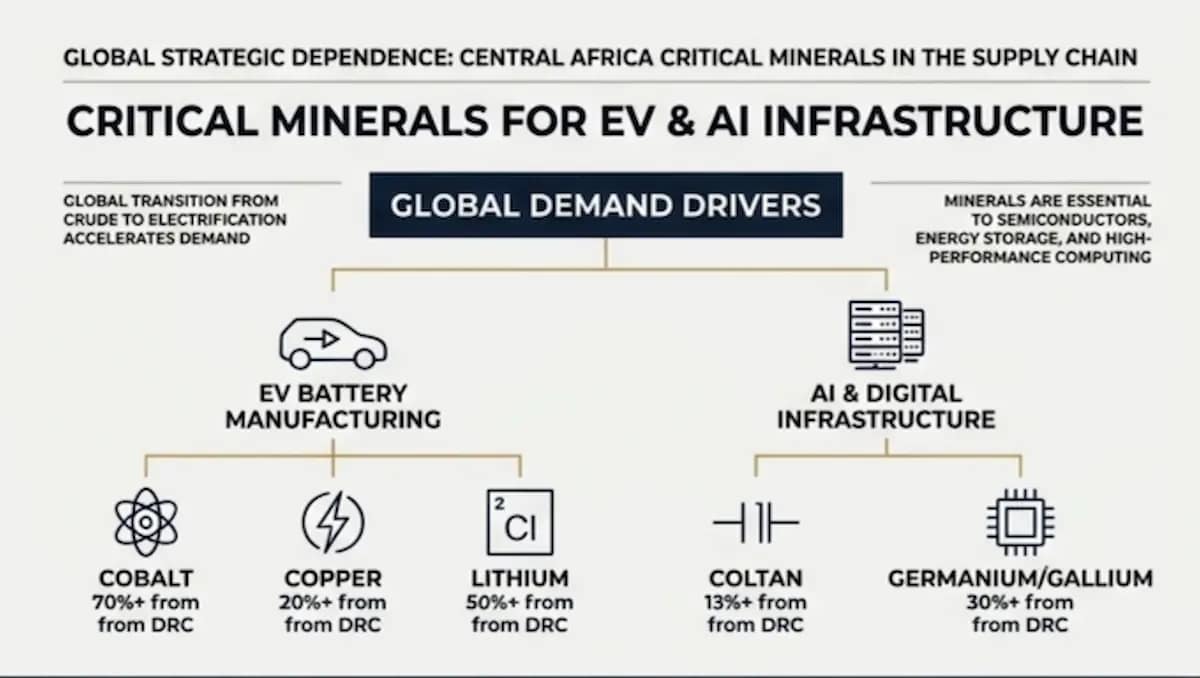
The global transition from crude-driven industrial systems toward electrification and AI infrastructure is rapidly increasing the strategic importance of the minerals powering batteries, semiconductors, data centers, and renewable-energy systems.
Cobalt, copper, coltan, and lithium have become increasingly important to EV manufacturing, chip-related supply chains, energy storage, and high-performance computing as governments and corporations push deeper into electric mobility and AI expansion across global markets.
Much of those resources sit across Central Africa, particularly inside the DRC’s copper and cobalt belt, placing the region closer to the center of the next industrial and energy cycle.
The pressure is no longer only about mining demand. It is increasingly about who controls the refining systems, industrial infrastructure, and supply chains surrounding the minerals driving the global transition away from traditional fuel dependence.
How the DRC Is Trying to Take More Control of Cobalt Supply
The Democratic Republic of Congo is no longer treating cobalt entirely as a normal export commodity as pressure grows around who controls the minerals powering EV batteries and future energy systems.
Congo has tightened export controls, imposed quota systems, expanded royalty enforcement, and created a state-backed strategic cobalt reserve as the government pushes for stronger leverage over the DRC cobalt supply chain and global pricing pressure surrounding the mineral.
The bigger question is whether the regulations are strong enough to translate mineral demand into broader industrial development across Central Africa itself.
The controls have helped Congo tighten oversight and stabilize cobalt prices after the market slump, but refining capacity, electricity infrastructure, manufacturing systems, and logistics networks across the region still remain limited compared with the scale of global demand now building around EV and AI supply chains.
Reuters also reported in April 2026 that President Félix Tshisekedi ordered a full audit of mining revenues and export systems after concerns over underreported revenues, opaque partnerships, and weak state value capture despite record cobalt and copper output.
Why Central Africa Still Risks Remaining an Extraction Hub
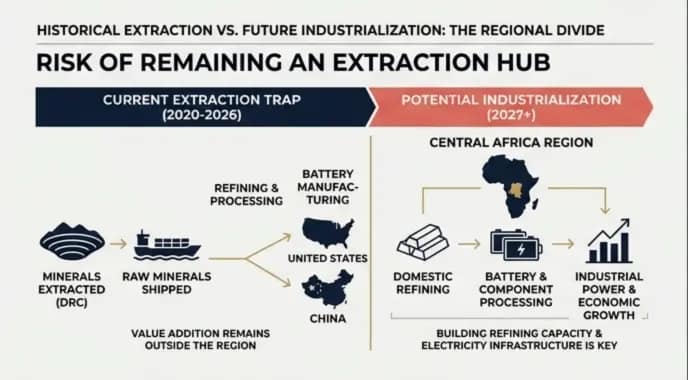
Central Africa is tightening control over cobalt exports and mineral supply chains, but most of the refining, battery processing, and industrial manufacturing tied to those minerals still happens outside the region.
The DRC has expanded export controls, introduced quota systems, and increased state involvement in cobalt pricing and supply management, yet recent agreements linked to Congolese cobalt continue directing much of the refining activity toward facilities in the United States and China rather than Central Africa itself.
The reality on the ground is that mineral demand is growing faster than Central Africa’s electricity systems, refining infrastructure, transport corridors, and industrial manufacturing capacity.
New logistics and supply-chain projects are expanding around the region’s cobalt and copper exports, but large-scale refining and battery manufacturing infrastructure inside Central Africa itself still remains limited compared with the scale of global EV and AI demand now building around the minerals.
That imbalance is why the region still risks remaining largely an extraction hub even as the world moves deeper into the next energy and industrial transition.
Who Is Competing for Central Africa Critical Minerals?
Central Africa critical minerals are becoming part of a wider geopolitical competition as China and the United States intensify efforts to secure cobalt, copper, lithium, and rare earth supply chains tied to EV batteries, AI infrastructure, semiconductors, and renewable-energy systems.
China still dominates much of the mining, refining, and infrastructure financing surrounding African critical minerals, while the United States is increasingly pushing new trade partnerships, strategic supply agreements, and mineral-security alliances designed to reduce Western dependence on Chinese-controlled processing systems.
The World Bank has also identified critical minerals as increasingly important to global industrial policy, energy security, and supply-chain resilience as governments compete to secure access to the materials powering electrification and digital infrastructure.
The deeper pressure for Central Africa is that much of the geopolitical competition still revolves around securing mineral access rather than building large-scale refining and manufacturing systems inside the region itself.
That imbalance continues reinforcing concerns that Central Africa could remain central to global mineral extraction while industrial control surrounding the minerals remains concentrated abroad.
Can Central Africa Turn Mineral Demand Into Industrial Power?
Central Africa critical minerals can still become the foundation of long-term industrial expansion, but the region’s biggest challenge may no longer be mineral access alone.
The deeper challenge is financing the refining systems, electricity infrastructure, rail corridors, processing plants, and industrial networks required to keep more long-term value inside the region.
Much of Africa’s large-scale industrial expansion has historically depended on private capital, state-backed investors, or foreign financing partnerships rather than public-sector funding alone.
The pressure now building around EV batteries, AI infrastructure, and renewable-energy systems is creating a commercial opening that could reshape Central Africa’s industrial future if the region moves beyond extraction fast enough.
The DRC and neighboring producers already sit at the center of global cobalt and copper demand, but mineral ownership alone will not industrialize the region.
The countries that attract refining investment, processing infrastructure, and large-scale industrial capital may ultimately capture far more value than those exporting raw minerals alone.
The next phase of the global energy transition could become one of the biggest industrial opportunities Central Africa has seen in decades.


Recent Comments