

Featured Summary:
- South African transporters are challenging shipping charges incurred during congestion at Durban’s container terminal
- A complaint involving eight international shipping lines is under preliminary assessment by competition regulators
- MSC is developing a new Lagos terminal, while ICTSI has taken over operations at a major Durban facility
- African cargo owners face separate freight, storage and container charges as global operators expand their port businesses
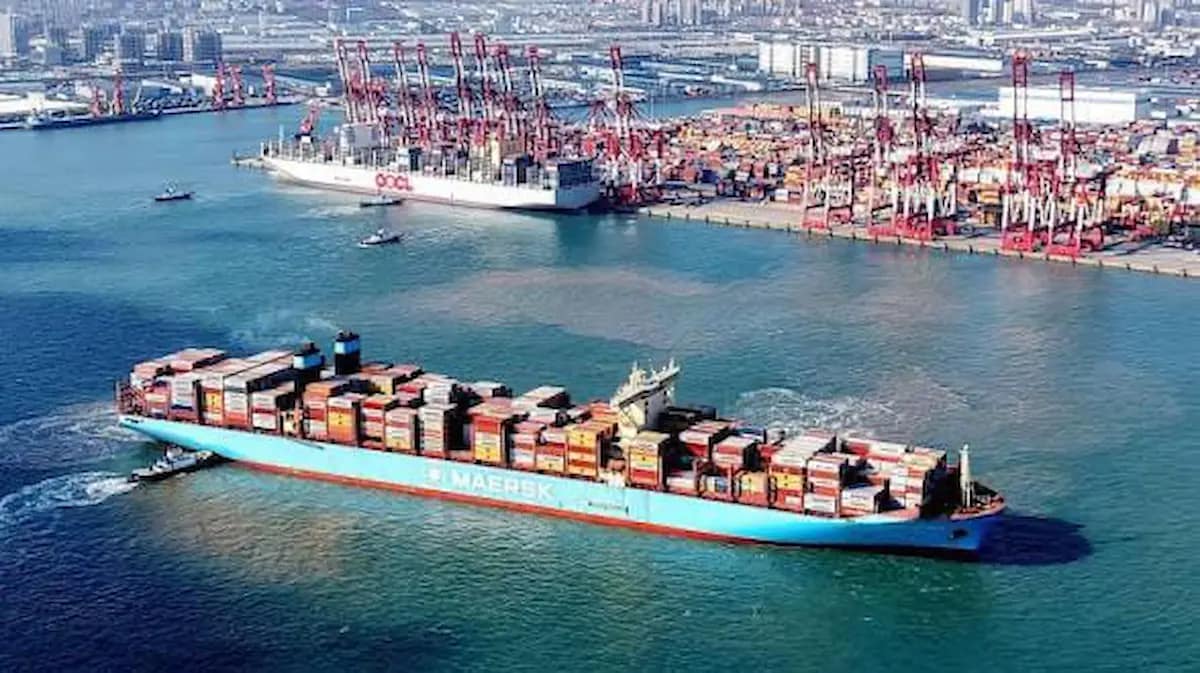
Eight international shipping lines have been named in a complaint to South Africa’s competition authorities over container charges at Durban port.
Transport operators allege that they are being billed for delays caused by congestion that prevents them from collecting or returning containers.
Positive Freight Solutions filed the complaint in July 2026 on behalf of a group representing 140 transport businesses and approximately 6,000 workers.
South Africa’s Competition Commission confirmed in September that it was assessing the allegations. No finding of anti-competitive conduct has been announced.
Transporters have reported congestion-related charges of up to $500 per container. MSC has disputed claims concerning its responsibility for certain terminal fees, distinguishing the shipping line’s position from the allegations made by transport operators.
The complaint comes during a period of expanding international investment in African ports. Shipping companies and terminal operators are taking on larger roles in cargo handling and logistics, while South African regulators assess the charges challenged by Durban’s transport businesses.
Durban Container Delays Leave Transporters Facing Disputed Charges
Durban Gateway Terminal handled an average of 3,672 twenty-foot-equivalent units (TEUs) daily during the four weeks ending September 10, according to the Southern African Association of Freight Forwarders.
That was approximately 30.5% below its average for the preceding four months. Equipment failures and restrictions on truck collection appointments slowed container collections.
Positive Freight Solutions reported storage charges reaching approximately $140 per container per day after free-time allowances expired. The figure is the complainant’s estimate, rather than a verified standard tariff.
Terminal operators announced temporary storage-fee relief in September. Maersk suspended its Durban–Cato Ridge container drop-off charge from September 11, removing a fee previously set at R4,200 for a 20-foot container and R4,500 for a 40-foot dry container.
Transporters continued disputing demurrage, detention and congestion-related charges in October. The September relief measures did not establish whether shipping lines would waive fees incurred during earlier delays or how charges would be handled if congestion persisted.
Africa Shipping Competition Draws Scrutiny Over Freight-Rate Coordination
South Africa’s Competition Commission referred eight international shipping companies to the Competition Tribunal on December 2, 2025, alleging coordination of freight-rate increases between 2008 and 2018 on routes linking South Africa with Asia and West Africa.
The companies named were Maersk, Mediterranean Shipping Company (MSC), CMA CGM, Pacific International Lines, Mitsui O.S.K. Lines, Evergreen, COSCO Shipping Lines and K Line.
The Commission alleged that the carriers announced matching general rate increases on shipments from Shanghai, Ningbo, Shekou and Qingdao to Durban, as well as cargo moving from Durban to Hong Kong.
The investigation followed a complaint from a Maersk customer in 2016 who presented pricing letters containing matching increases, according to Makgale Mohlala of the Commission’s Cartels Division.
Investigators later searched shipping company premises and collected documents and electronic records.
The Competition Tribunal has not issued a finding of unlawful price coordination in the proceedings described.
Global Shipping Companies Expand Their African Terminal Operations
Mediterranean Shipping Company (MSC) signed a 45-year concession with Nigerdock in March 2026 to develop and operate a container terminal at Snake Island Port in Lagos.
MSC Group announced plans to invest more than $1 billion in Nigerian infrastructure and logistics, with the new terminal scheduled for completion in 2028.
Plans call for a 30-hectare terminal with a 910-metre quay for deep-sea vessels and barges. MSC appointed ITB Nigeria and DEME Group for construction. APM Terminals operates at Lagos’ Apapa port, while CMA CGM has terminal interests at Lekki.
In South Africa, International Container Terminal Services Inc. (ICTSI) took over operations at Durban Container Terminal Pier 2 on January 1, 2026, under a 25-year partnership with Transnet.
The terminal handles approximately 46% of South Africa’s container traffic, and Transnet retains a majority stake in the partnership.
The agreement includes more than R11 billion in planned investment to increase annual handling capacity from 2 million to 2.8 million TEUs. Crane productivity is targeted to rise from 18 to 28 moves per hour.
Africa’s Shipping Market Faces a Test of Competition and Port Access
UN Trade and Development (UNCTAD) recorded a 10% increase in Africa’s average liner shipping connectivity between June 2024 and June 2025.
Cameroon posted a 54% increase following the arrival of larger vessels and additional capacity at Kribi port. Egypt remained Africa’s best-connected country in UNCTAD’s September 2026 figures.
Shipping options vary across individual trade routes, even at ports served by several international carriers. Terminal concession agreements set operating terms, including berth access and handling arrangements.
Shipping groups with terminal interests may also serve competing carriers, subject to the access requirements and tariffs governing those facilities.
Nigeria reserves much of its domestic coastal shipping trade for qualifying Nigerian vessels under the Coastal and Inland Shipping Act.
Foreign operators can participate through licensing and waiver provisions administered by the Nigerian Maritime Administration and Safety Agency (NIMASA).
The agency also oversees the Cabotage Vessel Financing Fund, established to support Nigerian vessel ownership and maritime operations.
African ports are attracting new investment, but cargo owners’ choices remain tied to the routes and shipping services available to them.
Vessel turnaround times, published port charges and sailing schedules will determine how much of the additional capacity translates into more reliable cargo movements. More terminal capacity will not, by itself, create competing shipping services or reduce freight rates.


Recent Comments