

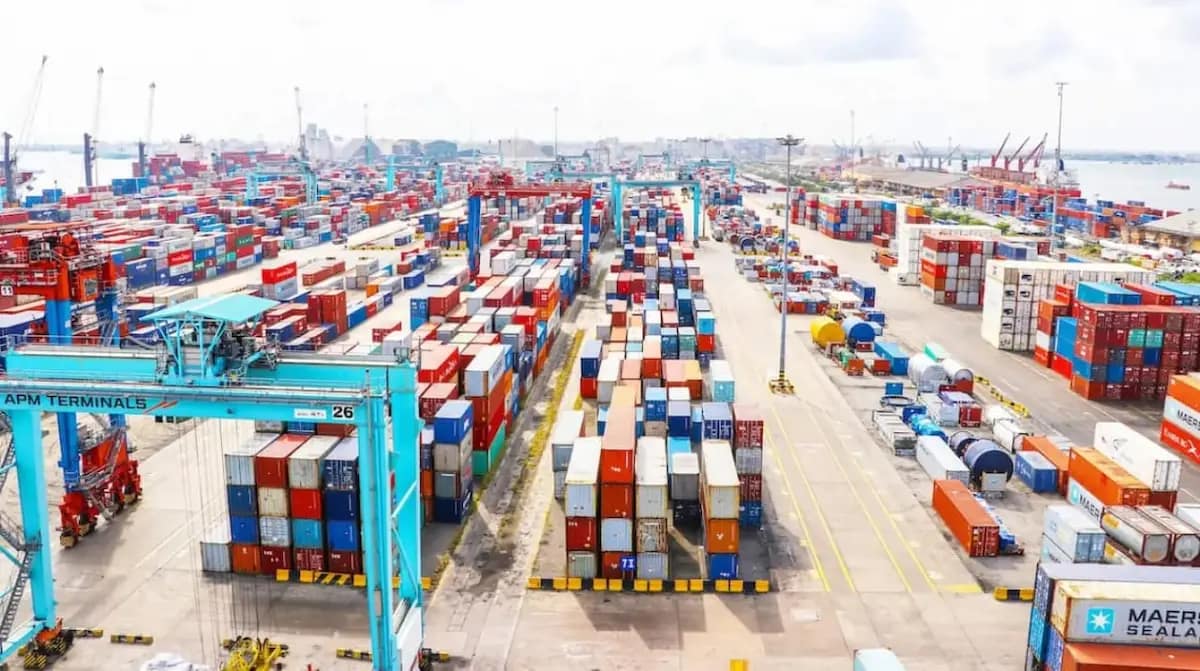
Featured Summary:
- Only 15–20% of Africa’s trade takes place within the continent, according to the World Bank
- UNCTAD estimates that road transport accounts for 29% of the price of goods traded within Africa
- A Malawi–Mozambique border reform has reduced reported customs-processing times from days to hours
- AfCFTA signed a $3.1 billion customs modernisation agreement in August 2026, with deployment still to be established
Only 15–20% of Africa’s trade takes place between countries on the continent, according to an August 2026 World Bank report.
The African Continental Free Trade Area (AfCFTA) is intended to expand regional commerce by reducing trade barriers, although exporters continue to face different customs requirements and transport regulations across national borders.
Manufactured goods account for more than 60% of intra-African trade, according to the African Union. AfCFTA seeks to increase trade in these products alongside agricultural goods and services by opening markets across participating countries.
UN Trade and Development (UNCTAD) estimates that road transport accounts for approximately 29% of the price of goods traded within Africa, compared with 7% for goods traded outside the continent.
The World Bank’s August assessment attributes roughly 60% of African trade costs to domestic barriers, including inefficient logistics, transport restrictions, customs delays and differing product standards.
These findings place domestic transport and border reforms among the priorities for AfCFTA implementation.
Africa’s Transport Costs Weaken AfCFTA’s Trade Advantage
Transport costs in Africa are approximately three times those in the United States, according to World Trade Organization research cited in UN Trade and Development’s (UNCTAD) Economic Development in Africa Report 2024.
Africa Finance Corporation’s 2025 infrastructure report found that transporting cargo from Tanzania’s Dar es Salaam port to Kigali, approximately 1,500 kilometres inland, could cost more than shipping it from Asia to Dar es Salaam.
The comparison uses historical freight data. Central Corridor monitoring recorded a trucking cost of $3,480 for a 22–27-tonne container on the Dar es Salaam–Kigali route in 2023, with an average transit time of 4.1 days.
UNCTAD estimates that non-tariff barriers restrict intra-African trade approximately three times more than customs duties.
The restrictions extend beyond border clearance to product testing, certification and compliance requirements that can differ between importing countries.
The Dar es Salaam–Kigali corridor carries agricultural products and manufactured goods into Rwanda. Importers using the route pay port-handling charges, trucking costs and applicable border fees before their shipments reach customers.
These expenses remain part of the delivered price even where qualifying goods receive preferential tariff treatment under AfCFTA.
Faster Border Clearance Shows Where African Trade Costs Can Fall
Commercial trucks previously spent 24 to 36 hours clearing the Dedza border between Malawi and Mozambique, according to an April 2024 World Bank report. Following the completion of a one-stop border facility in 2023, one driver reported finishing the process in less than half a day.
The facility brings customs and border officials into shared premises, with examination bays and parking capacity for 100 freight trucks. More than 80 trucks use the crossing on an average day, according to the World Bank.
The World Bank’s August 2026 assessment found that customs systems across Africa frequently cannot exchange shipment information directly.
Freight operators may have to submit documentation to separate national platforms and meet different transit requirements when moving cargo through several countries.
The AfCFTA Secretariat is developing electronic customs-information exchange and coordinated border-management arrangements for participating countries.
The proposed programme includes shared shipment records and joint inspections, with implementation across participating customs administrations still pending.
AfCFTA’s $3.1 Billion Customs Plan Moves Into Development
The AfCFTA Secretariat signed a 20-year customs modernisation concession worth $3.1 billion with Nigeria’s Bergmans Security Consultants and Supplies Limited on August 7, 2026.
The agreement assigns Bergmans responsibility for arranging project financing, following a memorandum of understanding signed in July. Implementation will require agreements with participating national customs authorities.
The proposed infrastructure includes electronic customs-information exchange, cargo-tracking systems, border inspection equipment, one-stop border posts and integrated data centres.
Customs risk-management technology is also included, with Bergmans planning to implement the project through its subsidiary, AfriTrade CMP Limited.
UN Trade and Development’s Review of Maritime Transport 2025 recorded a 10% improvement in Africa’s liner shipping connectivity between June 2024 and June 2025.
MSC announced a weekly feeder service in April 2026 linking Nigeria’s Lekki port with Lomé in Togo. Its published rotation includes Apapa, Tin Can Island, Lekki and Lomé, with the first arrival at Lekki scheduled for May 30.
Global Feeder Shipping announced four African feeder routes in July 2025, including a weekly connection between Pointe-Noire in the Republic of Congo and Matadi in the Democratic Republic of Congo.
These announced services involve commercial shipping networks outside the customs modernisation concession.
AfCFTA’s Trade Gains Require Cheaper Freight and Working Regional Connections
Processed foods, machinery, textiles, transport equipment and mineral processing are among the industries identified for expansion in the World Bank’s August 2026 report, Integrating Africa: From Threads to Hubs.
Investment in these industries could support production across several countries, with manufacturers sourcing materials and selling finished goods within the region.
Lobito Atlantic Railway carries freight between the Democratic Republic of Congo and Angola’s Atlantic coast, including copper and cobalt shipments.
The operator transported more than 200,000 tonnes of cargo in 2025 and was running approximately 12 trains weekly in July 2026. It plans to increase services to 20 trains a week by 2027, subject to additional locomotives, wagons and terminal capacity.
The World Bank estimates that further liberalisation of transport, telecommunications, financial and professional services could increase services trade within the AfCFTA area by approximately 60–64% by 2035.
The forecast depends on participating countries reducing restrictions on cross-border service providers.
For investors, freight costs and delivery schedules will influence the commercial prospects of regional manufacturing.
AfCFTA’s trade provisions can widen access to neighbouring markets, but producers must still be able to move goods across borders at prices that support profitable sales.


Recent Comments