

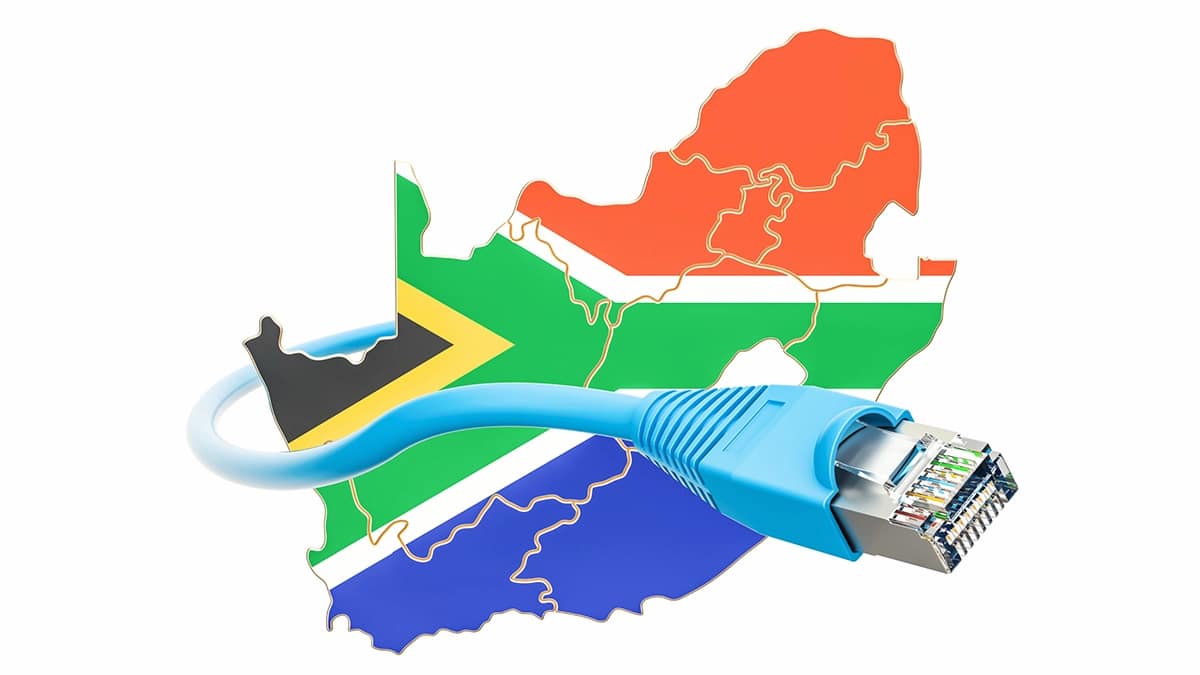
Featured Summary:
- South Africa broadband expansion is increasingly rewarding companies that integrate global technology with domestic telecommunications systems.
- Amazon Leo entered the market through a partnership with Herotel, showing the growing importance of local operators in digital infrastructure investment.
- Elon Musk Star link’s challenge in South Africa reflects regulatory alignment and market-entry structure rather than satellite technology limitations alone.
- Africa’s next connectivity investments will favor companies that create value alongside local businesses and comply with national frameworks.
Africa’s broadband challenge is no longer only about developing better connectivity technology.
The larger question is how global infrastructure companies enter national markets, work with domestic operators and operate within regulatory systems designed to protect local telecommunications ecosystems.
That shift explains why Amazon Leo’s South African entry extends beyond satellite internet.
Through its partnership with Herotel, Amazon is adopting a market model built around local participation rather than independent service delivery.
South Africa broadband is showing that future digital infrastructure competition will depend as much on commercial integration and regulatory alignment as on technological capability.
Why Will South Africa Broadband Reach More Rural Communities?
South Africa’s rural connectivity challenge has always been shaped by geography and infrastructure costs.
While fibre networks continue expanding, many remote communities remain difficult and expensive to connect through traditional infrastructure.
Satellite broadband provides another option because it can reach locations where building physical networks is commercially challenging, but technology alone does not determine whether communities gain meaningful access.
The success of satellite broadband depends on local distribution networks, installation capacity, customer support and regulatory approval.
Amazon Leo’s partnership with Herotel reflects this reality by combining satellite connectivity with an established South African telecommunications operator capable of delivering services locally.
The model shows that expanding broadband access requires both advanced technology and the domestic systems needed to make it commercially usable.
Why Is Amazon Leo Partnership Winning South African Support?
The Amazon Leo partnership represents a broader change in how global technology companies approach African markets.
Instead of entering as a standalone foreign infrastructure provider, Amazon is working with Herotel, allowing satellite connectivity to operate through an existing local telecommunications company.
This approach creates a direct connection between international technology and domestic market capability.
Local partnerships provide more than distribution. ,
They support regulatory compliance, customer relationships, installation services and operational knowledge of the market.
As African countries place greater emphasis on digital sovereignty and domestic participation, partnerships with local operators are becoming a strategic advantage for global technology companies seeking long-term market access.
Can Amazon Leo Succeed Where Starlink Failed Previously?
Amazon Leo and Elon Musk’s Starlink are not competing only on satellite technology.
Their different positions in South Africa highlight how market-entry strategies influence infrastructure investment.
Amazon Leo’s approach involves working through Herotel, while Starlink has faced delays in entering the South African market because of unresolved regulatory requirements.
The difference demonstrates that advanced technology does not automatically guarantee commercial access.
Telecommunications markets operate within national licensing frameworks, and companies must align their business models with local rules before reaching customers at scale.
In Africa’s digital infrastructure sector, regulatory strategy is becoming as important as engineering capability.
Why Is Elon Musk Starlink Still Missing South Africa?
Star link’s absence from South Africa’s commercial market is linked to regulatory requirements governing telecommunications operators.
The Independent Communications Authority of South Africa (ICASA) oversees licensing for electronic communications services, and providers seeking to operate commercially must comply with the country’s telecommunications framework.
South Africa has also debated how foreign technology companies should meet local ownership and transformation requirements within the communications sector.
These discussions have affected Starlink’s pathway into the market, showing that international connectivity providers must address domestic policy frameworks alongside technical deployment.
Why Must Africa Build Food Systems Instead of Just Expanding Agriculture?
Africa’s agricultural future will depend less on producing more crops and more on building the infrastructure that allows those crops to create lasting economic value.
Farms remain essential, but they cannot solve food insecurity alone without processing plants, storage networks, transport systems and food manufacturing capacity connecting production to consumption.
The next phase of African Food Systems will require a shift from production-focused agriculture toward integrated industrial value chains.
Countries that successfully combine farming, processing, logistics and distribution will not only improve food security but also create stronger industries, better farmer incomes and more competitive economies.
Africa’s agricultural opportunity will ultimately be measured not only by how much food it grows, but by how much value it can keep after harvest.


Recent Comments