


Featured Summary:
- East Africa is treating roaming less as a telecom feature and more as regional infrastructure.
- Mobile roaming can reduce communication friction that slows trade and business activity across borders.
- Affordable data increasingly determines whether Digital connectivity translates into regional participation.
- Cross-border connectivity improves when users carry access across markets instead of rebuilding it.
East Africa reduced many physical barriers to regional movement but left one cost relatively untouched: staying connected after crossing a border.
The region is now pushing a harmonized roaming framework because Regional integration becomes harder to sustain when communication, data access, and digital participation stop at national telecom boundaries.
Read: Botswana Bets on ICT Infrastructure to Power Digital Resilience and Economic Growth
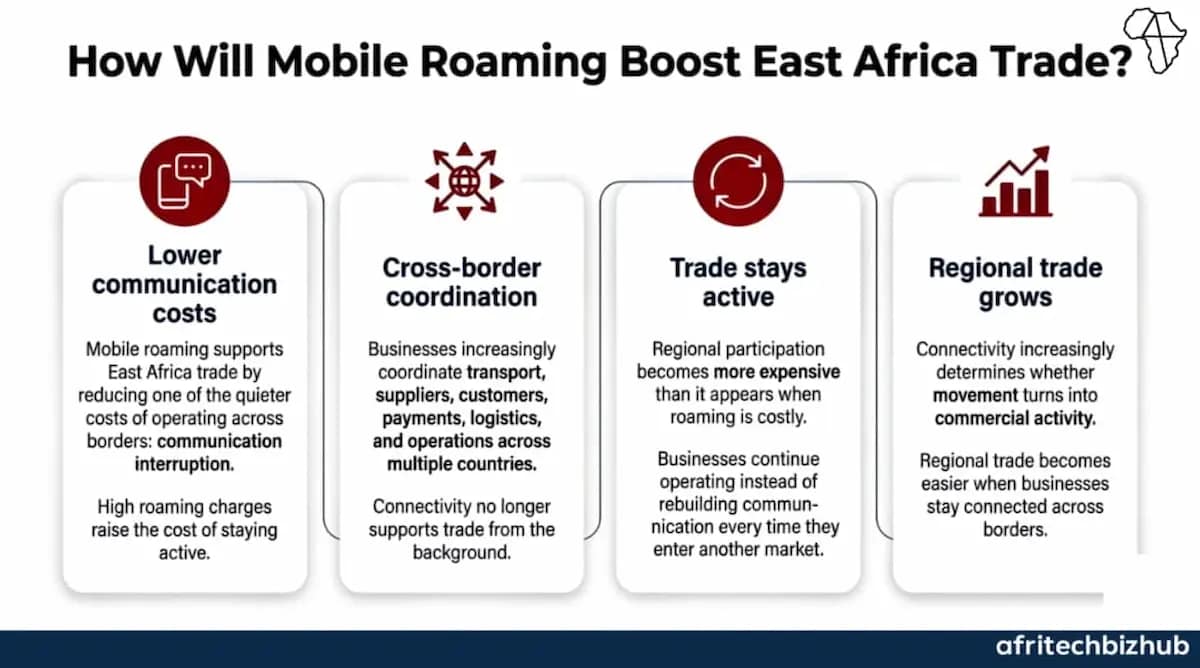
How Will Mobile Roaming Boost East Africa Trade?
Mobile roaming supports East Africa trade by reducing one of the quieter costs of operating across borders: communication interruption.
Businesses increasingly coordinate transport, suppliers, customers, payments, logistics, and operations across multiple countries.
High roaming charges raise the cost of staying active and make regional participation more expensive than it appears.
That changes the role of telecom infrastructure.
Connectivity no longer supports trade from the background.
It increasingly determines whether movement turns into commercial activity.
Regional trade becomes easier when businesses continue operating instead of rebuilding communication every time they enter another market.
Why Is Digital Connectivity Vital For Regional Integration?
Digital connectivity matters because regional integration no longer depends only on roads, border policy, and movement agreements.
People increasingly expect communication, information access, financial services, and business activity to remain available across borders without restarting access each time they travel.
That expectation creates a different standard for integration.
A region may remove physical barriers and still remain operationally fragmented if users lose affordable access once they move.
Digital connectivity increasingly acts as the layer that turns regional agreements into everyday economic participation.
Can Affordable Data Reduce East Africa Telecoms Costs?
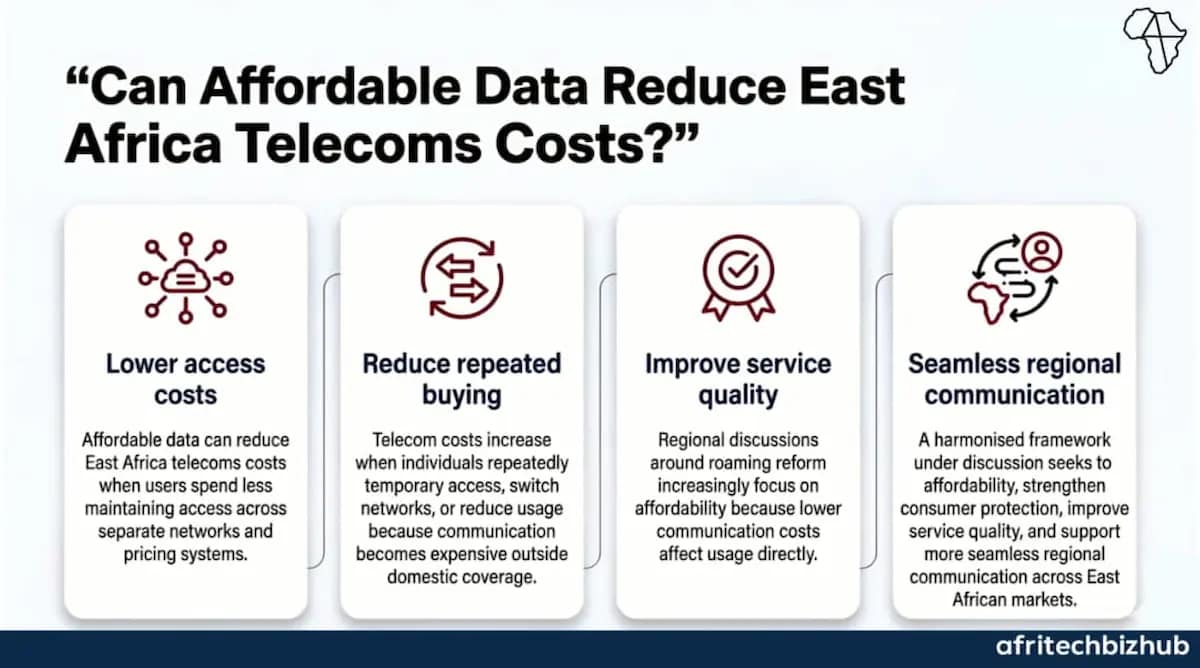
Affordable data can reduce East Africa telecoms costs when users spend less maintaining access across separate networks and pricing systems.
Telecom costs increase when individuals repeatedly buy temporary access, switch networks, or reduce usage because communication becomes expensive outside domestic coverage.
Regional discussions around roaming reform increasingly focus on affordability because lower communication costs affect usage directly.
A harmonised framework under discussion seeks to improve affordability, strengthen consumer protection, improve service quality, and support more seamless regional communication across East African markets.
How Will Roaming Reforms Improve Cross-Border Connectivity?
Roaming reforms improve cross-border connectivity by reducing the difference between moving physically and remaining digitally active.
People increasingly expect calls, mobile data, digital services, and communication tools to continue operating without major cost changes as they move between countries.
The larger opportunity extends beyond cheaper telecom access.
Regions that make connectivity easier to carry across borders may strengthen trade participation, business mobility, and digital economic activity faster than regions that continue treating telecom access as a domestic service.
The strongest regional infrastructure may not be the roads people travel on. It may be the networks they stop noticing while they move.


Recent Comments