


Featured Summary:
- GE Vernova is expanding Morocco’s role in Africa’s transmission infrastructure buildout.
- Transmission bottlenecks are increasingly limiting industrial electricity reliability across African markets.
- Morocco energy investment is strengthening regional electricity engineering and grid integration.
- Digital engineering is becoming central to how African utilities reduce outages and manage growing power demand.
Africa’s electricity challenge is increasingly no longer generation.
It is transmission.
Across the continent, weak grids, overloaded lines, and infrastructure failures continue disrupting industrial growth despite years of investment into power supply.
GE Vernova’s Morocco expansion signals where the next energy cycle is moving: transmission engineering, digital grid control, and regional electricity infrastructure are becoming more decisive than adding generation capacity alone.
How Will GE Vernova Transform Africa’s Electricity Networks?
GE Vernova is expanding its transmission operations through Morocco as African utilities increase spending on grid stability, transmission upgrades, and electricity network control.
The company’s Casablanca engineering hub will support transmission maintenance, digital grid monitoring, fault detection, and infrastructure services across African electricity systems as governments push to reduce outages and stabilize industrial power supply.
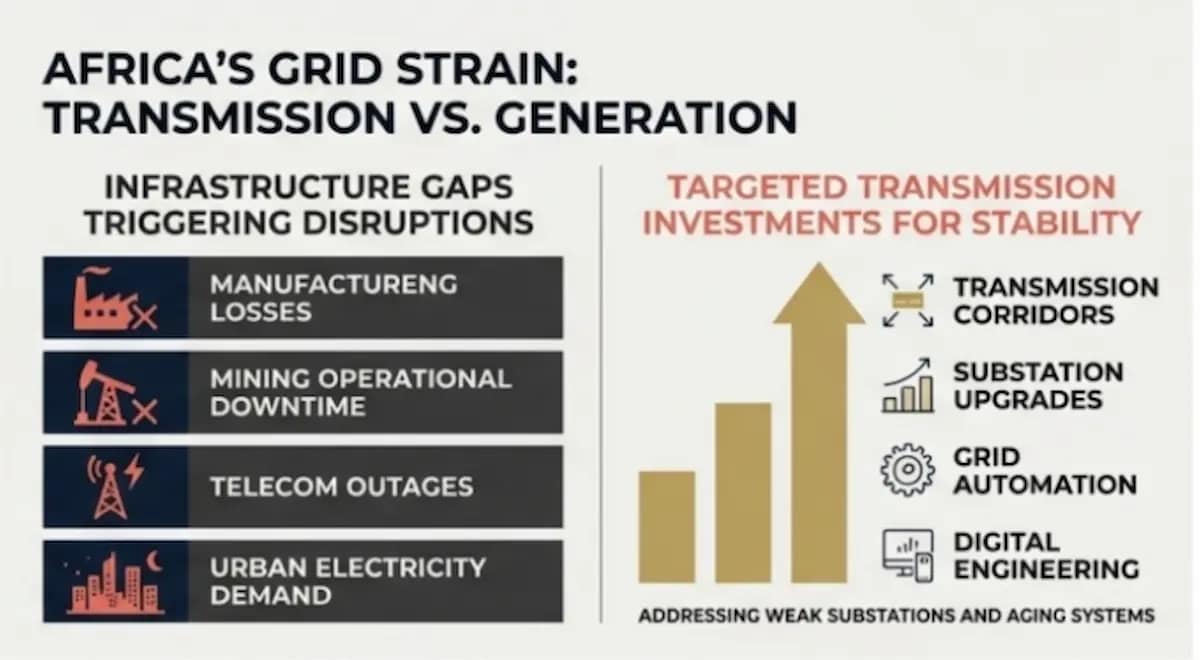
Weak transmission networks continue disrupting manufacturing, mining, telecoms, and urban electricity demand across several African economies despite rising generation capacity.
Governments and utilities are increasing investment in substations, transmission corridors, and grid automation as electricity infrastructure pressure spreads across industrial and urban markets.
Why Is Morocco Energy Sector Attracting Global Investments?
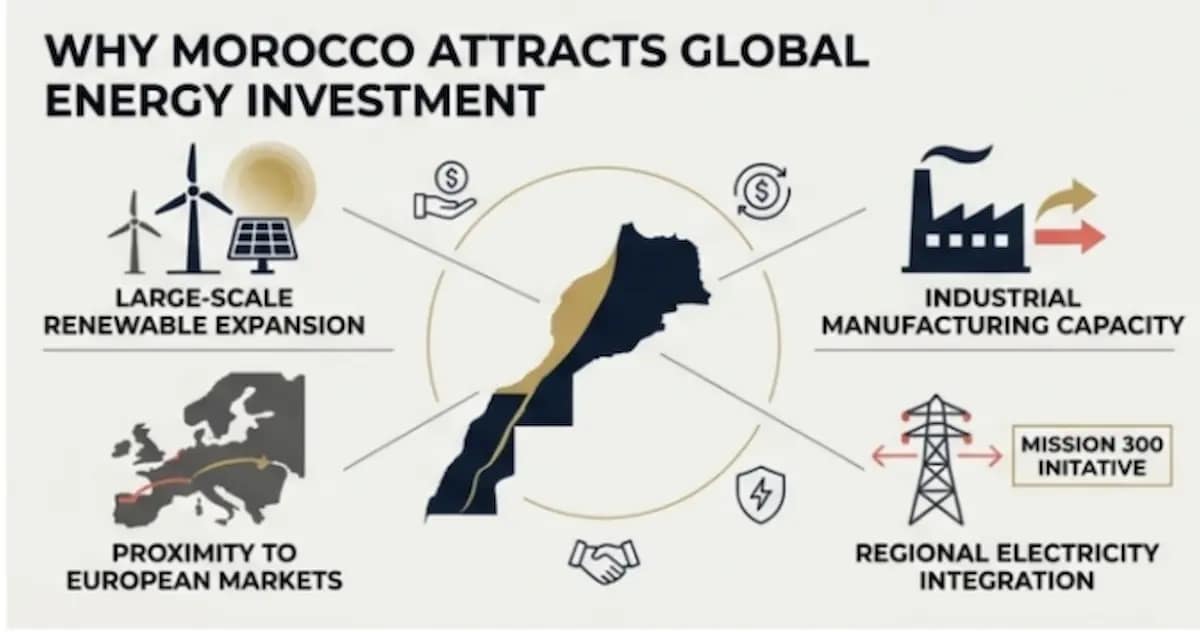
Morocco is attracting global energy investment through large-scale renewable expansion, industrial manufacturing capacity, and proximity to European energy and industrial markets.
The country has expanded solar and wind projects, modernized export infrastructure, and increased spending on industrial energy systems as governments and corporations accelerate investment across North African supply chains and clean-energy production.
European, Gulf, and international firms are increasing exposure to Morocco as energy security, electricity demand, and industrial manufacturing pressures intensify across regional markets.
Morocco’s political stability, Atlantic and Mediterranean access, and industrial infrastructure continue attracting capital into hydrogen projects, manufacturing corridors, and regional electricity integration.
Can Power Transmission Upgrades Improve Africa’s Grid Reliability?
Power transmission upgrades are central to stabilizing African electricity networks as overloaded transmission lines, weak substations, and aging grid systems continue triggering blackouts and industrial disruptions across several economies.
Governments and utilities are increasing investment in transmission corridors, substations, and regional interconnection projects to improve electricity distribution between industrial zones, urban centers, and national grids.
The African Development Bank and World Bank-backed Mission 300 initiative places transmission and regional grid integration at the center of expanding reliable electricity access across Africa, recognizing that generation growth alone does not deliver usable power without stronger transmission systems.
How Is Digital Engineering Reshaping African Energy Infrastructure?
Digital engineering is moving directly into African power systems as utilities deploy grid automation, transmission analytics, predictive maintenance, and real-time monitoring to reduce outages and strengthen electricity network control.
Energy companies are increasing investment in digital engineering as manufacturing expansion, telecom infrastructure, mining operations, urban growth, and data-center development place heavier pressure on electricity systems across African economies.
GE Vernova’s Morocco transmission expansion reflects a wider repositioning across African energy infrastructure.
Utilities are increasingly discovering that generation capacity alone does not guarantee reliable electricity.


Recent Comments