

Featured Summary:
- Indonesia’s stocks are drawing renewed investor interest as lower valuations reshape capital allocation.
- Indonesia’s market correction is forcing investors to reassess opportunities across emerging markets.
- African investors are increasingly competing for global investment opportunities beyond the continent.
- Strong businesses continue attracting capital despite broader market volatility.
Indonesia’s market correction is changing where global capital looks next.
Falling valuations are forcing investors to compare emerging markets more closely, separating short-term market pressure from long-term economic fundamentals.
For African investors, the opportunity is no longer defined by geography alone but by where stronger businesses and better valuations intersect.
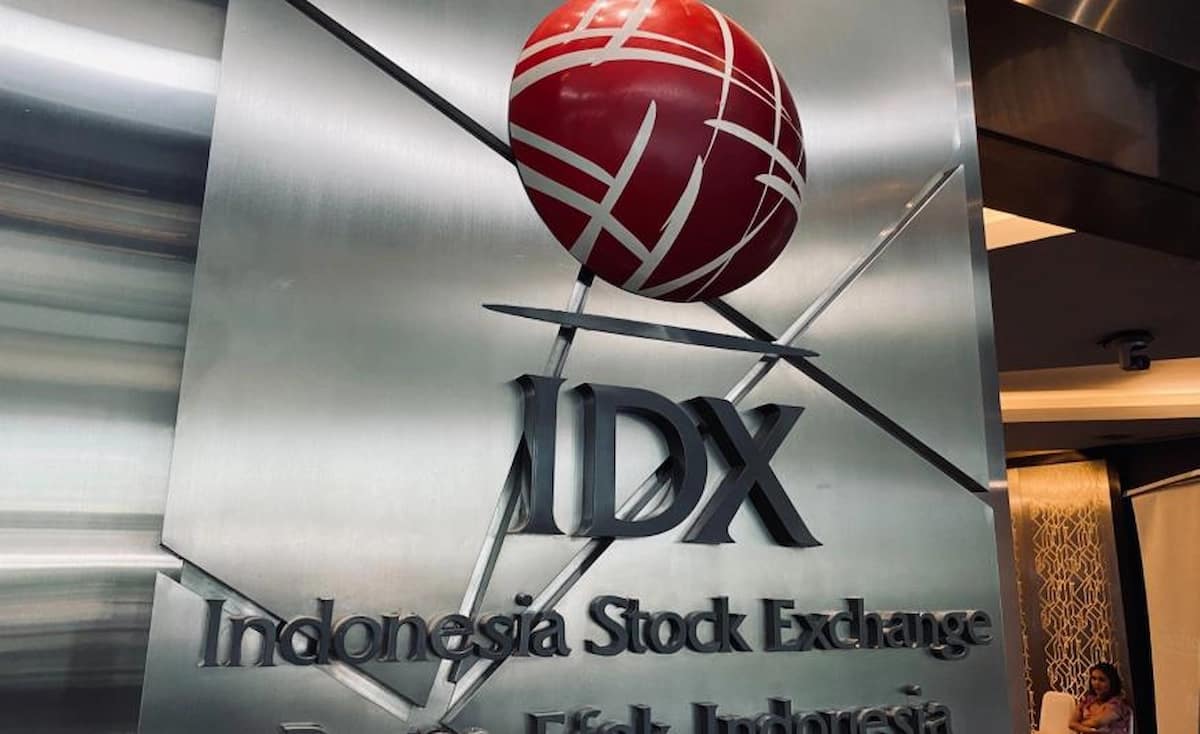
The sell-off has placed Indonesian stocks back inside a wider capital-allocation conversation.
Markets under pressure can expose weak confidence, but they can also reset prices for investors willing to look beyond immediate volatility.
Indonesia remains one of Asia’s largest emerging markets, with deep consumer demand, natural resources, banking scale, manufacturing capacity and a growing digital economy.
Lower prices have made that combination harder to ignore.
Why Are Indonesian Stocks Attracting Bold Investors in Africa Now?
Indonesian stocks are attracting attention because lower valuations have opened a new entry point into a major emerging market.
The market correction has created pressure, but it has also reduced the price investors must pay for exposure to Indonesian banks, consumer companies, commodities, manufacturing and digital economy assets.
For disciplined capital, weaker sentiment can create room to buy businesses that remain commercially relevant beyond the sell-off.
African investors are watching a market where price and fundamentals are beginning to separate.
Indonesia’s population, domestic consumption base, resource strength and industrial capacity still give it weight among emerging economies.
The opportunity sits in timing. Market panic lowers prices quickly, while stronger businesses recover through earnings, balance sheets and long-term demand.
What Does Indonesia’s Stock Market Crisis Reveal?
Indonesia’s stock market crisis shows how quickly capital can reprice risk without erasing the underlying economy.
Equity markets react immediately to foreign outflows, currency pressure, index concerns and investor confidence. Businesses move more slowly.
Banks keep lending, consumers keep spending, factories keep producing and commodity supply chains keep operating even when share prices fall.
That gap creates the investment opening.
The sell-off has reset expectations and forced investors to examine which companies were overvalued and which are now trading below their long-term earning potential.
Indonesian stocks are no longer being assessed only through the weakness of the index.
They are being separated by sector strength, cash generation, governance, debt levels and resilience.
How Is Global Stock Market Facing New Risks?
Global stock markets are facing a more selective capital cycle.
Investors are no longer treating emerging markets as one broad risk category.
They are comparing policy credibility, currency stability, corporate earnings, valuations, liquidity and reform progress more aggressively.
That shift makes weaker markets vulnerable, but it also makes undervalued markets more visible.
The new risk environment is not punishing every market equally.
Capital is rotating toward economies where lower prices still sit beside strong industries, credible reform signals and long-term demand.
Indonesia’s stocks are now part of that reassessment.
The sell-off has increased risk, but it has also improved the valuation argument for investors who can separate temporary pressure from durable business value.
Can African Investor Profit From New Opportunities?
African investors are operating in a market where access is widening beyond domestic exchanges.
The African Development Bank and the African Securities Exchanges Association signed a $600,000 grant agreement to expand the African Exchanges Linkage Project, a platform designed to connect African stock exchanges, support cross-border securities trading and improve market liquidity.
That institutional direction gives African capital a broader route into listed opportunities across the continent.
The same investment discipline applies when global corrections create value outside Africa. Indonesia’s stocks are being repriced at a time when investors are comparing emerging markets more carefully.
For African investors, the opportunity sits in selection, not geography.
Markets under pressure can expose stronger businesses at lower valuations, but the advantage belongs to capital that can read earnings quality, currency risk, sector strength and long-term demand before entering.
Which Business is Most Profitable in Indonesia?
Indonesia’s strongest businesses sit in sectors where domestic demand, exports and industrial depth remain difficult to replace.
Banking remains central because credit, payments and consumer finance move through the country’s large population and business base.
Commodities retain weight through coal, nickel, palm oil and metals.
Consumer goods benefit from household demand, while manufacturing continues to support exports, jobs and supply chains.
The digital economy and renewable energy add another layer to the investment case.
E-commerce, financial technology, data services, electric-vehicle supply chains and clean-energy projects are shaping where future earnings can grow.
A falling stock market does not weaken every industry equally.
The businesses with pricing power, cash flow, governance strength and demand resilience will remain the focus for investors using Indonesia’s correction as an entry point rather than an exit signal.


Recent Comments