

Last updated: December 12, 2025
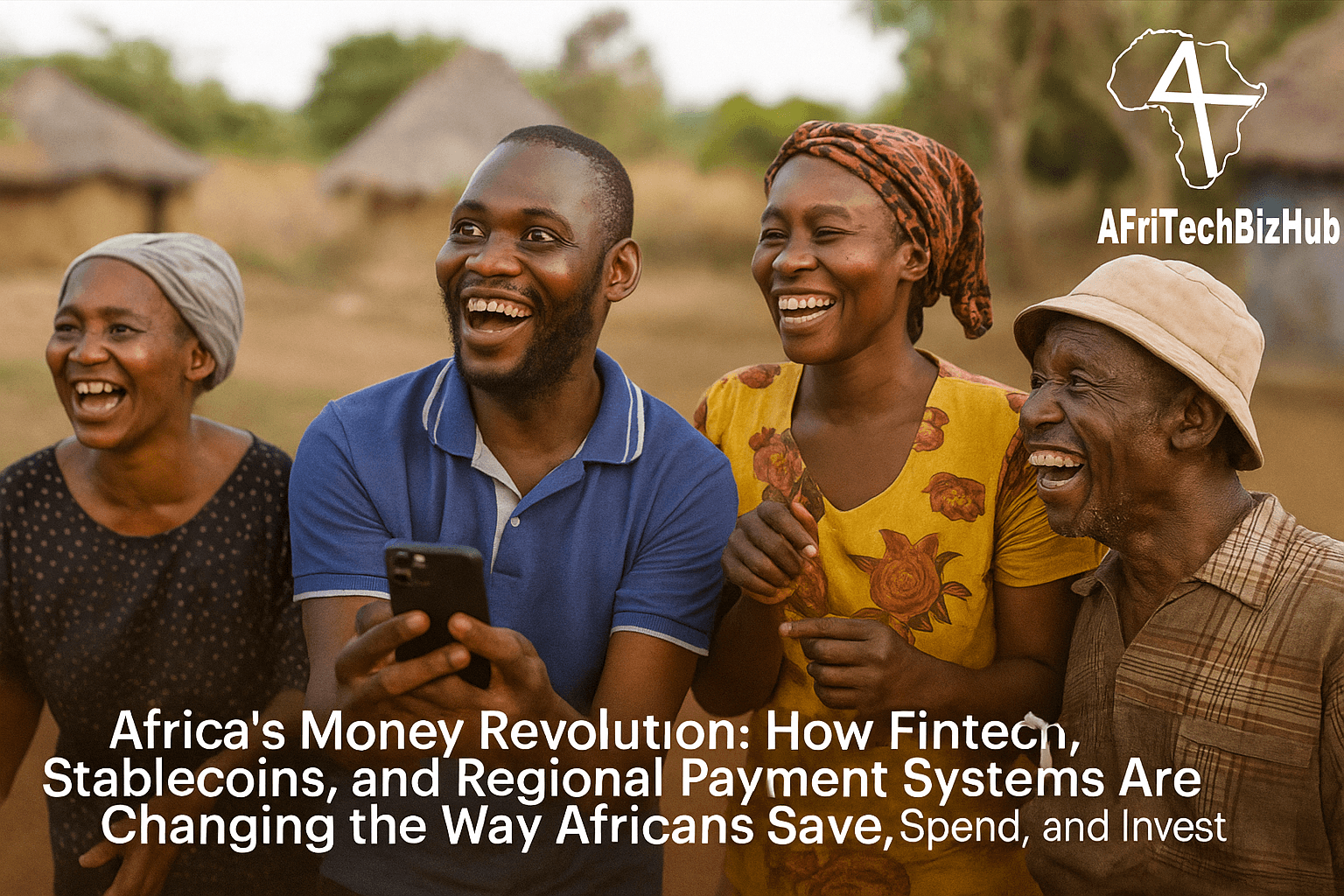
From Visa’s Moniepoint partnership to COMESA’s cross-border digital payment system, Africa’s fintech rise is redefining how the world saves, spends, and invests in 2025.
(Related articles: How Africans Are Making Money Online in 2025, COMESA’s Local-Currency Payments Platform, Africa’s Digital Economy Boom)
A New Understanding of Money in Africa
For a long time, the African story about money was simple but painful: you earned it in your local currency, tried to save it in a weak bank account, and watched inflation quietly eat it away. But in 2025, something has changed. Money in Africa is no longer just paper and plastic — it’s data, code, and trust, moving through phones and apps faster than ever before. Across the continent, a silent revolution is unfolding. From Moniepoint agents in Lagos to mobile money traders in Lusaka, and freelancers in Nairobi saving in stablecoins, Africans are rewriting the rules of finance. This isn’t a corporate revolution — it’s a people-driven one. Ordinary Africans are learning that technology can do what banks refused to do for decades: make saving, earning, and investing accessible to everyone.
Featured Summary:
Africa’s money revolution is reshaping how people save, spend, and invest. From Moniepoint’s Visa partnership giving small traders access to digital payments, to COMESA’s local-currency system enabling trade without the dollar, and freelancers saving in stablecoins — Africans are building a new, tech-driven financial future for themselves.
When Moniepoint Met Visa: Banking Without Banks
In October 2025, something remarkable happened in Nigeria. Visa, the global payment giant, announced a partnership with Moniepoint, one of Africa’s fastest-growing fintech companies. The goal? To make digital payments easier for small businesses that have never seen the inside of a traditional bank. It may sound like just another press release — but to millions of traders, artisans, and drivers, this partnership changed everything. Take Chidinma, a market woman in Yaba, Lagos. She used to reject card payments because “POS no dey work” or she didn’t have a business account. Today, with her Moniepoint Visa card, she accepts payments instantly from anyone — and her earnings go straight into her wallet.
“Before, I only took cash. Now I take cards, transfers, even QR payments,” she tells me with a proud smile. “I see the money right away. No more going to bank or waiting three days.”
This is financial inclusion in real time.
What COMESA is doing at the continental level — connecting African countries through digital currency settlement — Visa and Moniepoint are doing at the street level. They’re proving that Africans don’t need permission to join the financial system; they just need tools.
How COMESA Is Redefining Regional Money
When the Common Market for Eastern and Southern Africa (COMESA) launched its Local-Currency Payments Platform, many people didn’t immediately see the impact. But for African traders who move goods across borders, it was like a door opening to a new world. Before, a Zambian business buying from Malawi had to first convert kwacha to dollars — then to Malawian kwacha. That meant double charges, long waits, and fewer profits. Now, through COMESA’s digital payment system, they can trade directly in their local currencies, fast, safe, and transparent.
“When I sell to Zambia now, I get paid in kwacha, not dollars. No more delays,” says Moses, a small maize exporter from Lilongwe. “I never thought I’d see the day.”
In our earlier coverage, COMESA’s Local-Currency Platform — Africa’s Trade Revolution in Motion, we broke down how this digital system cuts dollar dependence and strengthens Africa’s trade ecosystem. It’s part of the same wave — an Africa that’s no longer waiting for global systems to work in its favor.
The Rise of Digital Money and Stablecoins
But beyond fintech apps and trade platforms lies another quiet shift — one that’s happening on mobile screens, not in boardrooms. Across Africa, freelancers, remote workers, and digital traders are now using stablecoins like USDT and USDC to store value. It’s a practical solution to a daily problem: unstable local currencies. When inflation eats into the naira, cedi, or kwacha, many turn to digital wallets that hold stablecoins pegged to the U.S. dollar. Platforms like Yellow Card, Binance, and Chipper Cash now allow Africans to send, receive, and spend stablecoins without needing a foreign bank account.
“I don’t even use my dollar account anymore,” says Faith, a Kenyan freelance writer. “It takes too long and charges too much. I save in stablecoins, and when I need cash, I send it straight to M-Pesa.”
This isn’t crypto speculation, it’s survival innovation. It’s Africans using technology to protect the value of their sweat.
Connecting the Dots: Fintech, COMESA, and the Digital Economy
If you’ve been following Afritech Biz Hub’s coverage — from How Africans Are Making Money Online in 2025 to Africa’s Digital Economy Boom — you’ll see a pattern forming. Africa’s financial evolution isn’t about one company or one product. It’s a movement driven by connection, people, platforms, and policy working in sync.
- Fintech connects the unbanked.
- COMESA connects African countries.
- Digital assets connect Africans to the global economy.
All three are building the same thing, a financial future where Africans don’t just use technology; they own their financial identity.
Why This Matters — and What’s Next
The next phase of Africa’s financial revolution won’t be about new apps or bigger investors. It will be about understanding, helping people trust digital systems the same way they once trusted cash. Because right now, a farmer in Chipata, a tailor in Accra, and a software engineer in Nairobi are all asking the same question:
“How can I make my money work for me — not against me?”
The answer lies in access, education, and community. Afritech Biz Hub exists for that purpose, to explain Africa’s digital transformation in a way everyone can understand, from those who already know to those who are just learning. As Africa builds its own financial rails, one truth is clear: the future of African money won’t be imported. It’s being written — code by code, transaction by transaction — right here on the continent.


Recent Comments