


Last updated: May 17, 2026
Featured Summary:
- Africa infrastructure constraints are increasingly colliding with global AI, cloud, and industrial expansion plans across the continent.
- Microsoft’s stalled Kenya project exposed how financing, grid capacity, and infrastructure scale are becoming harder barriers for global tech investment in Africa.
- Dangote’s industrial expansion is reinforcing a broader shift as private African capital moves deeper into energy, logistics, and infrastructure systems critical to future digital growth.
Africa’s infrastructure gaps are increasingly colliding with the continent’s digital and industrial ambitions as global investment negotiations grow more demanding across key markets.
Microsoft’s planned $1 billion Kenya data center project stalled after disagreements over financing guarantees, infrastructure scale, and power-capacity commitments exposed the deeper limits facing East Africa’s digital expansion push.
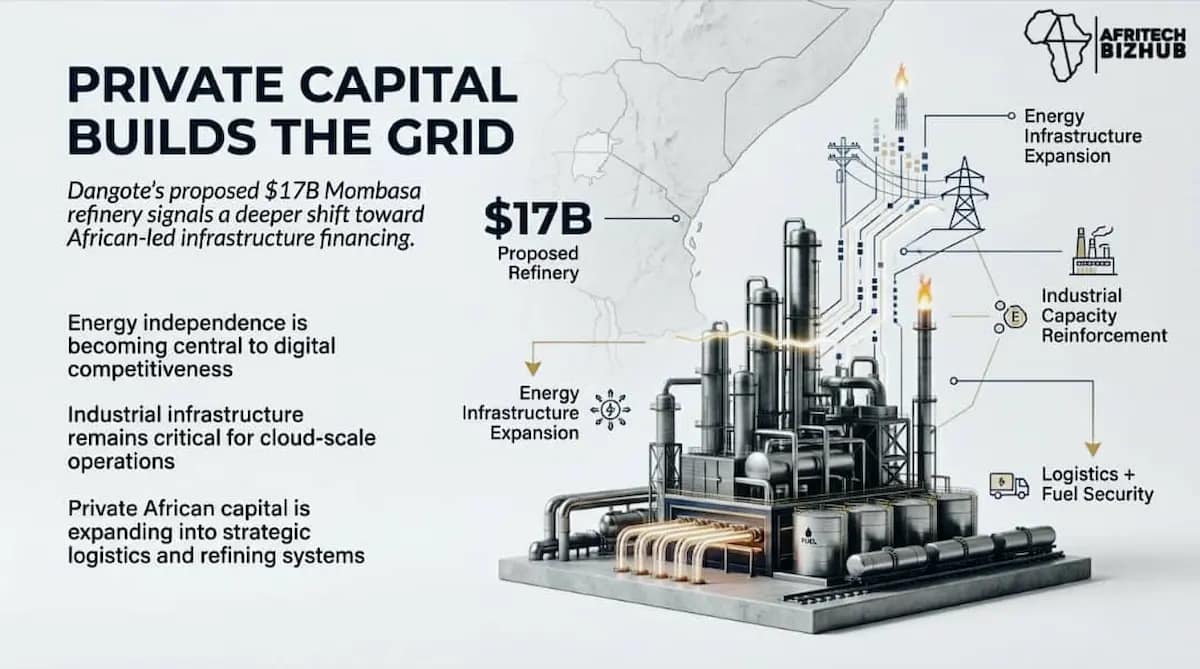
At the same time, Aliko Dangote is moving deeper into East Africa’s industrial sector through a proposed $17 billion refinery project in Mombasa, reinforcing how African economies still rely heavily on large-scale private capital to accelerate infrastructure development.
East Africa’s growth ambitions are expanding quickly. Its infrastructure systems still need the capital to keep pace.
Why Did Microsoft’s $1B Data Center Project Stall in Kenya?
Microsoft’s planned $1 billion data center investment in Kenya stalled after negotiations over financing commitments, infrastructure capacity, and scaling requirements failed to align between the company and Kenyan authorities.
The breakdown exposed deeper pressure inside East Africa’s digital expansion push, where demand for large-scale cloud, AI, and industrial infrastructure is accelerating faster than supporting systems can expand.
Kenya’s technology ambitions continue rising, but Africa infrastructure constraints are making large-scale investment agreements harder to close as global firms push for stronger operational guarantees.
Can Dangote’s Infrastructure Expansion Ease Africa’s Energy Pressure?
Aliko Dangote is expanding deeper into large-scale industrial infrastructure as pressure grows around Africa’s energy capacity, refining systems, and manufacturing growth.
Dangote’s proposed refinery investment in Mombasa comes as several African economies push to strengthen industrial capacity and reduce infrastructure dependence tied to imports, fuel supply, and logistics bottlenecks.
The expansion is also unfolding as Africa infrastructure gaps continue shaping how global technology and industrial investors assess long-term operational stability across the continent.
Why Do Data Centers Need Refineries to Address Africa Infrastructure Gaps?
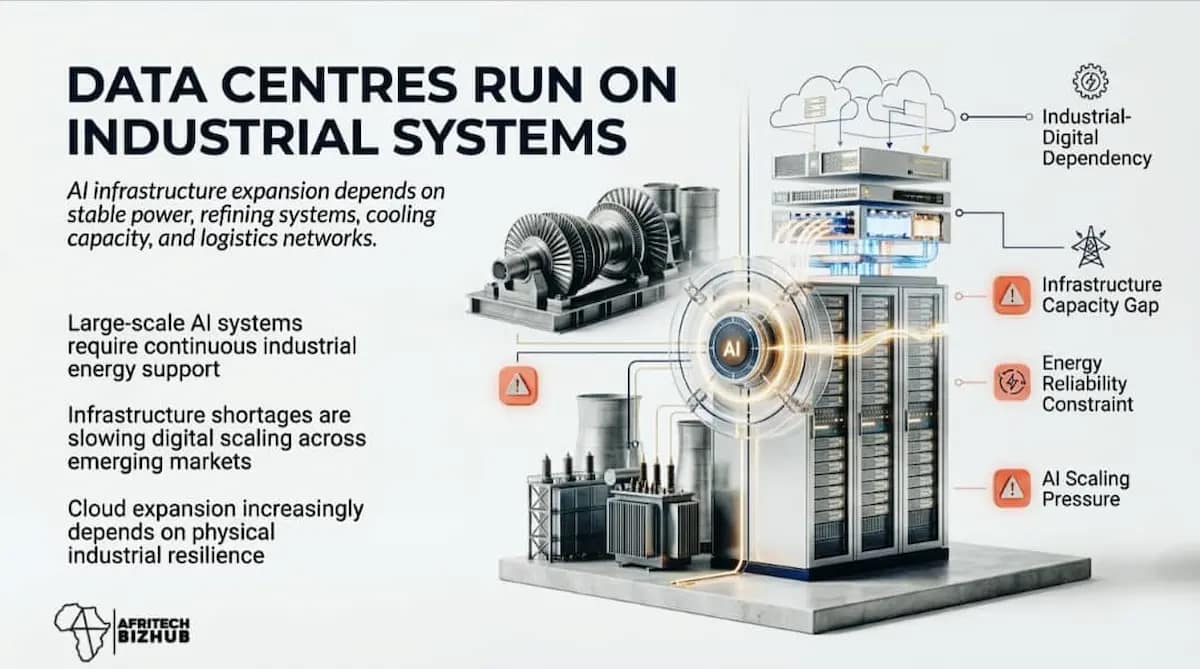
Large-scale data centers require stable electricity, fuel supply, cooling systems, logistics networks, and continuous industrial capacity to operate at scale.
Those demands are colliding directly with Africa’s infrastructure gap as AI infrastructure, cloud expansion, and digital commerce accelerate across the continent.
The World Bank has repeatedly warned that infrastructure financing and capacity shortages continue limiting growth across developing economies, including Africa, where industrial and digital expansion are rising faster than supporting systems can scale.
Why Is Africa Infrastructure Becoming a Bigger Risk for Global Tech Investment?
Microsoft and G42’s stalled Kenya negotiations exposed the growing pressure global technology firms face as Africa’s digital expansion moves faster than supporting infrastructure systems can scale.
Financing commitments, power capacity, industrial support systems, and long-term infrastructure guarantees are becoming harder issues to resolve as global firms push deeper into African cloud, AI, and data infrastructure projects.
Large parts of the continent still remain underdeveloped in energy, transport, refining, and industrial capacity despite rising demand for large-scale digital investment.
Dangote’s proposed $17 billion refinery project in Mombasa is unfolding as infrastructure pressure intensifies across several African markets.
Governments are pushing for faster industrial growth, digital expansion, and larger technology investment, but infrastructure systems across much of the continent still remain under heavier strain.
Africa’s digital growth is accelerating. Infrastructure development is under increasing pressure to keep pace.


Recent Comments