

Featured Summary:
- Trade facilitation can strengthen Nigeria-Netherlands trade by reducing delays, improving clearance, and helping legitimate exporters move goods faster.
- Trade enforcement matters because safer supply chains protect compliant businesses from illicit goods, smuggling risks, and weak border credibility.
- Supply chain security can improve trade when customs systems, intelligence sharing, port controls, and risk-based inspections become more reliable.
- Import export Nigeria could gain if customs cooperation improves cargo movement, European market access, port efficiency, and exporter confidence.
Nigeria’s export power will not be defined only by what the country produces.
It will also be defined by how efficiently goods move through ports, airports, customs systems, and international supply chains.
Strong agricultural output, energy exports, consumer goods, and industrial potential lose value when clearance is slow, documentation is weak, enforcement is unpredictable, or cargo routes are not trusted.
That is why Nigeria’s customs engagement with the Netherlands carries a bigger African meaning.
It is not a traditional market-opening trade agreement.
It is a test of whether better customs cooperation can make Africa’s largest economy a more credible export gateway.
How Does Trade Facilitation Boost Nigeria-Netherlands Trade Efficiency?
Trade facilitation boosts Nigeria-Netherlands trade by attacking the hidden costs that weaken exporters before goods reach buyers.
Delays at ports, unclear paperwork, repeated inspections, weak coordination, and unpredictable clearance procedures can make businesses lose time, contracts, and price competitiveness.
A stronger customs partnership can help simplify processes, improve documentation, support risk-based clearance, and make cargo movement more predictable.
That matters because modern trade rewards reliability as much as production.
For Nigeria, the export stakes are direct. Agricultural exporters need faster clearance for goods such as cocoa products, sesame, cashew, ginger, leather, and processed foods.
Manufacturers need smoother movement of machinery, packaging materials, industrial inputs, and finished products.
Importers also need predictable clearance for materials that support local production.
When trade facilitation works, businesses can plan better, deliver faster, reduce hidden costs, and compete more confidently in European-linked supply chains.
What Role Does Trade Enforcement Play in Bilateral Cooperation for African Countries?
Trade enforcement gives bilateral cooperation its credibility. Customs systems do not only exist to collect duties or stamp documents.
They protect supply chains from counterfeit goods, narcotics, smuggling networks, under-declared cargo, unsafe products, and other illegal flows that weaken confidence in legitimate trade.
For African exporters, weak enforcement can become a reputational problem because international buyers want proof that goods are traceable, compliant, and protected from illicit interference.
The Nigeria-Netherlands cooperation can make enforcement more targeted rather than more burdensome.
Better intelligence sharing, cargo profiling, officer training, scanning capacity, post-clearance audits, and risk controls can help authorities focus on high-risk shipments without punishing every trader with delays.
That balance is important. African countries need stronger enforcement, but they also need faster legitimate trade.
The goal is not to make borders harder for honest businesses. The goal is to make supply chains safer while allowing compliant cargo to move with less friction.
How will Supply Chain Security Improve Cross-border Trade in Africa?
Supply chain security improves cross-border trade when governments can track cargo, detect risks, and protect legitimate goods from criminal activity.
Nigeria’s ports and airports do not serve only domestic commerce.
They are part of a wider West African trade system where goods, inputs, and finished products move through regional and global routes.
If Nigeria strengthens cargo monitoring, customs intelligence, inspection quality, and port coordination, the benefits can reach beyond one bilateral relationship.
The Netherlands connection matters because global trade now rewards trusted corridors.
Buyers, insurers, logistics firms, regulators, and shipping companies want confidence that goods are properly declared, safely handled, and traceable.
Nigeria can use this cooperation to improve customs data, container tracking, cargo screening, port procedures, and collaboration between customs and terminal operators.
A stronger supply chain does not only protect borders.
It can reduce delays, lower trade costs, and make Nigerian exporters more credible in international markets.
Why is Trade Agreement Reshaping Global Trade Relations and How does it Impact African Countries?
Modern trade cooperation is no longer judged only by tariff cuts or market-access promises.
It is judged by how well countries improve compliance, traceability, customs coordination, enforcement capacity, and supply-chain trust.
That shift matters for African countries because export competitiveness now depends on systems, not production alone.
A country can produce goods that buyers want, but weak customs processes can still make those goods harder to move, insure, certify, and trust.
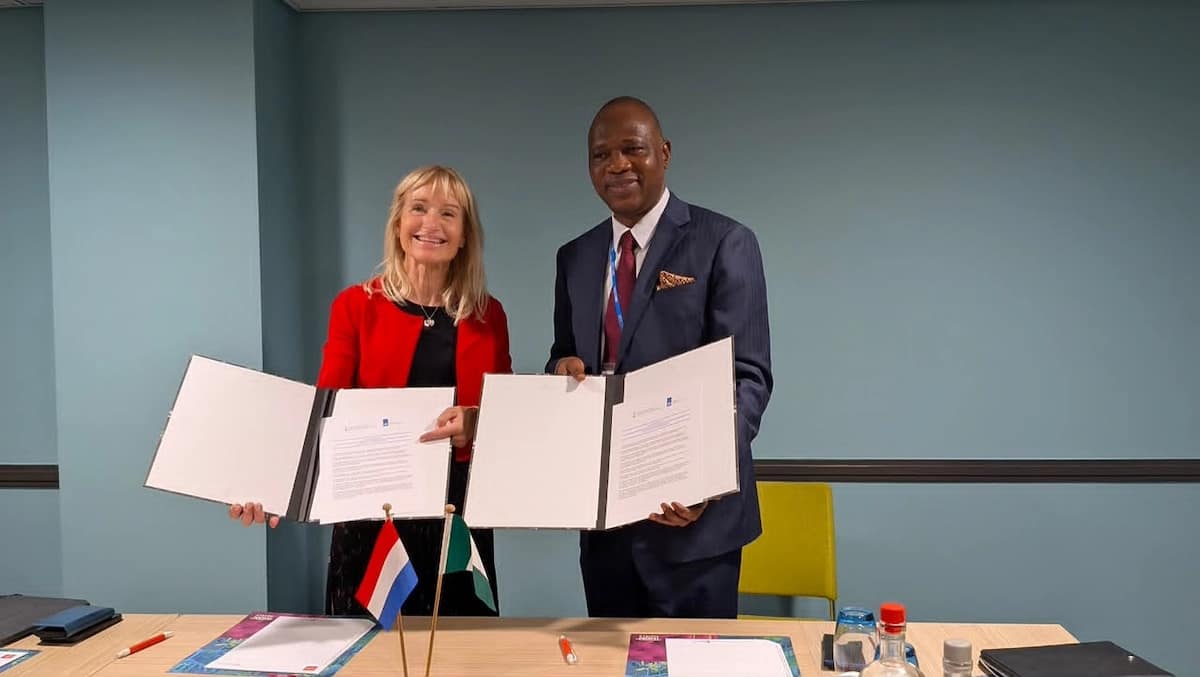
The Nigeria Customs Service official March 2026 newsletter documented cooperation with a Netherlands Customs delegation, with discussions focused on border control, illicit trade, supply chain security, enforcement capacity, intelligence sharing, and trade facilitation.
That institutional foundation matters because the engagement is about the systems that determine whether trade can move safely and efficiently.
For African countries, the wider lesson is clear.
Trade partnership worldwide is becoming a systems game, and countries with stronger customs capacity will be better positioned to expand exports.
How does Nigeria-Netherlands Trade Expand Import Export Nigeria?
Nigeria Netherlands trade can expand import export Nigeria by improving the channels through which goods move between Nigerian producers, European buyers, and global logistics networks.
The Netherlands is one of Europe’s strongest logistics economies, which makes it useful for Nigerian exporters seeking better access to European-linked markets.
If customs cooperation leads to cleaner documentation, faster clearance, stronger enforcement, and better cargo confidence, Nigerian exporters could gain in agriculture, processed foods, energy products, textiles, packaging, manufactured goods, and consumer products.
The import side also matters. Nigerian manufacturers depend on machinery, spare parts, industrial inputs, chemicals, packaging materials, and technology.
When import systems are slow or unpredictable, local production becomes more expensive and less reliable.
A better customs partnership can reduce delays for legitimate imports while strengthening enforcement against illegal or unsafe goods.
That is the practical value of Africa-Netherlands cooperation: exports can leave faster, imports can support production more reliably, and businesses can face fewer hidden costs.
The final test is execution. If the cooperation produces stronger officer training, better customs data, smoother port processes, safer cargo movement, and more predictable clearance, Nigeria could become a stronger export gateway for West Africa.
If it remains only a diplomatic engagement, the impact will be limited. Nigeria’s export power will not be redefined by one customs visit or one agreement label.
It will be redefined by whether trade facilitation, enforcement, and supply-chain trust improve enough for businesses to feel the difference.


Recent Comments