

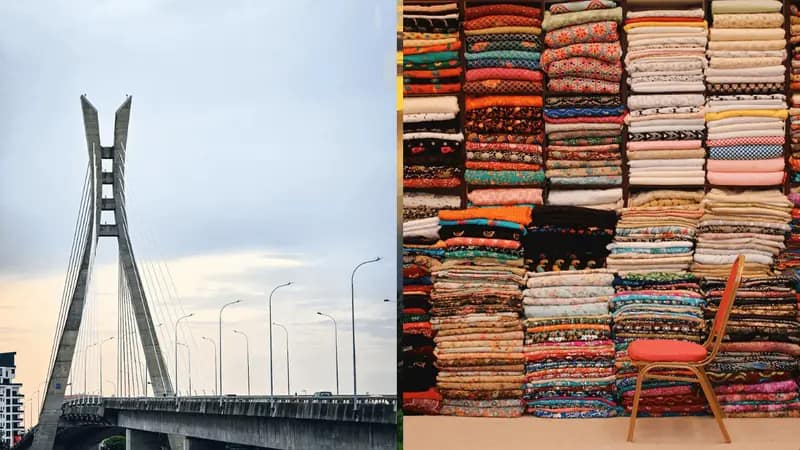
Nigeria’s fashion market commands premium pricing without large-scale manufacturing, revealing how brand leverage and material sourcing control define margin structure.
Featured Summary:
- Nigerian designers charge premium prices based on brand visibility and elite networks, not factory scale.
- The industry spans mass production, import-driven middle markets, and high-margin designer brands.
- Fabric sourcing access shapes quality, cost, and pricing control.
- Fashion business in Nigeria rewards brand positioning and material leverage inside a fragmented system.
A garment that costs $120 to produce can retail for $600 in Lagos. A similar design, made with comparable tailoring skill, might sell for $150 from a lesser-known label.
In Nigeria’s fashion market, pricing is rarely a function of stitching alone. It is a function of brand leverage, sourcing access, and perceived exclusivity.
Fashion business in Nigeria operates within a decentralized production system but commands premium margins in key segments.
The industry lacks large-scale manufacturing infrastructure, yet pricing power remains concentrated among designers who control material sourcing and brand positioning. The gap is not accidental. It is structural.
Why Are Nigerian Designers Expensive
Fashion business in Nigeria prices at two distinct tiers. At the top end, designers command premium rates largely through perceived proximity to elite networks, celebrities, political figures, executives, and cultural influencers.
Visibility becomes currency. Once a label is associated with high-status clientele, pricing stabilizes above production cost. The margin is anchored to brand capital rather than material input.
At the middle tier, pricing power operates differently. Many designers outside elite circles compete on sourcing intelligence and craftsmanship quality rather than name recognition.
Access to premium fabrics — often concentrated through Lagos-based supply channels — determines output quality and margin flexibility.
As explored in our broader analysis of business in Africa, pricing across sectors frequently reflects layered input costs and informal supply chains rather than manufacturing scale.
Nigeria’s fashion market follows that same structural logic: those who control sourcing and positioning influence final price more than those who simply stitch garments.
How Big Is the Nigerian Fashion Industry
Nigeria’s fashion industry sits inside one of Africa’s largest consumer markets. With a population exceeding 220 million and a median age under 20, the country represents one of the continent’s deepest youth-driven apparel markets.
Demand spans informal mass production hubs such as Aba, where low-cost garments serve working-class consumers, to premium designer segments in Lagos and Abuja that command luxury-level pricing without global brand infrastructure.
The market is stratified rather than uniform. International brands like Nike and Adidas maintain retail presence, yet broad penetration of European luxury labels remains limited to a small upper-income segment.
Meanwhile, domestic designers operate across tiers, from workshop-based production to high-margin lifestyle brands with loyal followings.
Import flows from China and other Asian suppliers fill middle-market demand, while local tailoring remains dominant in customized and ceremonial wear.
The industry functions across parallel tiers — informal mass production, mid-market import distribution, and premium designer branding — each operating with distinct margin logic.
Where Do Nigerian Designers Source Materials
Nigeria’s fashion supply chain is not evenly distributed. Access to premium fabrics — imported lace, structured cotton, specialty silk blends, embellished textiles — is concentrated in commercial hubs, particularly Lagos.
Designers who maintain direct relationships with importers or wholesalers reduce cost volatility and secure higher-quality inputs ahead of seasonal demand spikes.
Outside major sourcing hubs, designers often rely on secondary distributors, which introduces layered markups and inconsistent quality. The difference in finished garment pricing frequently reflects upstream fabric access rather than tailoring skill alone.
In fashion business in Nigeria, sourcing networks function as a competitive moat. Designers with direct supply relationships protect margins and stabilize quality; those without them absorb cost pressure or compete on lower price tiers.
Fashion Business in Nigeria Rewards Brand and Sourcing Leverage
Fashion business in Nigeria generates concentrated pricing power inside a fragmented production system. Large-scale manufacturing remains limited. Supply chains are informal. Yet premium margins persist at the top end of the market.
That tension defines the structure. Pricing authority sits with those who control brand visibility, sourcing access, and elite proximity, not necessarily those who control factories.
The system does not mirror Western fashion infrastructure, but it does produce durable margin layers.
For investors and operators observing from outside the market, the takeaway is structural: Nigeria’s fashion industry monetizes positioning and material control before scale. The asymmetry is the opportunity.


Recent Comments