

Featured Summary:
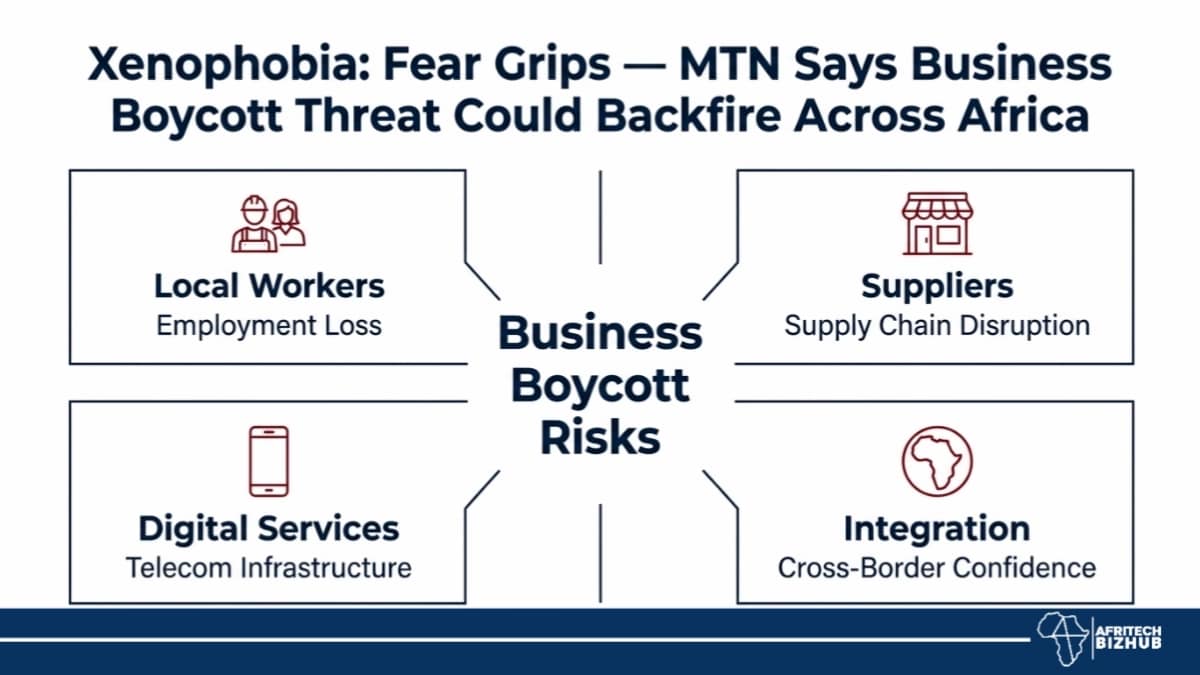
- Business boycott campaigns could affect local workers, suppliers, customers, and businesses far beyond South Africa.
- MTN Nigeria says retaliation against companies operating across Africa risks unintended economic consequences.
- Economic integration depends on markets where businesses and people can operate across borders with confidence.
- Digital transformation becomes more vulnerable when major telecom and technology platforms become targets of political anger.
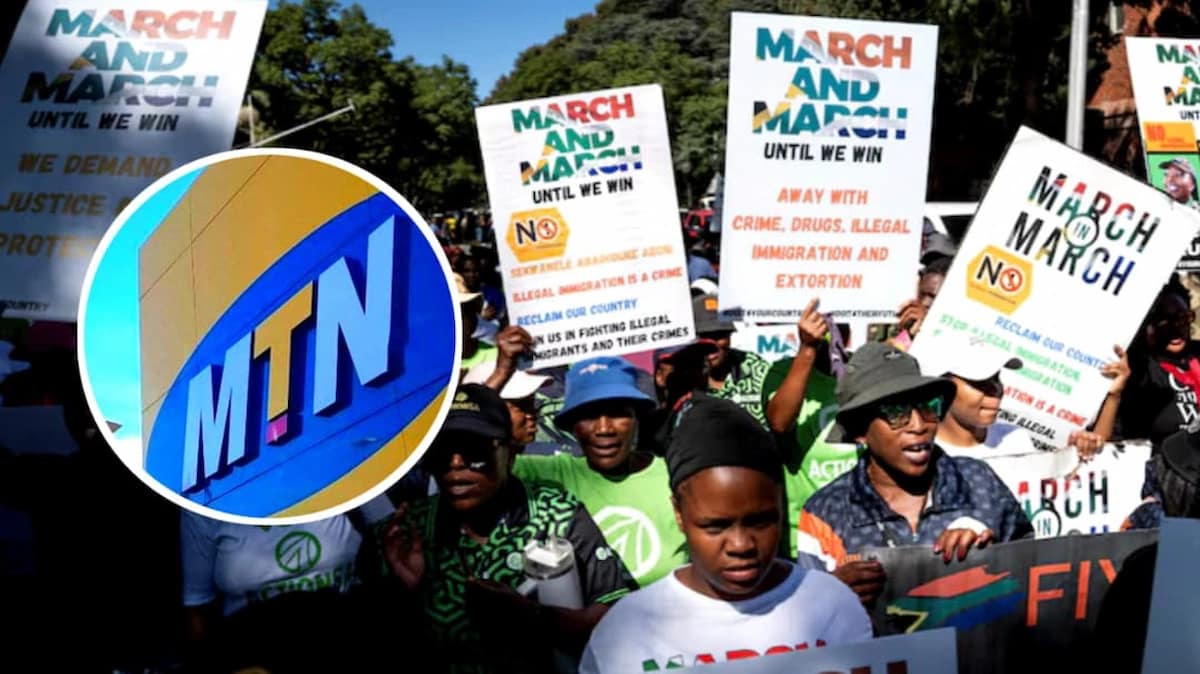
Business boycott campaigns are gaining momentum as frustration over xenophobic attacks grows, but the economics of retaliation are proving more complicated than the politics.
Large African companies no longer operate as simple extensions of their countries of origin.
They employ local workers, pay taxes in host markets, contract domestic suppliers, and provide services that support millions of households and businesses.
That reality sits at the centre of MTN Nigeria’s warning that calls for a Business boycott could produce consequences extending well beyond the intended target.
The contradiction is becoming difficult to ignore.
Public anger is directed at xenophobic violence, yet the proposed response could disrupt African businesses, weaken digital infrastructure, and affect workers and consumers in economies seeking to strengthen regional integration rather than undermine it.
Why Are Foreign Nationals Central to Africa’s Xenophobia Crisis?
Foreign nationals frequently become visible targets during periods of economic frustration because migration is often mistaken for the source of deeper structural problems.
Unemployment, inflation, housing shortages, and limited economic opportunities create pressures that are sometimes redirected toward migrants, traders, professionals, and entrepreneurs from neighbouring countries.
The result is a cycle in which social tension spills into commercial activity and cross-border relationships.
The economic consequences extend beyond those immediately affected.
Foreign nationals participate in local markets as employers, employees, investors, consumers, and service providers.
When that participation is disrupted, business confidence and commercial activity weaken alongside social cohesion.
How Could Economic Integration Survive Rising Xenophobic Backlash?
Economic integration depends on confidence as much as policy.
Trade agreements and regional initiatives encourage businesses to expand across borders, but companies also assess operational risk before committing capital.
Recurring xenophobic incidents increase uncertainty for firms seeking to invest, hire staff, or establish regional operations in unfamiliar markets.
That dynamic creates friction within Africa’s integration agenda.
Markets become less attractive when businesses perceive that diplomatic tensions or public anger can quickly translate into commercial disruption, making long-term expansion decisions more cautious.
Can Digital Transformation Thrive Amid Cross-Border Business Tensions?
Digital transformation relies on infrastructure designed to connect economies rather than divide them.
Telecommunications networks, payment platforms, fintech companies, cloud services, fibre operators, and digital marketplaces all depend on scale and cross-border investment.
Their ability to serve millions of users rests on stable operating environments where infrastructure remains trusted regardless of political developments.
The debate surrounding MTN Nigeria illustrates that challenge.
Telecom operators are not simply corporate brands; they form part of the systems supporting communication, banking, commerce, education, and entrepreneurship.
Pressure on those networks therefore reaches beyond individual companies into the wider digital economy.
Will a Business Boycott Hurt African Economies More Than South Africa?
Business boycott campaigns carry consequences that extend beyond corporate ownership structures.
MTN Group’s financial reporting shows that operations outside South Africa, including MTN Nigeria and MTN Ghana, contribute significantly to the company’s performance and growth.
The economic footprint therefore includes local employees, distributors, contractors, technology partners, and millions of subscribers across multiple African markets rather than a single national economy.
The significance lies in the structure of modern African business.
Companies operating across borders generate local employment, support domestic supply chains, and provide services essential to economic activity.
A Business boycott aimed at one country can therefore create costs that are distributed across several others.
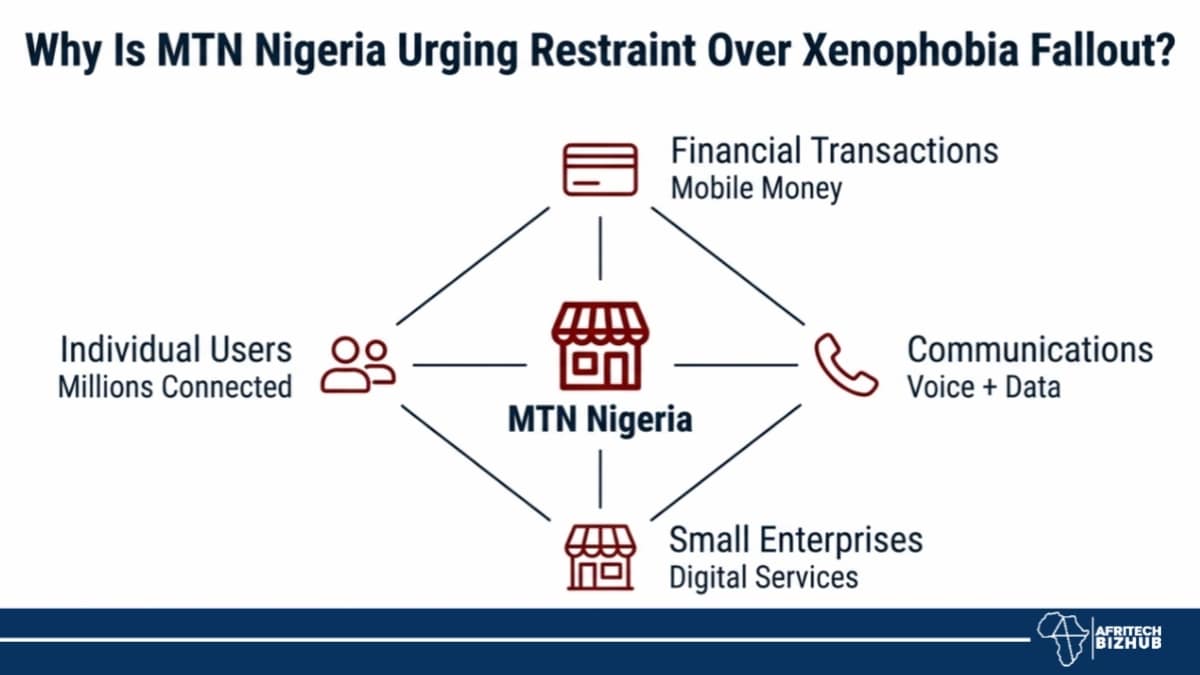
Why Is MTN Nigeria Urging Restraint Over Xenophobia Fallout?
MTN Nigeria’s position reflects the interconnected nature of contemporary African commerce.
Its infrastructure supports financial transactions, communications, digital services, small enterprises, and millions of individual users whose daily activities depend on reliable connectivity.
Disruptions directed at those systems would extend beyond corporate balance sheets into broader economic activity.
The deeper issue is larger than a single company or a single episode of xenophobia.
Africa is pursuing stronger Economic integration, expanding Digital transformation, and encouraging businesses to operate across borders with greater confidence.
In that environment, the effectiveness of a Business boycott cannot be measured only by its intended message but also by its impact on the African businesses, workers, and consumers already connected through the continent’s growing economic networks.


Recent Comments