

Last updated: December 12, 2025
Why Green Tech Investment in Africa Is Becoming the Next Global Frontier
Spiro’s recent $100 million raise sent a clear signal: Africa is no longer a passive recipient of green promises, it’s building them. That landmark investment into electric mobility underlines a broader narrative: green tech investment in Africa is no longer niche, but central to the continent’s future. From solar farms to battery storage, climate tech is becoming a cornerstone for sustainable growth. Global capital, once hesitant, is now engaging with Africa’s climate agenda, attracted by bold policies, rising demand, and innovation tailored for local constraints. For investors and visionaries alike, the question has shifted from “if” to “how fast” the continent can scale.
The Investment Surge: Capital Flows, Targets & New Commitments
In 2025, Africa aims to mobilize US$50 billion annually toward climate and green innovation through the new Africa Climate Innovation Compact. Globally, renewable capacity additions hit 582 GW in 2024, a 15.1 % rise over the prior year. While Africa has benefited less from this trend historically, private and public sector investment has begun to shift: clean energy investment in Africa nearly tripled since 2019, rising from USD 17 billion to nearly USD 40 billion in 2024.
This wave of commitment captures the heart of green tech investment in Africa: scaling what was once underfunded, and turning climate imperatives into commercial opportunity.
Renewable Energy Projects Leading the Way
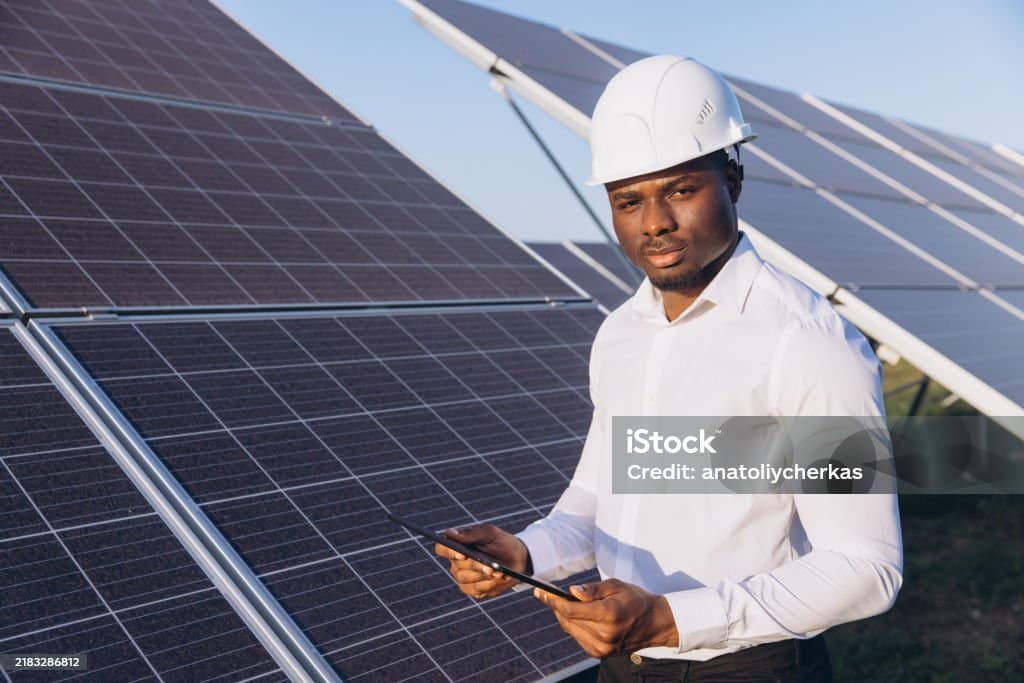
Across Africa, new renewable projects are proving the viability of large-scale clean energy. In Zambia, the Chisamba Solar Power Plant (100 MW) was commissioned in mid-2025 to diversify the country’s energy mix. In South Africa, emerging independent power producers and solar procurement programs are expanding capacity and mitigating chronic load-shedding.
These projects demonstrate that renewables aren’t just climate tools, they are economic infrastructure. They attract foreign capital, reduce import dependence on fossil fuels, and create local jobs. This trend sits squarely at the center of green tech investment in Africa.
Cleantech, Off-Grid Innovation & Mini-Grids
Beyond grid-scale solar and wind, innovation is exploding in off-grid and microgrid solutions. A study of solar mini-grids in rural Kenya and Nigeria showed quadrupled incomes in connected communities, with women gaining more business opportunities and health improvements from reduced kerosene usage.
African startups are designing modular battery systems, smart inverters, and IoT-enabled energy management platforms that can plug into rural communities or remote industrial sites. These innovations carry outsized impact, technically accessible, scalable, and suited to low-infrastructure zones, and form a critical component of green tech investment in Africa.
Barriers, Risk Mitigation & Policy Enablers
Africa currently receives only ~2 % of global clean energy investments, per the International Energy Agency, largely due to perceived risk, regulatory uncertainty, and weak project preparation. To close the gap, project sponsors and governments are deploying blended finance, guarantees, de-risking instruments, and capacity building. For example, the AfDB and development banks are engaging in more preparatory funding, reducing transaction costs and improving bankability.
Effective policies are essential. As one energy official put it in 2025: A reformed sector plus capital equals well-structured projects… make good policies, then investors can start looking at Africa as a viable investment destination. Success in green tech investment in Africa depends on aligning incentives, reducing regulatory risk, and deploying capital smartly.
The Spiro Moment & the Broader Clean Mobility Shift
Spiro’s $100 million raise in 2025 is more than an EV milestone, it is a bellwether for how climate tech can be embedded in mobility, energy, and circular systems. The funding backs expansion in battery manufacturing, swap networks, and local assembly across Nigeria, Kenya, and beyond.
In doing so, Spiro becomes one of the strongest examples of green tech investment in Africa that spans hardware (bikes, batteries), energy systems (swap & charging), and demand (commuter mobility). If capital flows reliably into adjacent climate tech sectors, from grid storage to carbon marketplaces & green hydrogen, then Africa’s green economy narrative will accelerate forcefully.
Current Statistics & Examples (2025)
- Africa aims to mobilize US$50 billion/year for climate solutions through a new continental compact.
- 582 GW of renewables added globally in 2024, a 15.1 % rise.
- Africa’s clean energy investment rose from ~USD 17B to ~USD 40B (2019–2024).
- Chisamba Solar Plant (Zambia): 100 MW, commissioned in June 2025.
- Africa receives ~2 % of global clean energy investment.
- Spiro raises $100 M, expanding battery manufacturing and mobility infrastructure across Africa.
- Ampli Energy in South Africa launches platform for renewable energy trading, with flexible subscription models.
Green tech investment in Africa isn’t a forecast, it’s unfolding now. From solar farms in Zambia to mobility innovations like Spiro’s EV ecosystem, climate capital is rewriting Africa’s economic playbook. But to sustain this momentum, smart governance, blended finance, and institutional alignment are essential. For African innovators, this is their moment to lead; for Western capital, it’s time to partner, not parachute. Follow Afritech Biz Hub for rigorous insight, deal flow tracking, and the stories shaping Africa’s clean revolution. Join us at the intersection of climate, capital, and continental impact.


Recent Comments