

Featured Summary:
- Stock market today shows Wall Street reassessing AI valuations
- Africa’s critical minerals are rising in strategic value
- Washington is expanding investment in African mineral corridors
- AI supply chains are becoming a bigger market focus
Wall Street is reassessing AI valuations as investors look beyond chip earnings to the supply chains behind artificial intelligence.
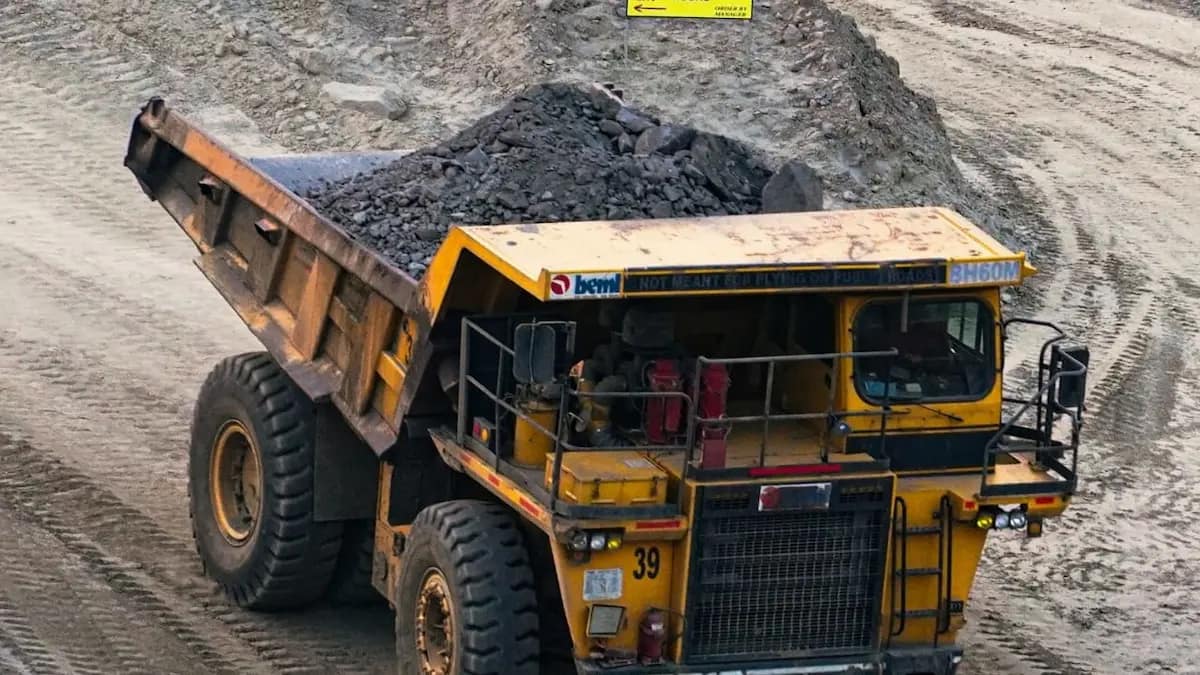
Africa is entering that calculation through copper, cobalt, graphite and rare earths, the materials sitting behind data centers, power systems, batteries, semiconductors and defense manufacturing.
Washington’s financing push across African mineral corridors, led by the Lobito Corridor and Project Vault, is turning African infrastructure into part of America’s long-term market risk map.
AI Valuations Are Moving Beyond the Chip Trade
The AI trade is no longer being priced only through Nvidia’s earnings power. Investors are testing how much of the sector’s premium still holds as semiconductor supply improves, competition widens and customers look for more control over hardware costs.
Hedge funds had already been cutting exposure to chip stocks for a fourth straight week as AI-linked shares sold off, according to Reuters.
That move matters because the market is no longer treating AI infrastructure as a straight-line margin story. It is becoming a supply-chain story.
Africa Enters Through Critical Minerals
Africa’s role is not in today’s oil shock or Treasury move. Its role is in the physical supply chain behind AI.
Copper moves power. Cobalt and graphite sit inside battery systems. Rare earths feed magnets used in electric vehicles, wind turbines, robotics and defense equipment.
As AI infrastructure expands, the market is forced to price the materials, logistics and processing capacity behind the technology stack.
That is where Africa becomes strategic. The DRC and Zambia sit inside the copper-cobalt belt. Mozambique carries graphite exposure. South Africa and Angola are tied to rare-earth processing and supply-chain diversification.
This is not frontier-market decoration; it is the input layer of America’s AI, defense and advanced manufacturing cycle.
Lobito Is the Main Corridor Signal
The Lobito Corridor is the clearest infrastructure signal because it links the DRC and Zambia’s mineral zones to Angola’s Atlantic coast.
DFC says its $553 million loan supports the upgrade and rehabilitation of more than 800 miles of rail and the mineral port in Lobito.
AFC has also reached financial close on a $753 million package for the 1,300-kilometre Lobito Corridor railway project, strengthening the route’s status as bankable infrastructure rather than a diplomatic announcement.
For US investors, Lobito is not an Africa development story. It is a minerals-delivery route tied to copper, cobalt, industrial security and China supply-chain diversification.
Washington Is Turning Minerals Into Policy
Project Vault puts the policy signal in plain sight. EXIM says the initiative is a public-private structure designed to establish a US Strategic Critical Minerals Reserve, with up to $10 billion in approved financing.
Stock market today coverage should read African mineral infrastructure through that policy shift. Washington is not only financing mines. It is backing the railways, ports, strategic reserves and processing networks that reduce dependence on China-dominated supply chains.
The market variable is no longer only the mineral deposit; it is whether the United States can secure, transport and process critical minerals at scale.
Investor Read-Through for Stock Market Today
Stock market today coverage is focused on Wall Street’s decline, oil risk and AI volatility.
Afritech Biz Hub’s read is narrower and more useful: the AI reset is exposing the physical supply chains behind US technology valuations.
Wall Street can reprice software multiples quickly. It cannot remove the need for copper, cobalt, graphite, rare earths, railways, ports and processing capacity.
That is why African critical minerals are becoming a strategic US market variable.


Recent Comments