

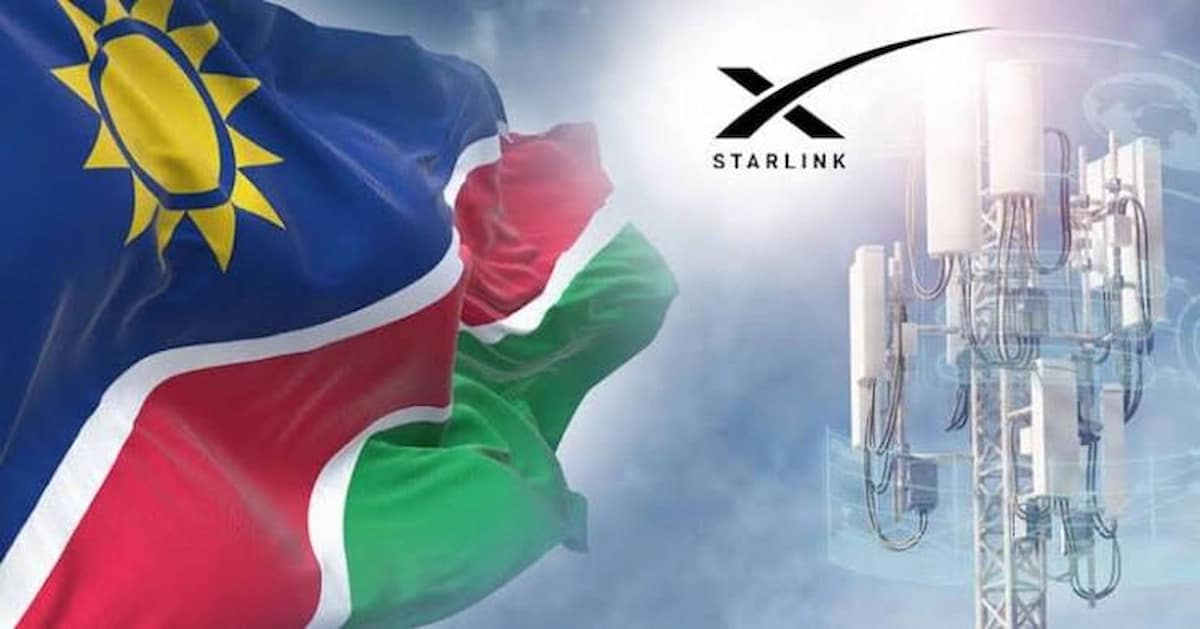
Featured Summary:
- Satellite internet has faced another setback in Namibia after regulators upheld the rejection of Starlink’s licence applications.
- SpaceX Starlink remains blocked from legal operations after failing to satisfy Namibia’s ownership and control requirements.
- CRAN Namibia has turned a connectivity dispute into a wider regulatory signal about telecom licence discipline and national oversight.
- Starlink Africa’s regional expansion now faces a sharper reality: demand is strong, but market access still belongs to the regulator.
Starlink Africa has entered one of the clearest contradictions in Africa’s connectivity market.
The same satellite internet model promoted as a fast route around weak fibre networks, remote geography, and uneven broadband coverage has run into the slower machinery of national regulation in Namibia.
CRAN Namibia has dismissed Starlink’s appeal against the rejection of its telecommunications service licence and radio spectrum application, leaving SpaceX Starlink outside the country’s legal operating framework.
The decision matters beyond Windhoek, not only as a licence dispute, but as a signal that Africa’s digital infrastructure race will be shaped by ownership, compliance, and sovereign control as much as speed, coverage, and consumer demand.
Why did Satellite Internet Face Another Setback in Namibia?
The setback in Namibia lands at the point where connectivity ambition meets regulatory authority.
Satellite internet carries a powerful commercial promise in markets where fixed broadband remains uneven and remote communities are costly to serve, but Namibia’s regulator has made clear that a promising technology does not create an automatic right to operate.
Starlink’s applications for a telecommunications service licence and radio spectrum access were rejected, and the appeal process has now failed to reopen the door.
That leaves Namibia Starlink plans suspended inside a licensing fight rather than a consumer demand story.
The significance is the message behind the refusal.
African regulators are no longer treating satellite operators as neutral infrastructure providers arriving above national systems.
Once a company sells connectivity, handles customer access, uses spectrum, and builds a market presence, it becomes part of the communications structure a state is expected to supervise.
Namibia’s decision places that principle above the excitement around faster internet and forces Starlink Africa to confront the legal foundation of market entry.
How did Telecom Licence Rules Derail Starlink’s Namibia Bid?
Telecom licence rules turned Starlink’s Namibia bid from a technology rollout into a compliance test.
The company’s service depends on radio spectrum and telecommunications approval, two areas where national regulators retain direct authority.
That made the licence process the real gatekeeper, not satellite availability or consumer interest.
SpaceX Starlink could offer coverage, but coverage alone could not satisfy the legal structure required to operate.
The Namibia case also exposes the limits of a borderless technology narrative.
Satellite networks may operate across vast territories, but customers, payments, service obligations, and consumer protections remain inside national jurisdictions.
For governments, that distinction matters.
A telecom licence gives regulators leverage over conduct, accountability, ownership, spectrum use, and public-interest obligations that cannot be left to corporate scale alone.
Why Couldn’t SpaceX Starlink Meet Namibia’s Ownership Requirements?
The ownership barrier sits at the centre of the dispute.
Namibia’s telecommunications licensing framework requires 51% Namibian ownership for a telecommunications service licence, creating a direct challenge for a foreign-controlled satellite internet provider.
SpaceX Starlink’s global model relies on centralised technical control and a recognisable operating structure across markets.
Namibia’s rule demands a different arrangement: local ownership must sit inside the licensed entity before market access can move forward.
That tension cuts deeper than one company’s paperwork.
Communications infrastructure now carries data, payments, emergency services, government systems, business operations, and household access to the digital economy.
Regulators see ownership as part of national control, not as an administrative footnote.
The Starlink dispute therefore reflects a bigger African question over how far foreign digital infrastructure should expand before local law, local participation, and local accountability are secured.
How Did CRAN Namibia Justify Rejecting Starlink’s Appeal?
CRAN Namibia anchored its decision in ownership, control, and procedure.
The regulator said Starlink Africa remained non-compliant with the ownership and control requirements under Namibia’s Communications Act, while the reconsideration application came after the statutory deadline.
It also said the valid reconsideration submissions introduced no new facts and identified no material error in the original decision. That gave the regulator a firm basis to keep the March rejection in place.
The institutional weight of the story sits with CRAN Namibia, the body responsible for regulating telecommunications services, networks, broadcasting, postal services, and radio spectrum in the country.
Its official licensing framework states that telecommunications service licences require 51% Namibian ownership and that a spectrum licence is required where a service uses radio waves.
By applying that framework to Starlink, CRAN Namibia is drawing a regulatory line that satellite internet providers cannot stand outside domestic communications law.
The issue is not whether Starlink can connect users; the issue is whether it can meet the rules attached to controlling connectivity inside Namibia.
What Does Starlink Africa’s Latest Setback Mean for Regional Expansion?
Starlink Africa’s latest setback points to a tougher phase of expansion across the continent.
The company’s strongest markets are often the places where traditional broadband has left gaps, but those same markets also carry national concerns over ownership, spectrum, tax, data oversight, and consumer protection.
Namibia has shown that satellite internet can be attractive to users and still unacceptable to regulators under the wrong ownership structure.
That changes the expansion story from a question of launch dates to a question of legal alignment.
The regional implication is sharper than a single licence refusal.
Starlink Africa will move faster in countries where regulators accept its structure or create workable compliance routes, while markets with stricter local ownership rules will demand deeper adaptation.
SpaceX Starlink still has a powerful demand case, especially in underserved areas, but demand is no longer the decisive variable.
Namibia has made the ground rule visible: Africa’s next connectivity race will not be won only by the company with satellites in orbit, but by the company that can satisfy the regulator on the ground.


Recent Comments