


Featured Summary:
- Malawi e-learning programs are reporting early improvements in student attendance and classroom participation.
- Digital education is helping schools expand access to learning materials and teaching support.
- Education technology is moving beyond device distribution toward measurable educational outcomes.
- Educational tablets are increasingly being evaluated on their impact on student performance rather than deployment numbers.
For years, education technology projects across Africa were often measured by how many devices reached classrooms.
Malawi’s experience is beginning to shift that conversation.
Early findings from government-supported digital learning initiatives and education-sector partners suggest improvements in attendance, classroom participation, and access to learning materials as technology adoption expands across schools.
Malawi e-learning is attracting attention beyond the country because governments across Africa are increasingly searching for evidence that digital education investments can improve learning outcomes rather than simply increase device distribution.
How Is Malawi E-Learning Raising Student Attendance?
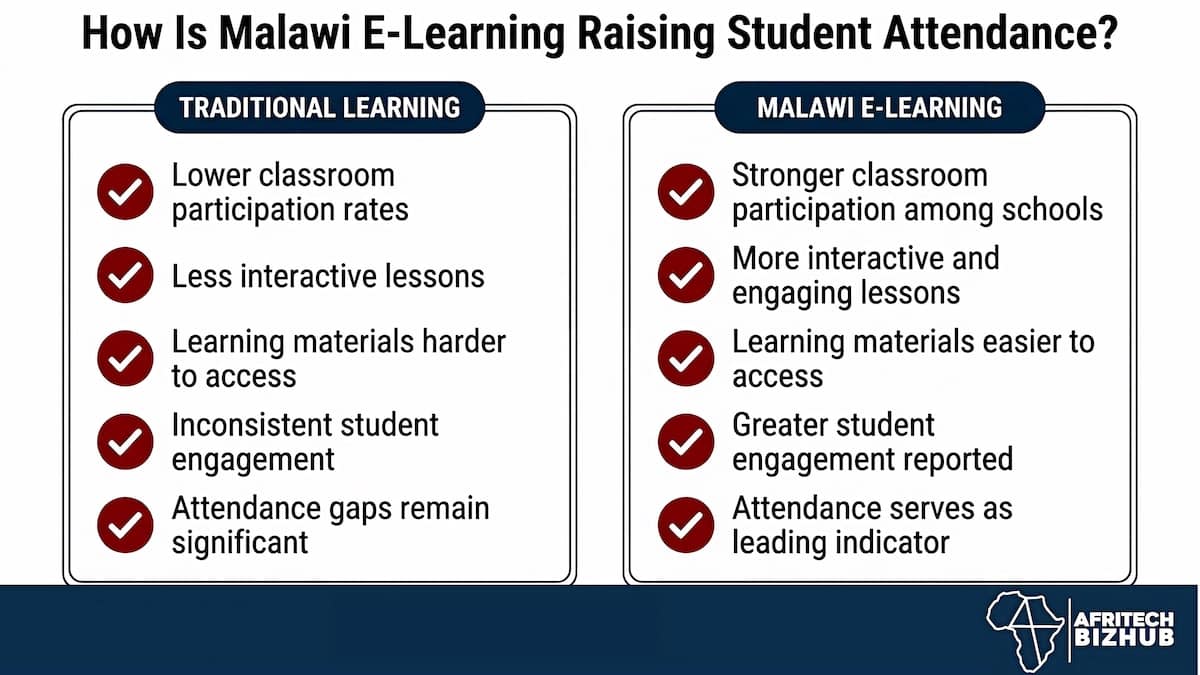
One of the earliest signs emerging from Malawi e-learning initiatives is stronger classroom participation among schools involved in digital learning programs.
Schools participating in technology-supported learning projects have reported greater student engagement as lessons become more interactive and learning materials become easier to access.
These early observations remain important because attendance often serves as a leading indicator of broader educational engagement.
Students are more likely to remain connected to learning when classroom experiences become more structured, accessible, and relevant to their needs.
The significance extends beyond technology deployment itself.
Malawi e-learning is increasingly being evaluated on whether digital tools can encourage more consistent participation in everyday school activities rather than simply increasing access to devices.
Why Is E-Learning Delivering Better Learning Outcomes?
Attendance alone does not improve education. Learning outcomes do.
What makes Malawi’s experience notable is that digital learning tools are increasingly being associated with stronger access to educational content, improved lesson continuity, and greater opportunities for students to engage with learning materials beyond classroom instruction.
In Malawi, where shortages of textbooks and educational resources remain a challenge in some schools, digital education provides an additional layer of access that can help support teaching and learning activities.
Students can revisit lessons, access supplementary materials, and engage with content in ways that are often difficult when resources are limited.
The value of e-learning becomes most visible when it strengthens learning access rather than simply introducing new technology into classrooms.
How Is Digital Education Reshaping Malawi Schools?
Digital education is gradually changing how schools deliver learning rather than simply changing the tools used inside classrooms.
Teachers gain access to additional instructional resources, students interact with more diverse learning materials, and schools can introduce learning formats that were previously difficult to support through traditional methods alone.
The change is also operational.
Digital systems can simplify the distribution of educational content, improve learning continuity, and support classroom management when resources are stretched.
Rather than replacing teachers, digital education is increasingly being used to strengthen how learning is delivered across different school environments.
Malawi schools are increasingly integrating technology into existing educational systems instead of treating digital tools as standalone projects.
Why Is Education Technology Expanding Across Malawi?
The expansion of education technology reflects growing recognition that educational challenges cannot be addressed through physical infrastructure alone.
Rising student populations, resource constraints, and uneven access to learning materials continue placing pressure on schools across the country.
Malawi’s Ministry of Education has increasingly incorporated digital learning into broader efforts aimed at improving educational access, quality, and inclusion.
The objective is not simply technology adoption.
It is improving how educational services are delivered across schools facing different resource conditions.
That approach reflects a broader shift in education policy.
Technology is increasingly being viewed as a supporting layer within the education system rather than an isolated intervention.
How Are Educational Tablets Supporting Student Success?
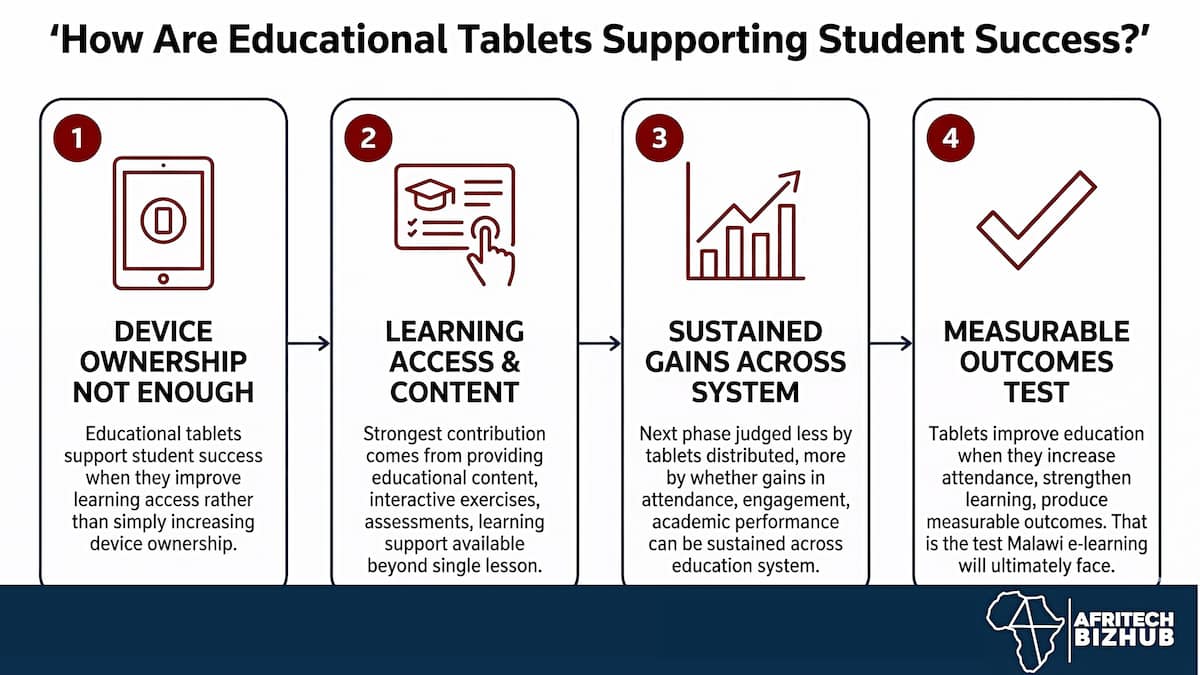
Educational tablets support student success when they improve learning access rather than simply increasing device ownership.
Their strongest contribution comes from providing students with educational content, interactive exercises, assessments, and learning support that remain available beyond a single lesson.
The next phase of Malawi e-learning will be judged less by the number of tablets distributed and more by whether gains in attendance, engagement, and academic performance can be sustained across the education system.
Educational tablets do not improve education simply because they exist.
They improve education when they increase attendance, strengthen learning, and produce measurable outcomes.
That is the test Malawi e-learning will ultimately face.


Recent Comments