

Last updated: June 16, 2026
Africa Startup Funding 2025 Powers a $2.6B Surge Driving Strong VC Growth
Featured Summary:
- Africa startup funding 2025 jumps with a $442M surge, signaling a shift toward revenue-first, infrastructure-backed startups across fintech, logistics, and climate tech.
- Nigeria, Kenya, Egypt, and South Africa lead deal flow, attracting disciplined investors moving away from burn-heavy consumer models.
- VCs now prioritize payments rails, mobility networks, B2B SaaS, and clean-energy platforms, mirroring capital trends in Latin America and Southeast Asia.
- Founders with strong unit economics and FX-resilient models gain the biggest advantage, setting the tone for a tougher but healthier 2025–2026 funding cycle.
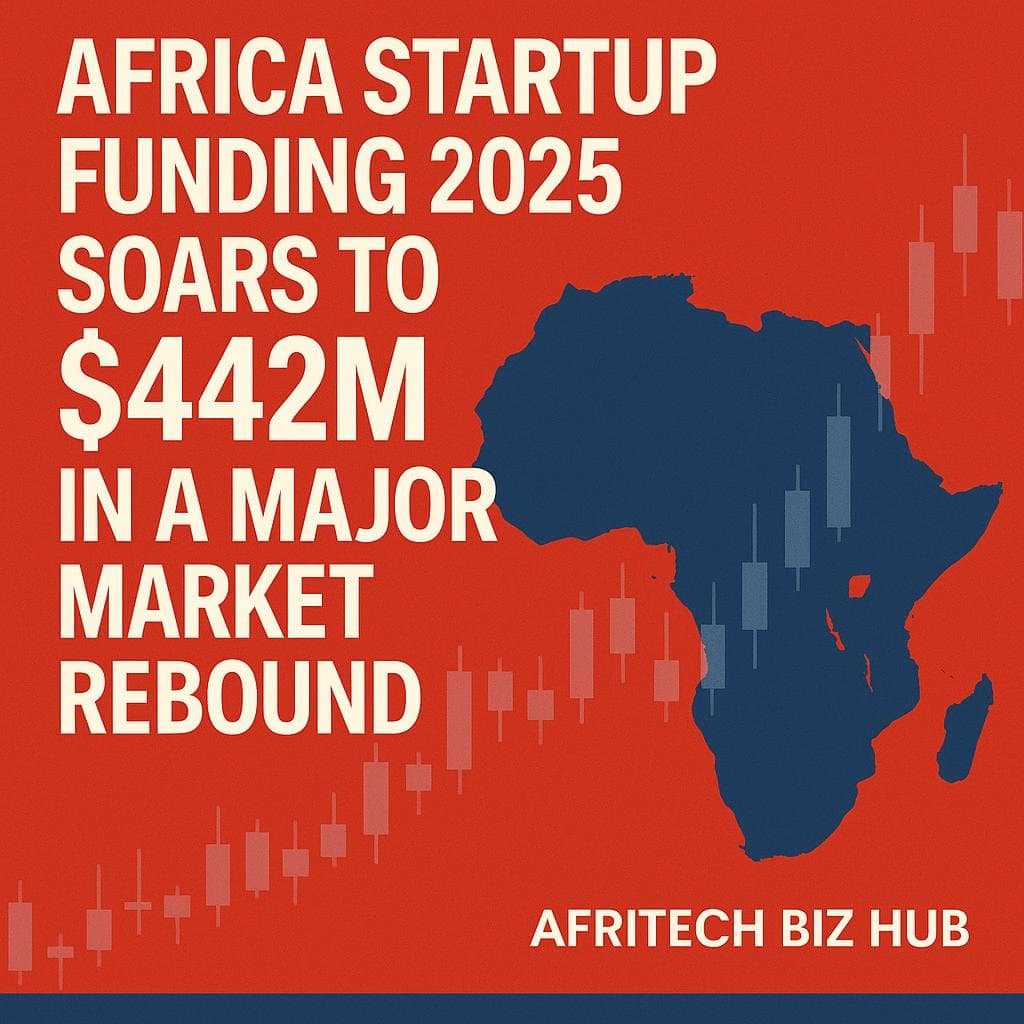
Africa startup funding 2025 is entering a sharper, revenue-driven cycle as startups secured $442M in new capital, signalling a decisive shift from the VC slowdown. Like Latin America and Southeast Asia’s disciplined rebounds, capital is now flowing into fintech rails, logistics networks, climate tech, and B2B SaaS. This aligns directly with our wider Africa startup funding sector breakdown, showing where real opportunities are growing.

What Major Shift Is Driving Africa Startup Funding 2025
Africa startup funding 2025 is defined by a discipline reset, where capital moves away from consumer burn models and flows into payments infrastructure, logistics networks, climate and energy systems, and B2B SaaS tools. October’s $442M rebound confirms that investors now reward real revenue, unit economics, multi-market scalability, and infrastructure-anchored business models, not vanity metrics or subsidized growth.
Why Africa’s VC Cycle Has Shifted Toward Revenue & Infrastructure
Investors are now prioritizing:
• Clear revenue and margins, not GMV inflation
• Infrastructure-heavy models (payments, logistics, utilities)
• Recurring enterprise contracts over unstable consumer spend
• FX-resilient business models due to Naira, KES, and EGP volatility
• Regulatory alignment in fintech, energy, and data
This hard reset mirrors what happened in Latin America (2022–2023) and Southeast Asia (2020–2021).
Which Sectors Are Driving Africa Startup Funding 2025
Fintech infrastructure — payments, cross-border, fraud tools, API rails
Logistics & mobility — e-commerce fulfilment, freight, last-mile
Climate & energy tech — solar financing, mini-grids, EV mobility
AI & deep tech — automation, enterprise AI, compliance tools
B2B SaaS — invoicing, workflow, HR, procurement
These are the same sectors lifting the $442M rebound and shaping 2025 deal flow.
Which Countries Are Leading This Funding Rebound
Funding concentration remains anchored in:
• Nigeria — fintech, payments, B2B
• Kenya — mobility, logistics, retail tech
• Egypt — fintech, e-commerce, healthtech
• South Africa — energy, SaaS, enterprise tools
These four markets capture over 70% of all capital flowing into Africa startup funding 2025.

Africa Startup Funding 2025 — Regions Driving the VC Rebound
Africa’s $442M funding rebound is not random, it is regional, sector-driven, and anchored in markets with real revenue infrastructure. The strongest deal flow aligns with the same macro shifts powering Africa’s climate-tech boom, logistics resurgence, and fintech infrastructure wave, themes we unpacked extensively in our Africa Climate Tech 2025 analysis.
Below is where the true continental recovery is coming from.
West Africa — Nigeria Regains Leadership With Fintech & Infrastructure Funding
Nigeria remains the engine of Africa’s VC volume, driven by:
• Payments infrastructure (Moniepoint, Flutterwave, Paga)
• FX-lite fintech models replacing burn-heavy consumer plays
• Logistics platforms scaling regional cross-border routes
• Enterprise SaaS and API infrastructure with real revenue
West Africa now contributes over 35% of deal value, as investors prioritize defensible, regulation-aligned fintech and B2B solutions.
East Africa — Kenya’s Logistics & Payments Surge Rebounds Strongly
Kenya’s rebound is powered by:
• Mobility & delivery platforms regaining demand
• Warehouse-to-last-mile logistics tech
• Payments rails built around mobile-money interoperability
• AI-enabled agriculture and retail supply-chain tools
These shifts align with the broader climate-resilience tech adoption wave across East Africa, reinforcing our climate-tech analysis.
North Africa — Egypt Leads With Deep Tech, SaaS & AI Scaleups
Egypt’s ecosystem is attracting high-quality, revenue-backed rounds in:
• AI & deep-tech platforms
• B2B SaaS serving MENA + Africa markets
• Infrastructure automation
• Fintech and digital banking
Its dual Africa–Middle East advantage gives Egypt a multi-market scale edge investors value in 2025.
Southern Africa — South Africa’s Climate & Energy Transition Drives Deals
South Africa is now the climate-tech capital of the continent, thanks to:
• Solar-as-a-service platforms
• Energy storage and grid optimization
• Mobility electrification
• Corporate sustainability and carbon-measurement tech
This continues the climate-tech momentum, where energy transition is unlocking new VC categories.
Francophone Africa — Senegal, Côte d’Ivoire & Rwanda Rising as New Hubs
Francophone Africa is attracting disciplined, infrastructure-aligned capital into:
• Mobile money interoperability
• Marketplaces with strong unit economics
• Logistics + warehousing platforms
• Climate and agritech solutions
Senegal and Côte d’Ivoire now anchor West Africa’s francophone growth corridor, while Rwanda leads East Africa with its policy-driven digital economy playbook.
Which Startup Sectors Won the Most Funding in Africa in 2025
Africa’s funding rebound in 2025 is concentrated in five high-performing sectors where revenue, infrastructure value, and multi-country scalability are strongest.
Fintech & Payments Infrastructure — Africa’s Most Funded Sector
Capital remains anchored in fintech because:
• Payments infrastructure continues to process billions in annual transactions.
• Fraud, KYC and risk tools reduce onboarding friction.
• SMEs depend on transaction-data-driven credit infrastructure.
• Markets like Nigeria, Kenya, and Ghana are expanding mobile-money interoperability.
Investor logic: Fintech is infrastructure, not discretionary spend, high retention, clear monetization, continent-wide demand.
Logistics & Mobility — Revenue-Dense, Asset-Backed Scale
Funding concentrates here due to:
• E-commerce demand for reliable fulfillment and last-mile delivery.
• Fleet management & routing platforms with measurable ROI.
• AfCFTA-driven cross-border mobility requirements.
• Predictable margins from asset-backed logistics models.
Investor logic: Africa’s trade corridors rely on logistics rails; investors back proven, necessity-driven solutions.
Climate Tech & Energy — Africa’s Fastest-Growing Investment Segment
As highlighted in our Climate Tech Startups in Africa report, this sector accelerates because:
• Distributed solar, mini-grids, and commercial energy systems reduce diesel dependence.
• E-mobility (battery swapping, e-bikes, EV fleets) gains corporate adoption.
• Carbon measurement and climate-risk intelligence tools attract global funding.
• Climate financing from DFIs and global climate funds continues to expand.
Investor logic: Africa’s energy gap + global climate mandates = structural, multi-decade investment runway.
AI & Deep Tech — High-Value Niche With Global Pull
Growth is driven by:
• Local-language models and African-context data products.
• AI automation tools for finance, logistics, and retail.
• Deep tech R&D hubs emerging in Egypt, South Africa, Kenya.
• Global AI investors seeking frontier datasets and defensible innovation.
Investor logic: AI offers high-margin, globally exportable IP with minimal physical infrastructure cost.
SaaS & Enterprise Tools — Lean, FX-Aligned, and Scalable
Investment momentum continues because:
• B2B workflow tools replace manual, paper-heavy operations.
• USD-priced SaaS subscriptions hedge FX risk.
• HR, accounting, and productivity tools scale across borders.
• SME digitization accelerates in finance, logistics, and retail.
Investor logic: SaaS delivers high ARPU, low burn, and predictable expansion, ideal in Africa’s disciplined funding cycle.

What Africa Startup Funding 2025’s $442M Rebound Means for Founders & Investors
Africa’s $442M October rebound signals a disciplined VC cycle where infrastructure, revenue, and hard-value sectors dominate the pipeline. The biggest opportunities now sit at the intersection of payments, logistics, climate tech, AI, and B2B SaaS, precisely the sectors driving the continent’s digital and economic transition.
Individuals & Talent — AI, Payments, and Climate Skills Lead the Demand Curve
2025 funding clearly shows where Africa’s next generation of talent must position itself:
• AI & automation skills — data labeling, model fine-tuning, agent workflows.
• Payments & fintech operations, fraud, compliance, KYC/AML.
• Climate & energy deployment — solar installation, fleet electrification, battery systems.
• Developer & cloud roles powering SaaS, logistics tools, and deep tech platforms.
• Cross-border commerce skills for AfCFTA-aligned SME expansion.
Opportunity: Talent that stacks AI + fintech + climate skills gets hired first in 2026.
SMEs & Corporates — Stronger B2B Infrastructure to Cut Costs & Scale Faster
Africa’s funding rebound is building a new backbone for everyday businesses:
• Payments rails that settle faster and reduce FX exposure.
• Logistics networks that shorten delivery times and improve inventory cycles.
• SaaS tools for accounting, HR, invoicing, and workflow automation.
• Energy & climate systems lowering diesel dependency and operational downtime.
Opportunity: SMEs adopting digital rails early enjoy lower costs and stronger regional reach.
Startup Founders — Build on Rails: Payments, Logistics, Energy, AI
To raise capital in Africa’s disciplined cycle, founders must anchor their products on core rails:
• Fintech/payment infrastructure (collections, payouts, embedded finance).
• AI-driven automation for retail, mobility, logistics, and finance.
• Logistics + mobility with real revenue density, not subsidy-led models.
• Climate & energy solutions solving real-world power and efficiency gaps.
• SaaS vertical tools for supply chain, agriculture, healthcare, and education.
Opportunity: Investors now reward infrastructure-first founders over “growth-at-all-costs” models.
Investors — Clear 2025 Thesis: Revenue, Margins, Infrastructure
The 2025 investment logic is consistent across regions:
• Revenue-first models with solid margins win deals.
• Infrastructure layers (payments, logistics, energy) continue to attract growth rounds.
• AI & deep tech deliver high-value, globally defensible IP.
• Climate tech receives the strongest pipeline from DFIs and global climate funds.
• SaaS businesses provide FX-resilient, scalable returns.
Opportunity: Savvy investors position in payments, climate, logistics, AI, and B2B rails now, before valuations steepen in 2026.
What the Numbers Say About Africa’s VC Recovery in 2025
Africa’s funding rebound is now anchored in disciplined, revenue-first investing, with 2025 deal volume crossing $2.6B YTD. Ticket sizes remain smaller, but earnings quality is higher as founders prioritise unit economics, FX resilience, and infrastructure-led business models.
Global LP Appetite Returns — Infrastructure, AI & Climate Lead the Recovery
New LP signals show global capital shifting back into Africa’s “utility-first” sectors: payments infrastructure, climate & energy, AI & deep tech, and logistics platforms. PitchBook data shows institutional LPs and family offices increasing exposure to Africa’s high-demographic growth markets, mirroring early-stage cycles last seen in Southeast Asia.
Future Outlook for 2026 — Africa Enters a Utility-First VC Cycle
Africa is entering a utility-first VC cycle in 2026, where capital flows target foundational rails: payments, mobility, energy, AI infrastructure, B2B SaaS, and commerce enablers. With climate-tech and fintech infrastructure attracting the highest deal certainty, analysts expect:
• 20–30% YoY growth in climate, mobility, and energy funding
• AI & deep tech to emerge as Africa’s fastest-rising startup niche
• A new investor preference for profitable corridors, not burn-driven models
• Stronger alignment between African VC trends, Latin America’s 2020–2022 efficiency cycle, and Southeast Asia’s B2B rebalance
Why Funding Won’t Scale Without Fixing FX, Regulation & Infrastructure
FX Volatility & Rapid Devaluations
Africa’s VC rebound still faces its biggest structural barrier: currency instability. Frequent devaluations in Nigeria, Egypt, Kenya, and Ghana erode startup revenues, distort valuation benchmarks, and make USD returns unpredictable for global investors. This FX uncertainty keeps capital cautious, especially from U.S. and European LPs searching for stable yield.
Regulatory Fragmentation Across Markets
African startups scaling across borders are slowed by non-harmonized rules, inconsistent licensing requirements, data-compliance gaps, and long approval cycles. Fintechs face the toughest hurdles, each market demands different KYC, capital, and operational frameworks. Until regulation syncs across AfCFTA markets, expansion costs will remain high and investor confidence limited.
High Cloud, Infrastructure & Talent Costs
African startups operate with disproportionately high cloud spend, infrastructure overheads, and engineering salaries relative to revenue. With AWS, Google Cloud, and Azure priced in USD, startups struggle to expand margins even when revenue grows. The talent gap in AI, fintech, and climate tech forces founders to rely heavily on expensive hybrid teams, weakening profitability metrics investors now require.
Limited Exit Pathways & Small Local LP Base
Africa’s exit landscape remains thin: few M&A transactions, slow IPO pipelines, and minimal late-stage capital. Meanwhile, local LP participation remains extremely low, keeping African funds heavily dependent on foreign capital cycles. Until the continent builds domestic pension, insurance, and sovereign LP activity, VC scalability will remain constrained and highly cyclical.
Connecting the Dots — Africa’s VC Reset Is Finally Structural
Africa’s 2025 VC rebound is not a return to hyper-growth hype, it is a transition into a utility-first investment cycle, where fintech rails, logistics infrastructure, climate and energy systems, and AI-led productivity tools form the backbone of the continent’s next decade of growth. The $442M October upswing shows that capital is flowing toward sectors with real earnings, regional demand, and stronger currency resilience. This mirrors the same shift that strengthened Latin America’s post-2020 recovery and Southeast Asia’s 2017–2021 infrastructure boom, proving Africa’s funding landscape is now maturing into a continental system, not a collection of disconnected startup markets.
For founders, operators, and investors, this reset aligns directly with the AfCFTA-driven continental market playbook, where stronger digital rails, payment interoperability, and logistics corridors empower SMEs to scale regionally. This supports the same opportunity pillars highlighted in our AfCFTA business opportunities for Africans analysis, lower expansion friction, unified demand pools, and deeper cross-border monetization paths. When combined with PAPSS, transit guarantees, climate-tech acceleration, and AI-enabled operational improvements, Africa’s startup ecosystem is converging around one truth: the next winners will be those building for a unified Africa, not single-country markets.
The Opportunity Ahead
Africa’s $442M funding rebound signals a decisive turn toward stronger business models, infrastructure-led innovation, and a continent ready for scalable, cross-border growth. As AfCFTA integration deepens and investors double down on payments, logistics, climate tech, and AI, founders who build for revenue, regional expansion, and operational discipline will define Africa’s next decade of breakout companies.
To understand the payment rail powering Africa’s next $5B trade boom, dive into our PAPSS Africa analysis — the system quietly rewriting cross-border settlement across the continent.


Recent Comments