

Featured Summary:
- Middle East crude exports are recovering faster than diesel, gasoline and jet-fuel supply
- Refinery outages are pushing more product demand toward Asia, the United States and Dangote
- Emergency fuel stocks are being released as refinery outages keep fuel supply tight
- New spending is concentrating on refinery capacity, storage and export routes that avoid vulnerable chokepoints
Middle East crude and condensate exports recovered to about 91% of pre-war levels in September, while refined-fuel shipments reached only about 60%.
More than 2.3 million barrels a day of processing capacity across the region remains offline.
Diesel and jet fuel markets remain tight even as more crude returns. Kuwait Petroleum Corporation estimates the global shortfall in refined products at about 6 million barrels a day.
Asia accounts for roughly 37% of global refining capacity, with China, India, South Korea and Singapore supplying more fuel into markets affected by outages across the Middle East.
Governments are also releasing emergency stocks, while refiners in Asia, the United States and Nigeria increase shipments into markets short of diesel and jet fuel.
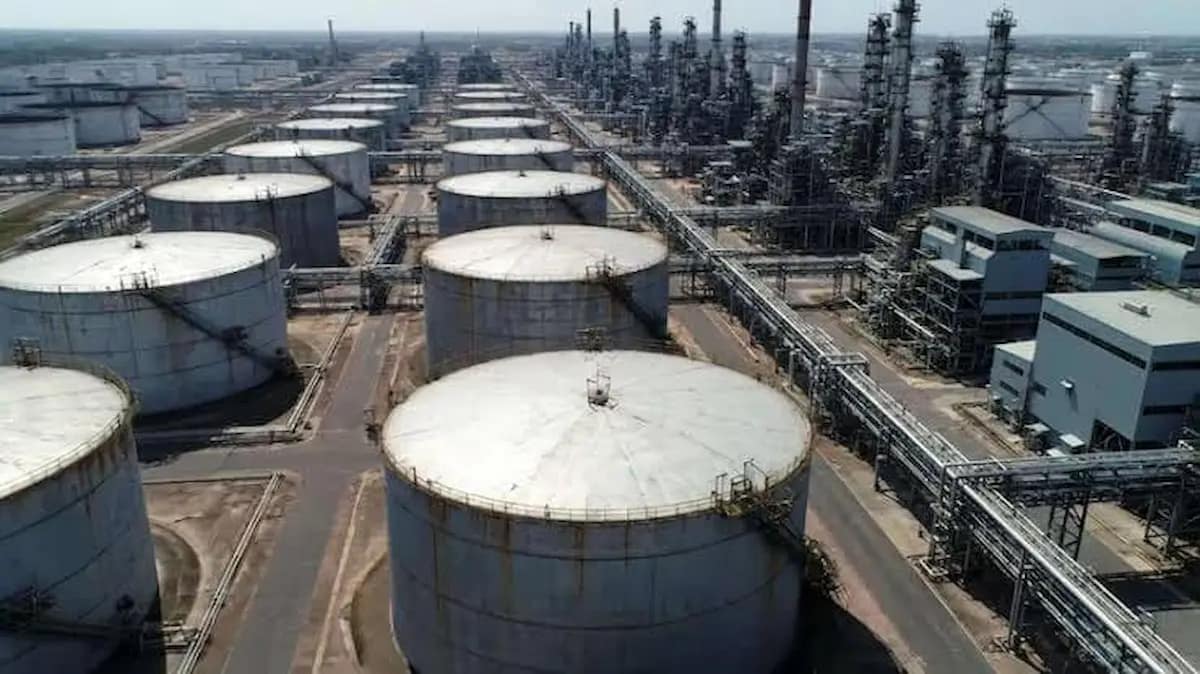
Crude flows are recovering faster than the system that processes them, leaving refinery capacity at the centre of the current energy squeeze.
War Damage Has Taken Millions of Barrels of Refining Capacity Offline
Since the conflict began, attacks have hit around 20 refineries across the Middle East, forcing shutdowns and cutting output at plants that normally supply large volumes of diesel, gasoline and jet fuel.
Saudi Arabia suspended the 550,000-bpd Ras Tanura refinery early in the conflict. The Saudi Aramco-ExxonMobil SAMREF refinery was also hit, while drone attacks and fires disrupted Kuwait’s Mina al-Ahmadi and Mina Abdullah plants.
The 400,000-bpd Jazan refinery in Saudi Arabia was targeted later while already out of service.
Russia has faced a similar loss of refining output. By September, three of its six largest diesel-producing refineries had either stopped operating or cut production sharply after Ukrainian drone strikes.
Kirishi was shut, while Volgograd and NORSI were running at about one-quarter of nameplate capacity.
Those six Russian plants normally account for roughly half of the country’s diesel output. Russian refineries were successfully hit about once every three days during the first eight months of 2026, according to the IEA.
The outages have left less diesel, jet fuel and gasoline available from two major producing regions, with several large plants still below normal operating levels.
Asia Is Capturing More of the Margin From the Refining Shortage
China has about 18.8 million barrels a day of refining capacity, while India has roughly 5.1 million bpd. South Korea and Singapore also remain important refining hubs for international fuel markets.
China exported 6.01 million tonnes of refined products in August, with diesel shipments up 42.1% from a year earlier to 1.33 million tonnes and jet-fuel exports at a record 2.55 million tonnes.
South Korean refiners have increased shipments into Europe, while U.S. refiners raised diesel exports by more than 20% from 2025 levels to about 1.3 million bpd.
Dangote’s 700,000-bpd refinery in Nigeria is also supplying diesel and jet fuel into overseas markets.
The company is working toward a $14.3 billion expansion that would raise capacity to about 1.4 million bpd by 2029.
More of the replacement fuel is now coming from plants outside the Middle East and Russia, where refinery outages continue to limit output.
Emergency Fuel Stocks Are Covering the Gap While Refineries Recover
France released 10 million barrels of diesel from strategic stocks on October 7. Paris estimated the move could lower diesel prices by about €0.12 to €0.18 per litre.
The EU held around 39 million tonnes of emergency gasoil and diesel stocks, with France and Germany accounting for about 35% of the total.
EU rules require member states to hold stocks equal to at least 90 days of net imports or 61 days of domestic consumption.
Saudi Aramco CEO Amin Nasser estimated that around 1 billion barrels have already been drawn from global inventories during the current crisis and said rebuilding those levels while demand remains high could take as long as two years.
The releases are adding fuel to the market while refinery output remains constrained, although continued drawdowns would leave smaller reserves available for any further disruption.
Refinery Expansion and Alternative Export Routes Are Drawing New Capital
TotalEnergies has backed proposals for new export pipelines carrying Iraqi crude through Syria and for greater use of the UAE’s Fujairah port, outside the Strait of Hormuz.
BP, ConocoPhillips and Türkiye’s TPAO have also studied additional outlets for northern Iraqi production, while Chevron has examined pipeline options toward the Mediterranean.
Chartering a VLCC carrying about 2 million barrels of U.S. crude from the Gulf of Mexico to China reached roughly $80 million in October, with freight costs more than 300% higher than in mid-August.
On some Middle East-Asia routes, tanker rates climbed above $1.2 million a day, compared with about $30,000 at the start of the year. Freight that once represented around 3% of the delivered barrel price rose to roughly 27%.
The higher transport bill is pushing more attention toward pipeline capacity, storage outside vulnerable routes and ports that can keep exports moving when major waterways are disrupted.
Crude supply is recovering, but the cost of getting that oil through refineries and into fuel-short markets remains high.
Investment is now following the parts of the supply chain that can shorten those routes and restore product flows.


Recent Comments