

Featured Summary:
- Gulf crude exports are recovering faster than diesel and jet-fuel supply
- Asia holds the largest concentration of refining capacity outside the Gulf
- India, China, South Korea and Singapore are supplying more fuel into Europe, Africa and Asian markets
- Existing refineries and export hubs are gaining value as product shortages persist
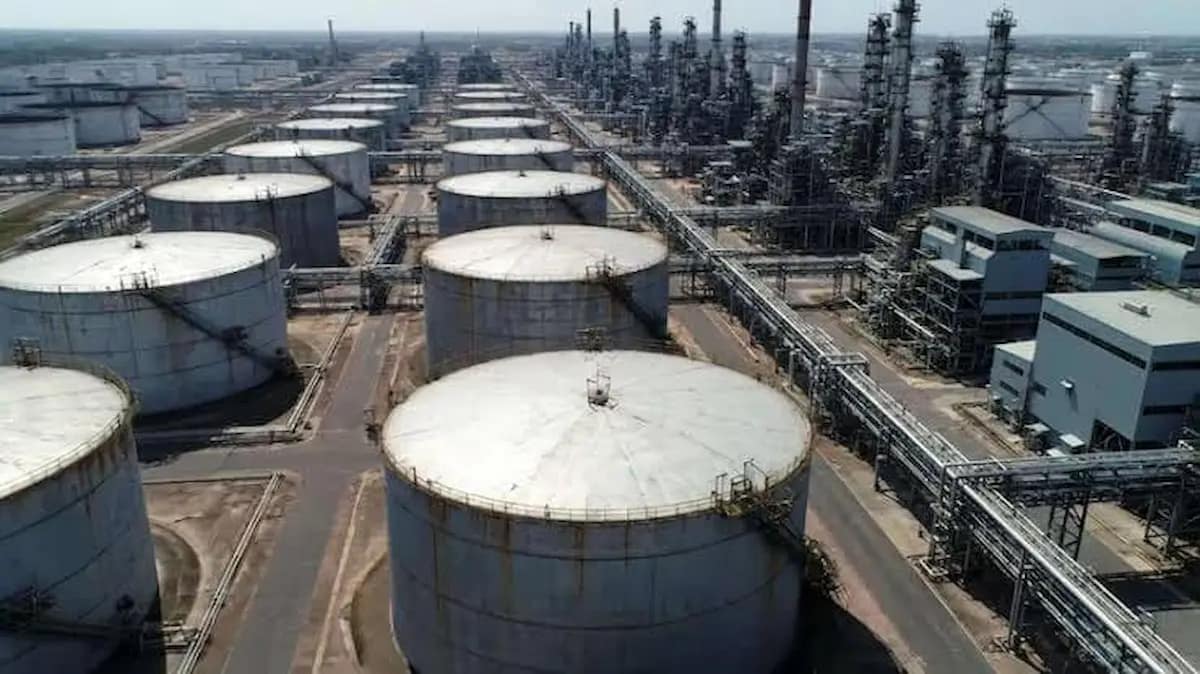
Asia accounts for about 37% of global refining capacity, with the region supplying a growing share of diesel, jet fuel and gasoline into markets still short of finished products.
Middle East crude and condensate exports are moving back toward pre-war levels, but refined-product shipments are recovering more slowly. More than 2.3 million barrels a day of regional processing capacity remains offline.
U.S. crude gained market share when buyers looked outside the Gulf for replacement barrels, but returning Middle Eastern supply is reducing the need for those substitute flows.
Asia’s position is different. Its large refining base remains central to processing the crude now returning to the market and supplying the fuels that remain scarce.
China and India Anchor Asia’s Refining Capacity
China has about 18.8 million barrels a day of refining capacity, the largest national total in the world, while India has roughly 5.1 million bpd.
India’s position is strengthened by Reliance Industries’ Jamnagar complex in Gujarat, which can process about 1.4 million barrels a day and has long been geared toward export markets as well as domestic supply.
South Korea adds another large block of export-oriented capacity through refiners that regularly ship diesel, gasoline and jet fuel into overseas markets.
Singapore remains central to regional petroleum trade through its refining base, storage terminals and role as a pricing and trading hub.
The location of those plants has become more important as Gulf crude flows recover. India sits only a few days by tanker from major Middle Eastern export terminals, while Singapore and South Korea are connected to established shipping routes across Asia and into Europe.
That concentration gives Asian refiners access to returning Gulf crude at the same time that several Middle Eastern and Russian plants remain below normal output.
Asian Refineries Are Increasing Fuel Exports
China’s refinery throughput rose to 13.91 million barrels a day in August, up 11.2% from July.
Refined-product exports reached 6.01 million tonnes during the month. Diesel shipments increased 42.1% from a year earlier to 1.33 million tonnes, while jet-fuel exports reached a record 2.55 million tonnes.
PetroChina, Sinopec and Zhejiang Petrochemical received most of the available export allowances as China kept fuel-export restrictions relaxed into September.
India is preparing for another increase in processing capacity, with the government targeting 6.2–6.4 million bpd, up from about 5.4 million bpd. Saudi Arabia and the UAE have shown interest in new refinery projects and upgrades.
South Korea has also increased fuel shipments into Europe. European imports of South Korean jet fuel reached about 129,000 barrels a day in September, the highest level since October 2022, after national jet-fuel output rose to nearly 13.89 million barrels in July, a seven-year high.
Major refiners including SK Energy, GS Caltex, S-Oil and HD Hyundai Oilbank operate the plants supplying that market.
The larger Chinese and South Korean export flows are reaching markets where Russian and Middle Eastern product supply remains below normal levels.
Europe and Africa Are Taking More Fuel From Asia
Africa imported between 1.8 million and 2 million tonnes of diesel from Asia in August, the highest monthly volume in at least four and a half years.
Middle Eastern diesel shipments to Africa fell to about 600,000–800,000 tonnes, their lowest level in almost nine years.
A year earlier, the region supplied about half of Africa’s imported diesel, with Saudi Arabia accounting for roughly 40%.
The change has pushed African buyers further into Asian supply chains, increasing the importance of longer-haul cargoes from India and other refining hubs east of the Gulf.
Singapore’s petroleum inventories reached 39.18 million barrels in late August, including nearly 8.5 million barrels of middle distillates.
Diesel exports rose 44% that week, with Malaysia and Indonesia among the main destinations.
The trade shift now runs in both directions: Gulf crude continues moving east into Asian refineries, while more finished fuel is moving back west into Africa and Europe.
Cross-Border Brokerage Is Emerging as the Commercial Opportunity
India is preparing to add more refining capacity, with national capacity at about 267 million tonnes a year and additional projects and upgrades already under development.
Shipowners have ordered more than 217 new VLCCs in 2026, representing over $20 billion in investment. Spot VLCC rates have climbed above $500,000 a day, compared with about $132,000 in February.
TotalEnergies has backed proposals for new pipelines from Iraq through Syria and greater use of the UAE’s Fujairah port.
BP, ConocoPhillips, TPAO and Chevron have also studied additional export routes toward the Mediterranean.
More capital is now going into refinery expansion, tanker fleets and routes that can move crude and finished fuel around disrupted chokepoints.
Asia’s large refining system is taking a bigger role in supplying markets short of diesel, gasoline and jet fuel as Gulf crude flows recover.


Recent Comments